
June 2026
Beyond the Pitch
Download PDFWe recently sat down with Dominic Nolan, CEO of Aristotle Pacific Capital, to get his insights on recent market performance, the economics of the World Cup, the Fed's next move, and fixed income. We conclude with a personal reflection.
Market Performance
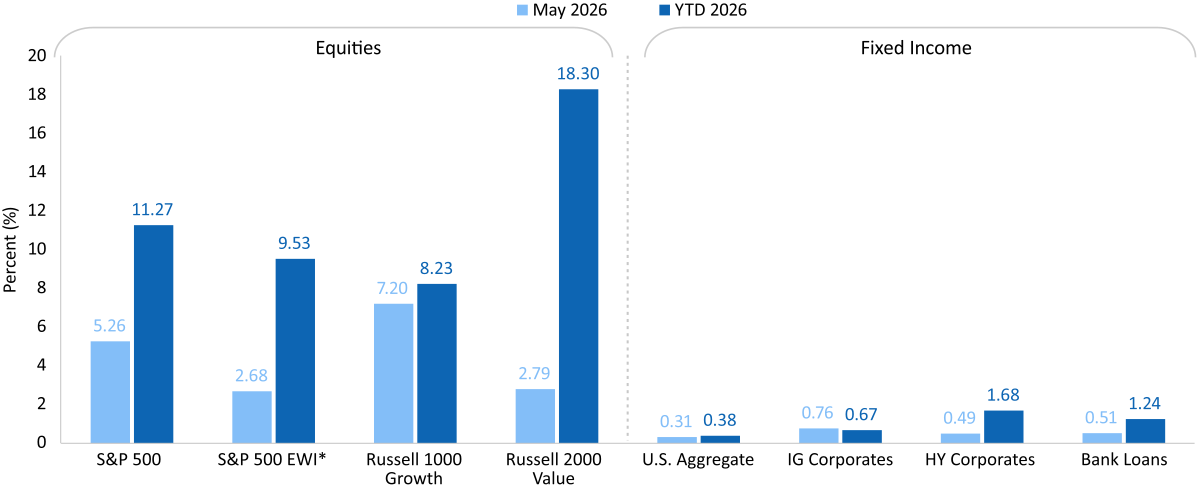
May was a strong month for stocks and ok for bonds. What drove risk appetite?
Artificial intelligence continues to be the overarching story in markets. The S&P 500 Index returned more than 5% in May, with the Russell 1000 Growth Index gaining more than 7%. The S&P is still leading the growth index year to date at 11.3% vs. 8.2%, while the Russell 2000 Value tops them both at 18.3% year to date, even though it returned a modest 2.8% in May.
Bonds had slightly positive gains in May, with the Bloomberg US Aggregate Bond Index returning 31 basis points (bps). Risk performed better in fixed income; investment-grade corporates gained 76 bps in May, while bank loans and high yield both returned roughly 50 bps.
Mag 7 + Broadcom
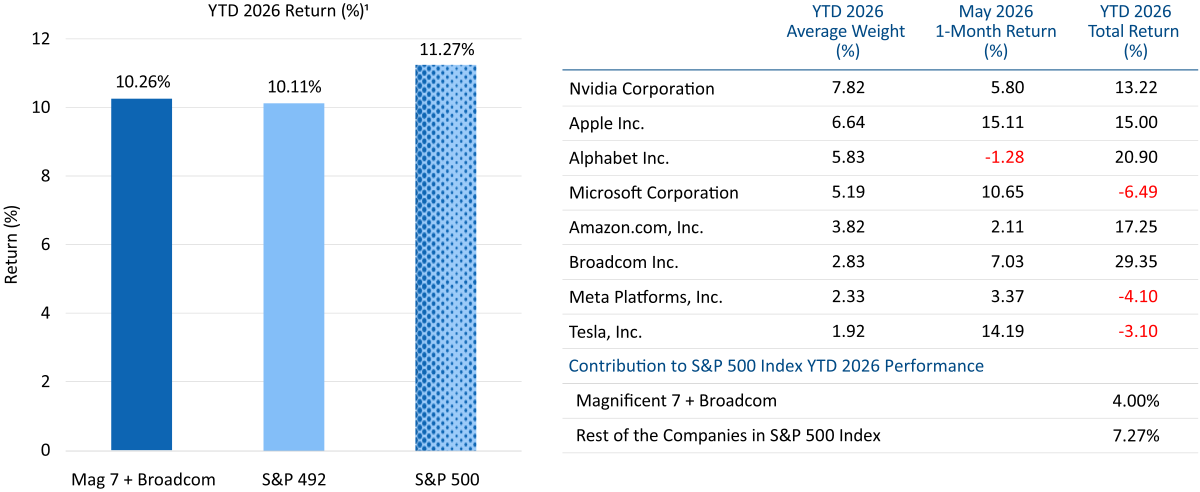
How did our Mag 8 perform?
May was positive overall for the group. Apple led the way, up more than 15%, while Alphabet was the lone laggard, down about 1%. As mentioned, AI continues to drive returns, and the rally broadened last month, encompassing more chip makers and representing a shift from AI-model training GPUs to more inference-capable CPUs, as well as Broadcom’s custom-designed AI accelerator chips. Also, the incredible capex spending continues; Alphabet announced on June 1 it is raising $80 billion through equity offerings to fund AI spending. Interestingly, Berkshire Hathaway is investing in $10 billion of the $80 billion announced – that’s a strong endorsement.
U.S. Treasury Yield Curve Range
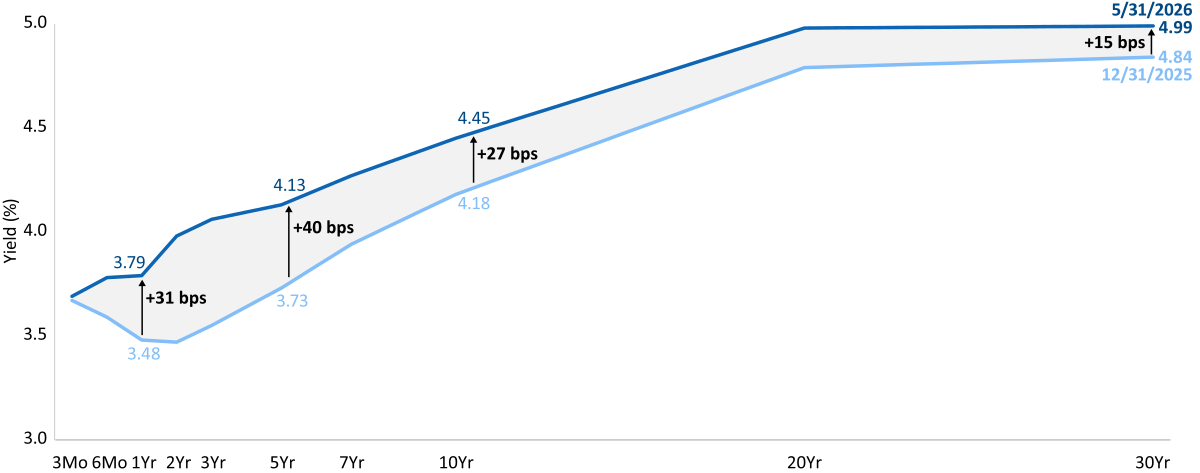
Circling back to bonds, U.S. Treasury yields charged higher in May, but ended well off the mid-month highs. What caused the rise in rates?
I think the market is shifting back somewhat to a traditional negative correlation between equities and fixed income. In the distant past, during periods of strong equity performance, risk appetite would increase and interest rates would rise, leading to a divergence in asset-class performance. However, I believe the Federal Reserve’s quantitative easing post financial crisis skewed the traditional dynamic between the asset classes, and they became more correlated. Today, the situation is different. Bond investors are observing higher inflation, increased supply from deficit spending, and the possibility of Fed hikes. Meanwhile, equity investors are seeing the AI momentum and continued economic growth.
The good news is higher yields tend to benefit fixed income investors, and if bonds are negatively correlated to stocks, they can add diversification benefit to an equity-focused portfolio.
Fed Futures
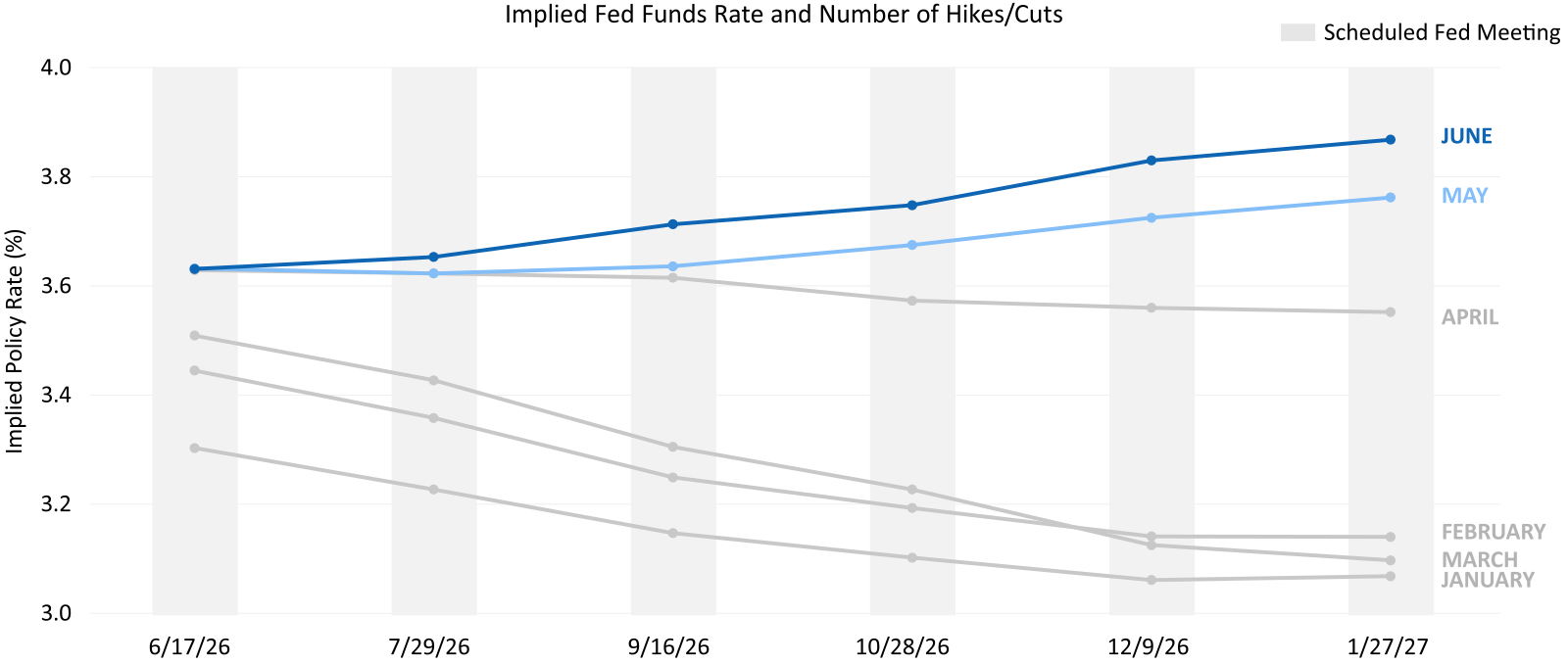
Regarding the Fed, Kevin Warsh took office as the new chair on May 22nd. What do you anticipate for Fed policy under his leadership?
I expect a different style of communication, and I think the Fed will continue to reduce its balance sheet. As we have this discussion, the market is pricing in higher rates by the end of the year. I've been skeptical of a hike this year and have been expecting one or two cuts. Perhaps I am being stubborn, but I still find it unlikely that the Fed will hike this year; my base case now is the Fed remains on hold. Yet, I recognize things are very kinetic.
Economic Dashboard
Shifting to the economy, what do you see in the data?
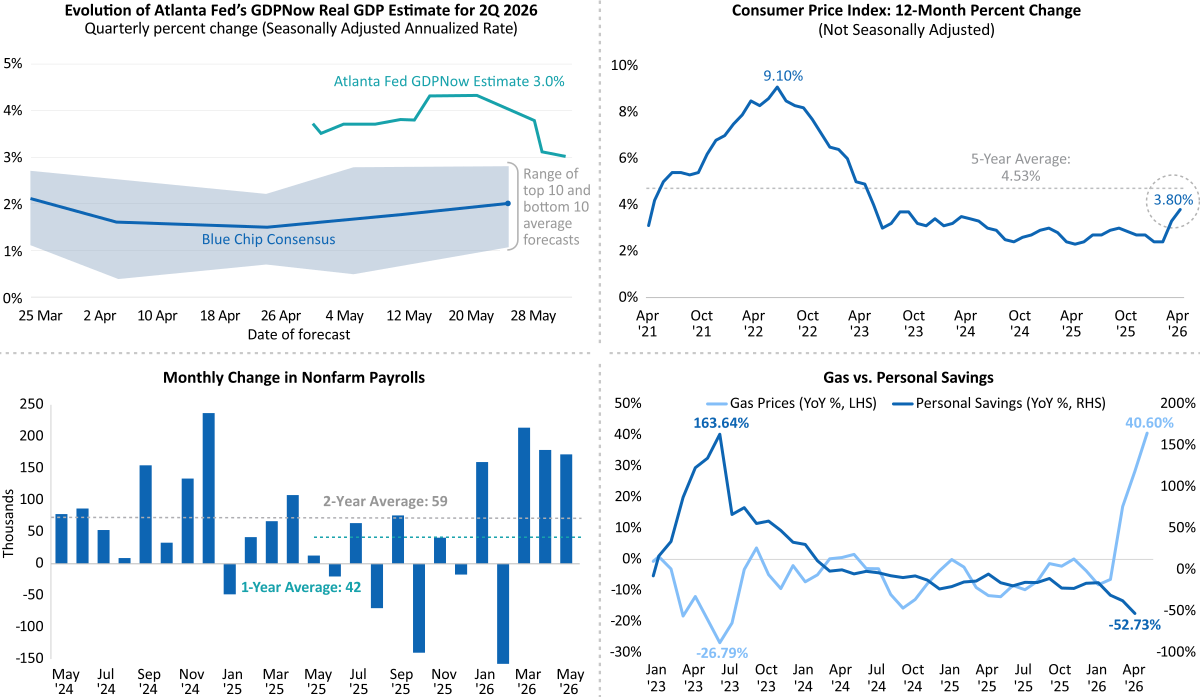
The economy has been absorbing an energy supply shock coupled with a massive AI-infrastructure buildout that is also a tax on energy. The macro numbers continue to paint a mixed picture, as we have discussed previously. For example, forecasters continue to expect GDP expansion, while the job market has been choppy since early 2025. I think the jobs data reflect that companies are reassessing key questions, including whether to reduce headcount and how much capital expenditure is appropriate.
Meanwhile, the Consumer Price Index released last month showed prices rising 3.8% in April versus a year earlier. Also, as gas prices have increased, personal savings have declined. To summarize: consumers are stressed, inflation is a potential issue, the job market is uncertain, but technology investment is propping everything up, allowing the economy and markets to absorb the shocks thus far.
Beyond the Pitch
Let’s shift to this month's special topic, the economics of the World Cup. Could you begin with some color on the tournament?
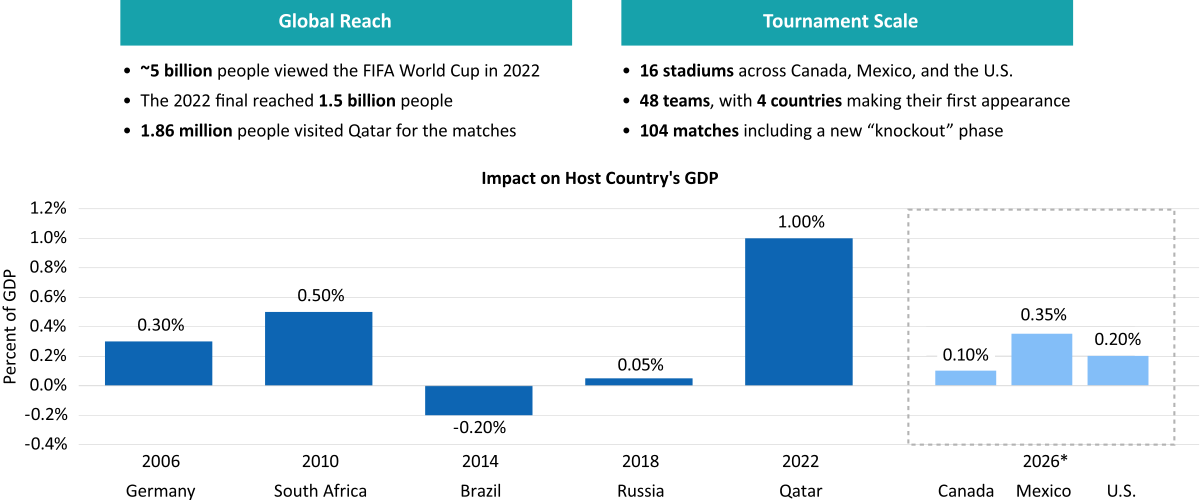
The 2026 FIFA World Cup will be the largest tournament in history. A big reason why is they have expanded the format, going from 32 teams to 48. We have done similar things in the U.S., for example, by expanding the college football playoffs from four teams to 12. More teams mean more matches, more fans, and ultimately more revenue. Also, for the first time three countries are hosting: the U.S., Canada, and Mexico.
One interesting tidbit: the MetLife Stadium in New Jersey will be temporarily called the New York New Jersey Stadium, because FIFA doesn’t want any corporate sponsor of a stadium to interfere with their sponsors. This is nothing new; the Olympics has done the same for years. Interestingly, for the 2028 Olympics the stadiums can keep the corporate names for a fee, with revenue going to the City of Los Angeles to cover some of the costs of hosting.
The World's Game
How popular is soccer compared to other sports around the world?
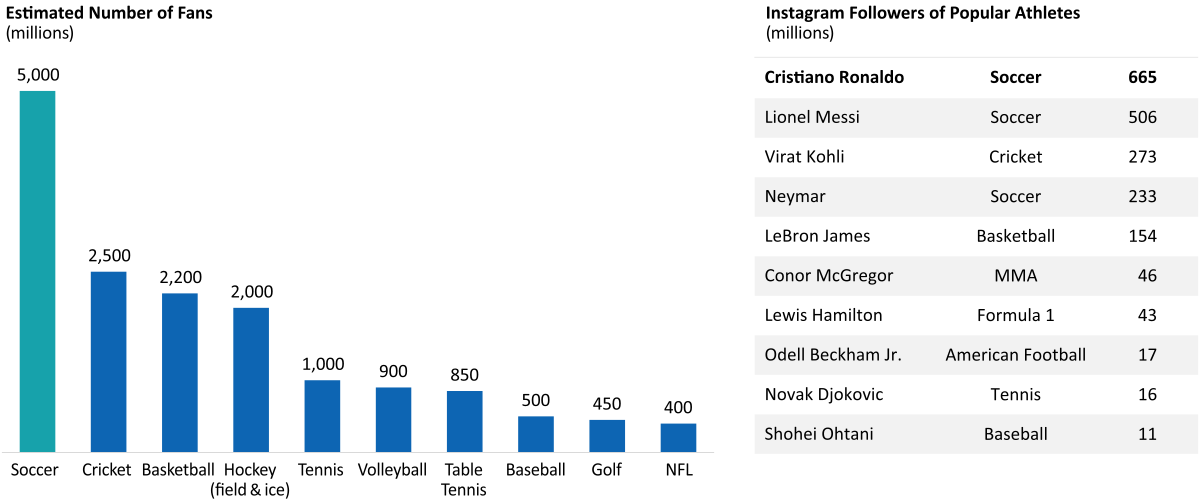
First, let me start with some perspective. I grew up a baseball kid, and today the baseball fanbase is ~500 million people worldwide. Basketball is much more popular worldwide, with a global audience of 2.2 billion. Well, soccer tops their combined fanbase, by a wide margin, as well as every other sport, with a fanbase of 5 billion people – that’s roughly how many people watched the 2022 World Cup and about how many are expected to watch the upcoming tournament via a device or by attending a game. More than 1 billion people will likely watch the finale, which is simply incredible. If one were to go beyond the sport to an individual level, it tells the same story. Cristiano Ronaldo has over 600 million followers on Instagram, Lionel Messi over 500 million; LeBron James, the best player of this generation,150 million, and Shohei, one of the best baseball players ever, just over 11 million.
Record Demand, Record Revenues
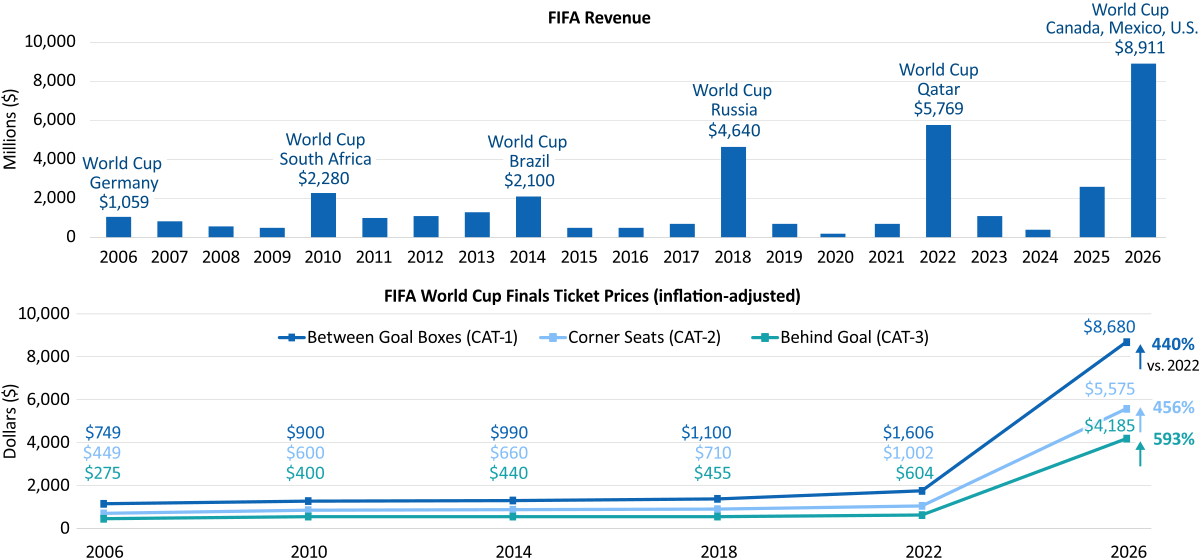
The 2022 World Cup in Qatar and related marketing over the four years from the previous Cup generated $7.6 billion in revenue for FIFA. What are the revenue forecasts for this year’s Cup?
Revenue has been on an upward trend for decades, and this year the World Cup is expected to generate close to $9 billion in 2026 and FIFA expects to earn more than $13 billion for the four-year cycle that includes the FIFA Women’s World Cup that was held in Australia and New Zealand in 2023. A portion of the revenue increase is due to FIFA’s use of dynamic ticket pricing for the first time this year, allowing the cost of seats to fluctuate in real time based on market demand. Prices have skyrocketed, with recent reports putting the range as high as $4,000 to $8,700 per ticket for the finale. There has been an outcry over the prices, and FIFA has distributed a limited number of cheaper tickets.
Despite the staggering revenue, I don’t expect the Cup to have a substantial impact on U.S. GDP given the size of the U.S. economy, though it will be accretive.
FIFA's Flows
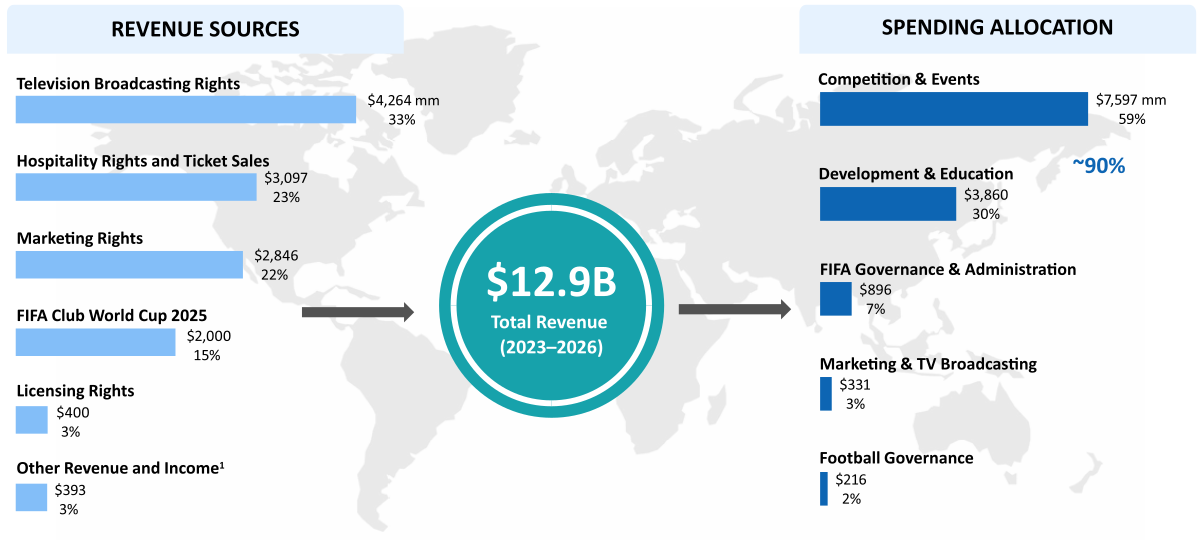
FIFA has a checkered past when it comes to corruption, which begs the question, who's making the money from the games and where is it going?
Looking at the big picture for the expected $13 billion to be raised from the 2026 World Cup marketing cycle, reportedly about $7.6 billion goes to fund competition and events, $3.9 billion to development and education, $900 million to FIFA governance and administration, $330 million to marketing and broadcasting, and $216 million to football governance.
As it relates to the “checkered past of FIFA,” strong governance was not a forte of the organization prior to “Lex FIFA”, let’s discuss the background behind the issues in past cycles. FIFA is governed under Swiss law. Roughly a decade ago, Switzerland overhauled its criminal code, colloquially known as “Lex FIFA,” to address private corruption. Private bribery became a criminal offense rather than a civil matter; previously, private bribery was only criminal if it distorted market competition. In addition, Swiss authorities no longer need someone to file a complaint to launch an investigation; they can act on their own initiative. Lastly, high-ranking sports officials became classified as politically exposed persons, putting them on the same legal level as political figures. As a result, Swiss banks are legally required to heavily scrutinize, track, and flag suspicious financial movements or assets tied to sports leaders.
However, bribery scandals have continued since the criminal code was amended, including alleged bribes related to the 2022 competition. Amid all the scandal, in 2018 the U.S. signed a formal FIFA agreement required to officially secure hosting rights for the 2026 Cup. FIFA was likely motivated both by a desire to avoid further accusations of corruption and because the U.S. could provide an expansive and lucrative location.
Economics of the World's Game
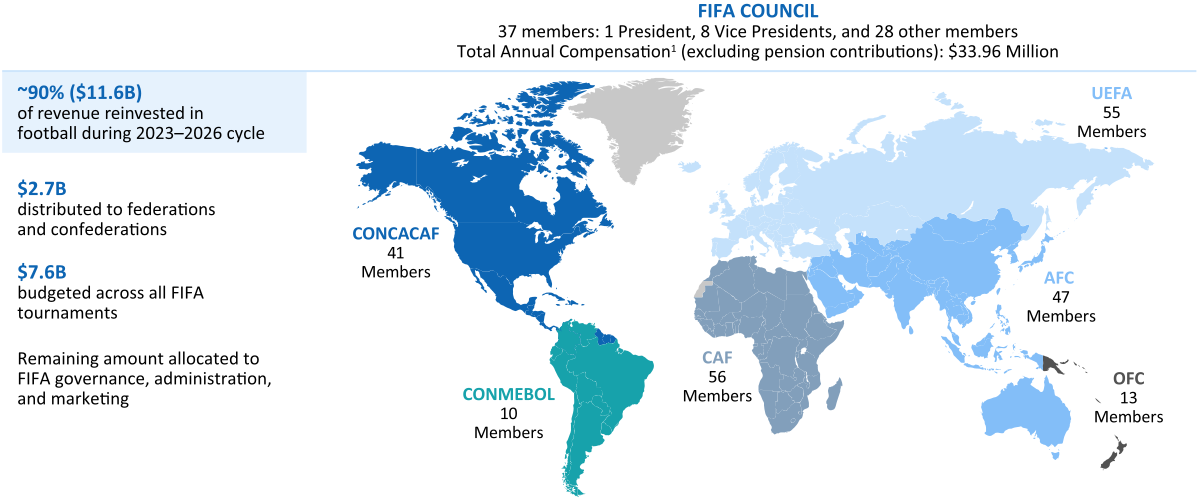
Finally, I’d like to point out that FIFA does seem to do a commendable job of promoting soccer globally and sharing funds with soccer clubs worldwide. Close to 90% of FIFA’s World Cup revenue is reinvested into soccer. FIFA both provides competing countries millions of dollars in funds to distribute to their teams and provides funding to private teams that release their players to compete on national teams.
It is most likely FIFA will have a stigma of some corruption for years to come, there have been governance changes to reduce it. I will be curious to see how the revenue numbers stack up over the next Cups if the host country is not a large global economy.
Fixed Income Yields and Year-to-Date Returns
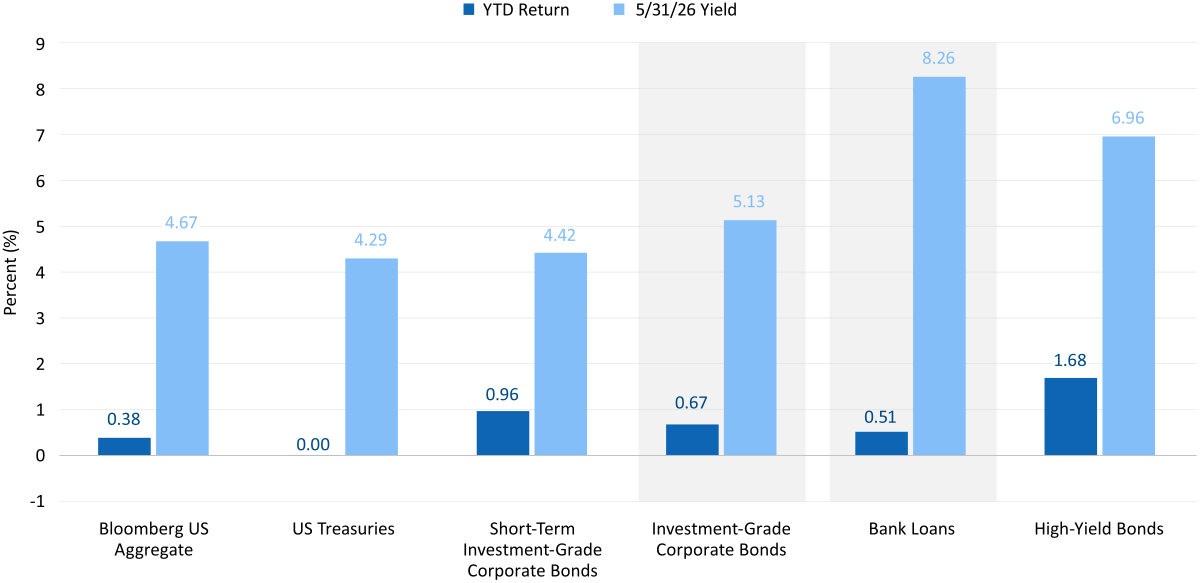
Let’s return to bonds. Where are you seeing opportunities in fixed income today?
Well, I have favored investment-grade corporates, but amid higher inflation, duration has been a headwind. Still, they have returned 67 basis points for the five months ending in May, outpacing the Agg. I continue to view IG corporates as a solid allocation. And bank loans continue to offer attractive income, with a yield around 8.2%, the highest in traditional fixed income. Duration has been a key determinant of performance this year given how strong floating-rate and shorter duration debt has performed. This was vastly different than most forecast entering 2026.
Let's close with a personal reflection.
The big word for me this month is perspective. We touched on it with the World Cup. Thousands of people will come to attend games, and billions of people will be watching. The World Cup should be the peak of cultural unity, with fans coming together and sharing in friendly competition. I hope we as Americans don't get caught up in frustrations over immigration, ticket costs, or travel restrictions. We have the potential to be good hosts, welcoming people and appreciating the global popularity of this sport. I hope we will. Don't let the media feed the negativity.
A 10-year Treasury note is a debt obligation issued by the United States government with a 10-year maturity period.
The Atlanta Fed GDPNow provides a running estimate of real GDP growth for the current quarter using available economic data.
Bank loans (or floating-rate loans) are financial instruments that pay a variable or floating interest rate. A floating rate fund invests in bonds and debt instruments whose interest payments fluctuate with an underlying interest-rate level.
A bond is a fixed-income instrument and investment product where individuals lend money to a government or company at a certain interest rate for an amount of time. The entity repays individuals with interest in addition to the original face value of the bond.
The Bloomberg US Aggregate Bond Index (Agg) is composed of investment-grade U.S. government bonds, invest-ment-grade corporate bonds, mortgage pass-through securities, and asset-backed securities, and is commonly used to track the performance of U.S. investment-grade bonds.
Capital Expenditure (CapEx) is the money a company spends to acquire, upgrade, or maintain long-term, physical assets.
Consumer Confidence measures consumers’ attitudes and optimism about the economy and their personal financial situation.
Coupon refers to the interest payment that a bond issuer promises to pay to a bondholder.
Fixed income refers to assets and securities that pay a set level of income to investors, typically in the form of fixed interest or dividends.
Investment grade refers to the quality of a company's credit. To be considered an investment grade issue, the company must be rated at 'BBB' or higher by Standard and Poor's or Moody's.
An investment-grade bond is a type of bond that is considered to have a relatively low risk of default.
The ISM Manufacturing Index is a monthly economic indicator published by the Institute for Supply Management (ISM) that gauges the health of the U.S. manufacturing sector.
Treasury rate (or yield) refers to the interest rate at which the U.S. government borrows money by issuing Treasury securities.
Yield is the income returned on an investment, such as the interest received from holding a security.
A yield curve plots the interest rates of bonds that have equal credit quality but different maturity dates.
Yield-to-Worst is the lowest potential yield that can be received on a bond without the issuer defaulting.
Any performance data quoted represents past performance, which does not guarantee future results. Index performance is not indicative of any fund’s performance. Indexes are unmanaged and it is not possible to invest directly in an index. For current standardized performance of the funds, please visit www.AristotleFunds.com.
The views expressed are as of the publication date and are presented for informational purposes only. These views should not be considered as investment advice, an endorsement of any security, mutual fund, sector or index, or to predict performance of any investment or market. Any forward-looking statements are not guaranteed. All material is compiled from sources believed to be reliable, but accuracy cannot be guaranteed. The opinions expressed herein are subject to change without notice as market and other conditions warrant.
Investors should consider a fund’s investment goal, risk, charges and expenses carefully before investing. The prospectus contains this and other information about the fund and can be obtained at www.AristotleFunds.com. It should be read carefully before investing.
Investing involves risk. Principal loss is possible.
A full list of holdings can be found at www.aristotlefunds.com and are subject to risk and to change at anytime. Any discussion of individual companies is not intended as a recommendation to buy, hold or sell securities issued by those companies.
Aristotle Funds and Foreside Financial Services, LLC are not affiliated with Pacific Life Fund Advisors LLC.
Foreside Financial Services, LLC, distributor.