
December 2025
Homes for the Holidays
Download PDFWe recently sat down with Dominic Nolan, CEO of Aristotle Pacific Capital, to get his analysis of credit markets, the likelihood of further rate cuts, and opportunities in fixed income. We conclude with a speed round of questions and answers, and a personal reflection.
Market Performance
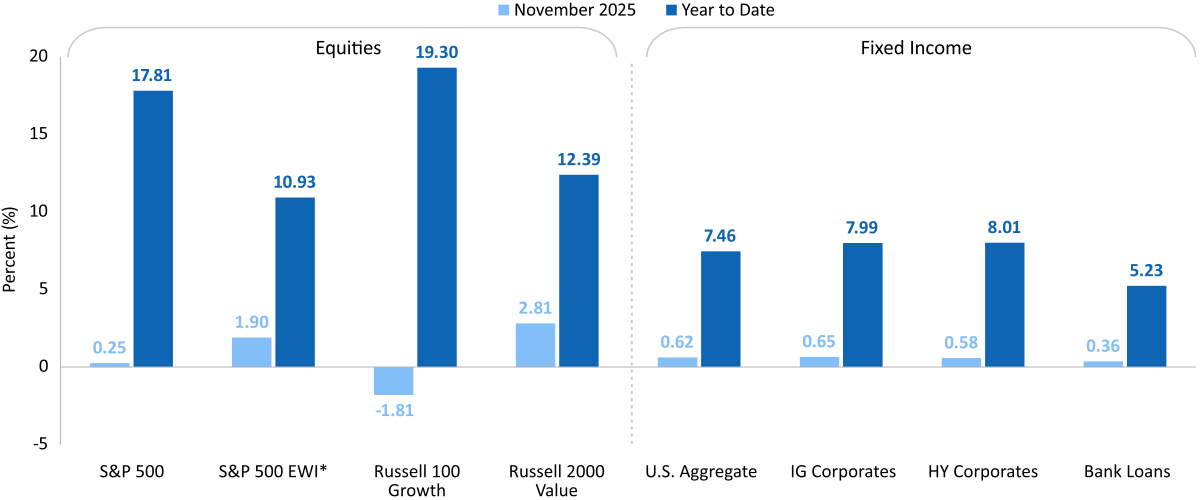
November was largely positive for stock and bond performance. What happened?
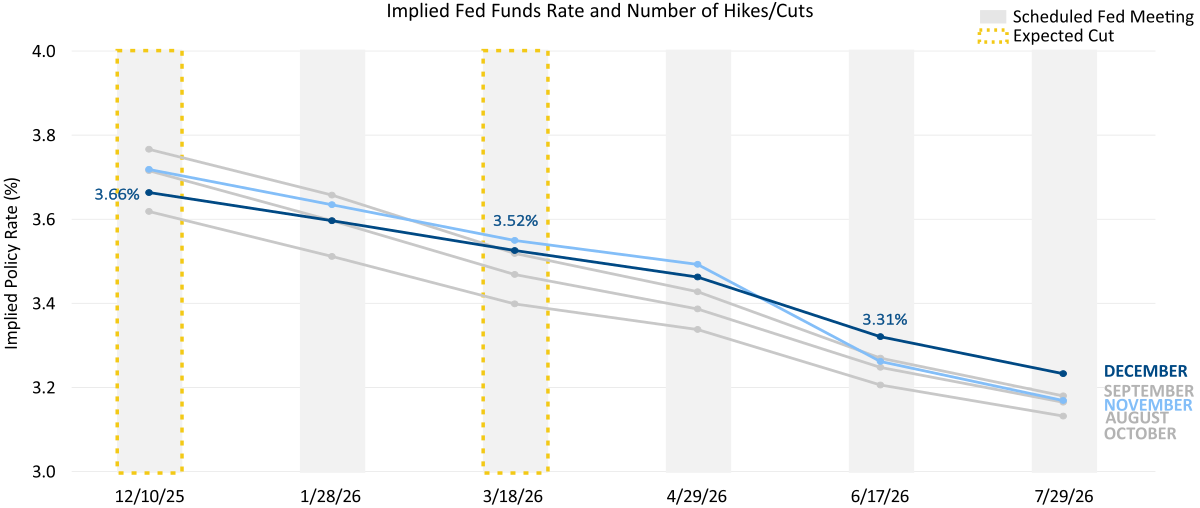
There were a few key tailwinds. The government shutdown ended. New York Federal Reserve President John Williams stated that monetary policy is modesty restrictive and there is room to move the federal funds rate closer to neutral, contributing to market optimism for a rate cut in December. Most importantly, companies continued to report strong earnings, with those in the S&P 500 Index growing earnings on average roughly 13% in the third quarter versus a year earlier, and 83% of them exceeding earnings per share estimates.
With that said, the gains were modest in November, with more of a value tilt than earlier in the year. The S&P 500 rose just 25 basis points (bps) in November, yet it is still up 17.8% year to date. By contrast, the S&P 500 Equal Weight Index rose 1.9% last month and is up 10.9% for the year. The Russell 1000 Growth Index declined 1.8% last month and is up 19.3% for the year. The Russell 2000 Value Index out shown them all last month, rising 2.8%, and is up 12.4% for the year.
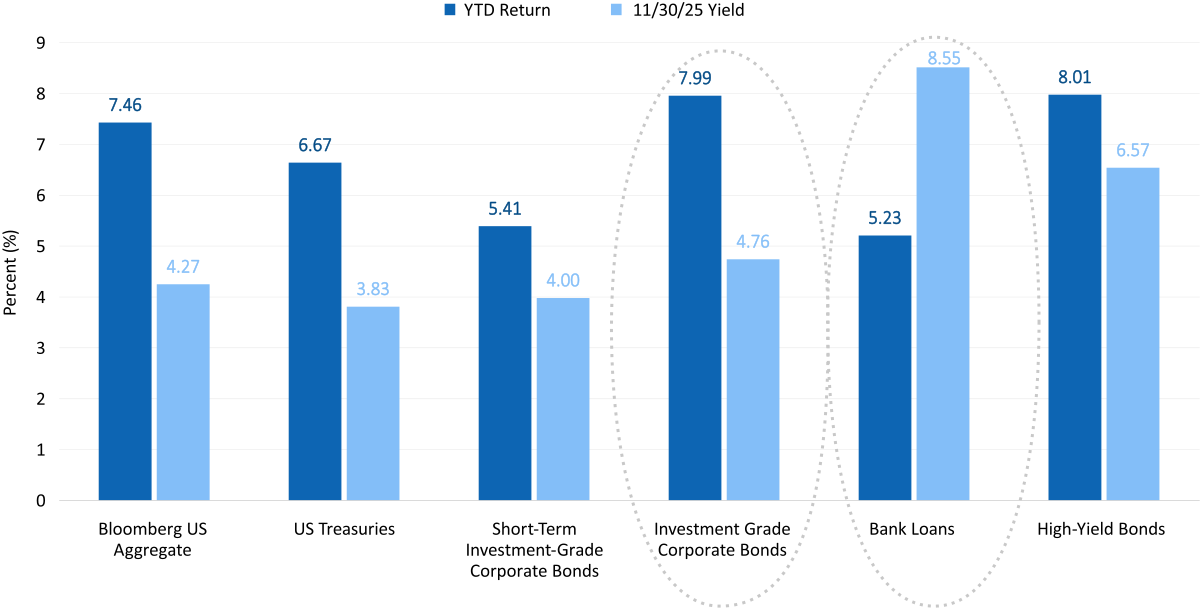
Fixed income also performed modestly well last month. The Bloomberg US Aggregate Bond Index, as well as investment-grade and high-yield corporates all returned close to 60 bps in November, now in the 7.5% to 8% return range for the year. Banks loans returned 36 bps in November and are up 5.2% for the year.
Mag 7 + Broadcom
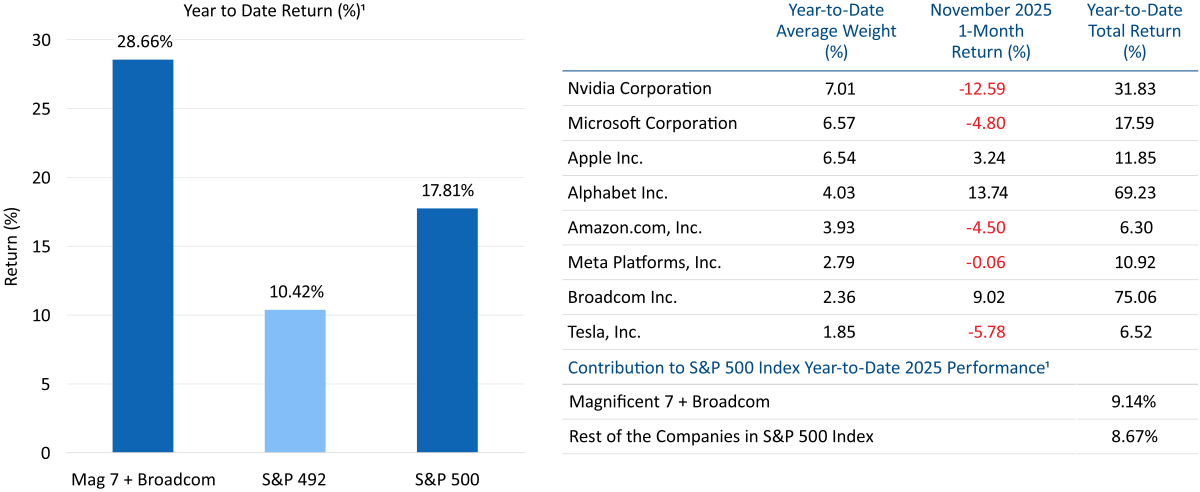
Anything notable about the Magnificent 7?
Performance was mixed for the Mag 7, plus Broadcom, with Alphabet on the high end, returning 13.7% in November, and Nvidia on the low end, declining 12.6%. Still, these eight companies have returned 28.7% year to date, far outpacing the S&P 500. One highlight: We added Broadcom a few months ago to this watch list and it has returned the most this year, 75.1%, and last I checked its market cap was about $1.8 trillion, higher than Meta’s roughly $1.7 trillion market cap. Conventional wisdom has not included Broadcom in the Mag 7, but we definitely will continue including the company in this group.
U.S. Treasury Yield Curve
Fed Futures
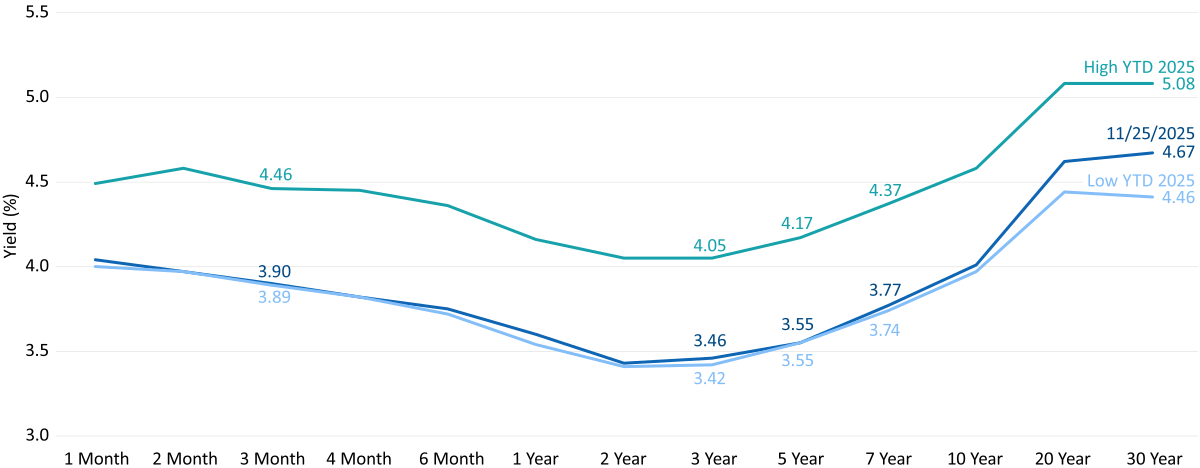
U.S. Treasury yields declined in November. What pulled them lower?
Yields have declined about 60 basis across maturities from the highs. The main drivers of that decline have been expectations of further Federal Reserve rate cuts, softening economic data, and conventional wisdom viewing risk premiums as somewhat rich.
The curve is normalizing. The 10-year Treasury yield remains above 4% and the shorter maturities are below 4%, which is the inverse of their relationship just two years ago.
Economic Dashboard
How is the economy doing?
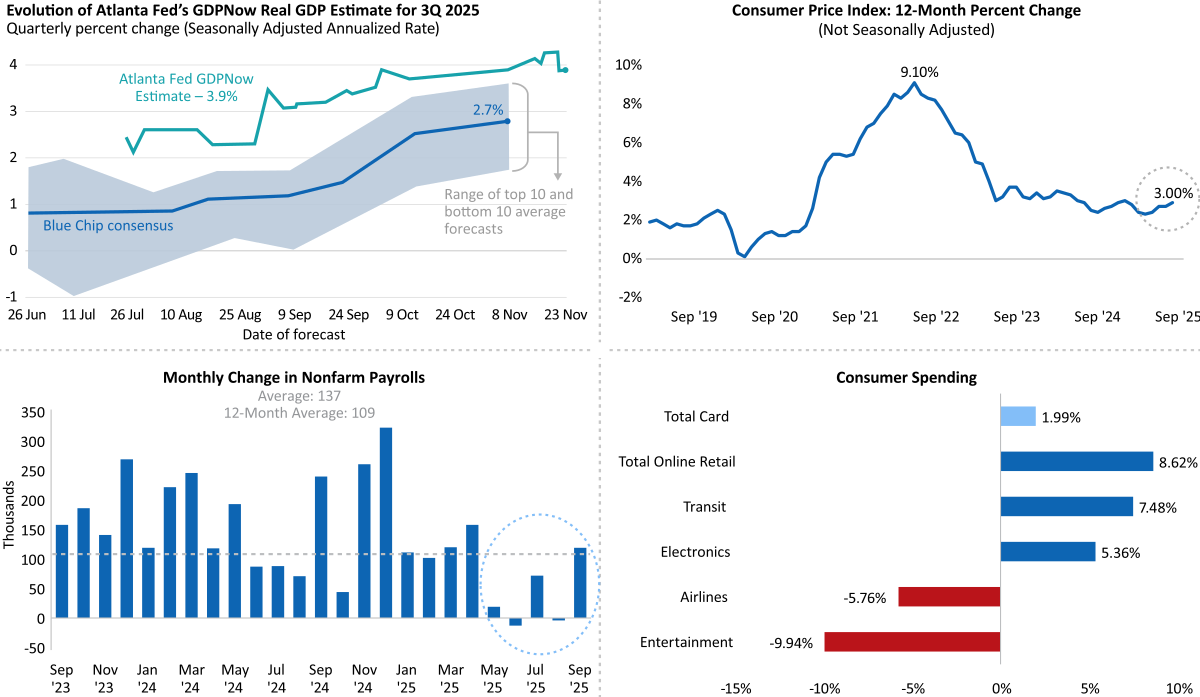
We continue to see a mix of strengths and weaknesses. The Atlanta Fed’s GDPNow indicator recently logged an estimated 3.5% growth rate for the third quarter, which suggests a healthy economy, though it has been trending down from above 4% in November. Keep in mind that at the beginning of year consensus pointed to a slowdown in the economy and a growth rate of 2%.
Meanwhile, due to the recently ended government shutdown we are missing the October CPI data, but before then inflation had been sticky at 3% for months. I believe tariffs are contributing to that stickiness, as is the decline in immigration, since it lowers the supply of labor. The labor market has been in an odd equilibrium as the decline in immigration offsets the decline in hiring. Bottom line: I'd say the economy is doing fine but has slowed.
Shopping By The Numbers
Are consumers demonstrating confidence this holiday season?
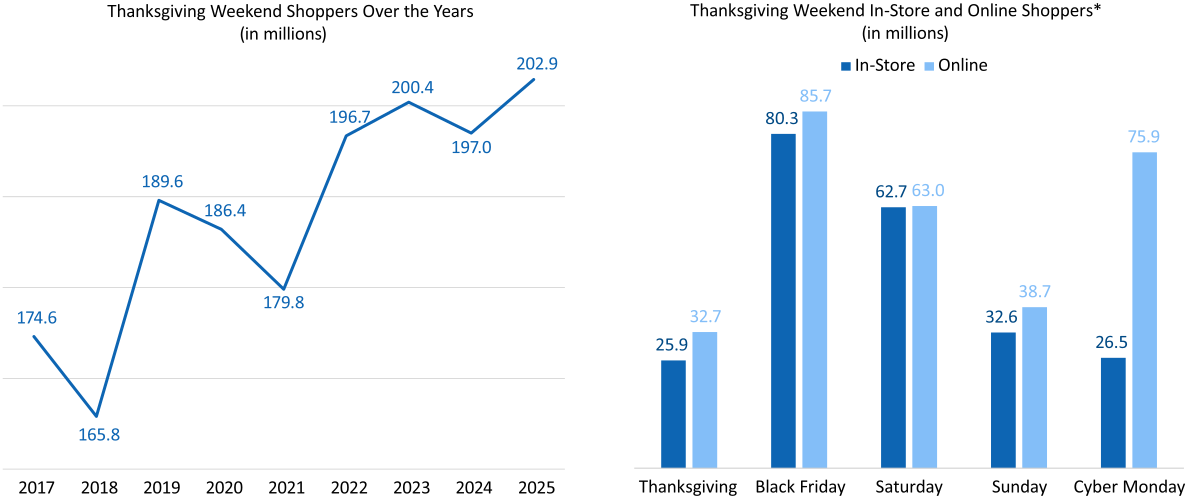
So far, the answer is yes. A record 202.9 million consumers shopped over the five-day Thanksgiving Weekend, according to the National Retail Federation, which had expected 186.9 million. Online shoppers outpaced in-store, but not by much, except for Cyber Monday, where nearly three times as many people bought goods online. Cyber Monday’s online shoppers totaled 75.9 million versus 85.7 million online shoppers active on Black Friday.
Mostly for fun I looked at the NRF’s top 10 sellers for girls and boys. The boys list was the same as last year with Legos in the No. 1 slot once again. On the girls list, clothes and Squish Meows dropped off, and Labubus and KPop Demon Hunters joined the top 10, and, man, I feel old saying those names.
Age Of First-Time Buyers Spikes To 40
Let’s shift to our special topic. The American dream of home ownership today seems out of reach for many people. To begin the discussion, is that statement true?
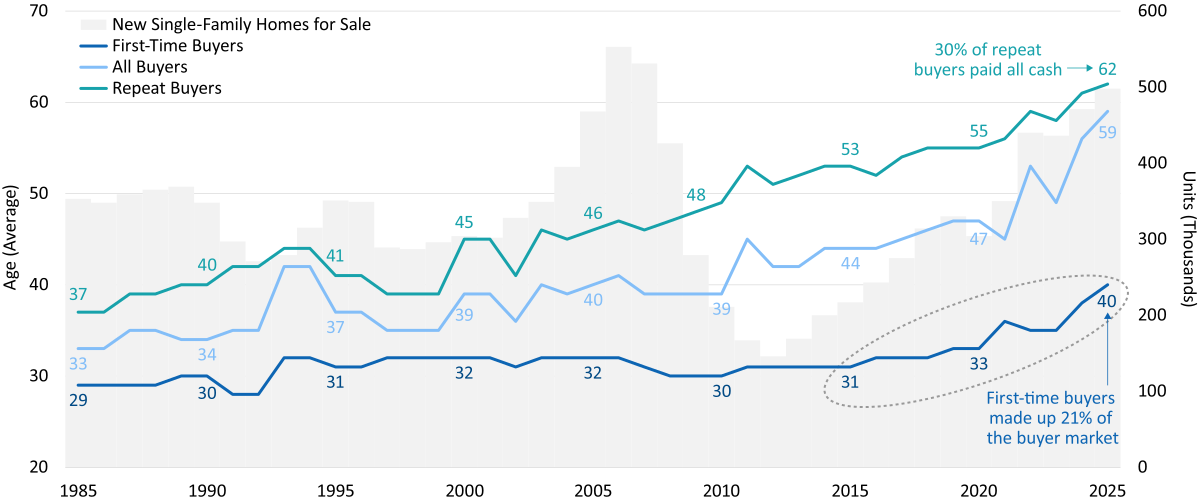
There’s truth to it. The median age of first-time homebuyers recently reached an all-time high of 40 years old, and first-time buyers overall accounted for a record low 21% of all homebuyers, according to the National Association of Realtors. The median age of repeat buyers also has been trending up and recently reached 62 years old.
I see these rising ages as driven by a combination of lower affordability and evolving demographics. Certainly, first-time homebuyers are finding it harder to afford their first home; there’s no question in my mind. Also, younger generations are tending to marry later and have children later, so that suggests they also are delaying their first home purchase. AS it relates to repeat buyers being older, that is driven by demographics rather than affordability, with aging baby boomers moving to smaller homes or buying a second home.
Affordability On The Edge
How did home ownership become so unaffordable?
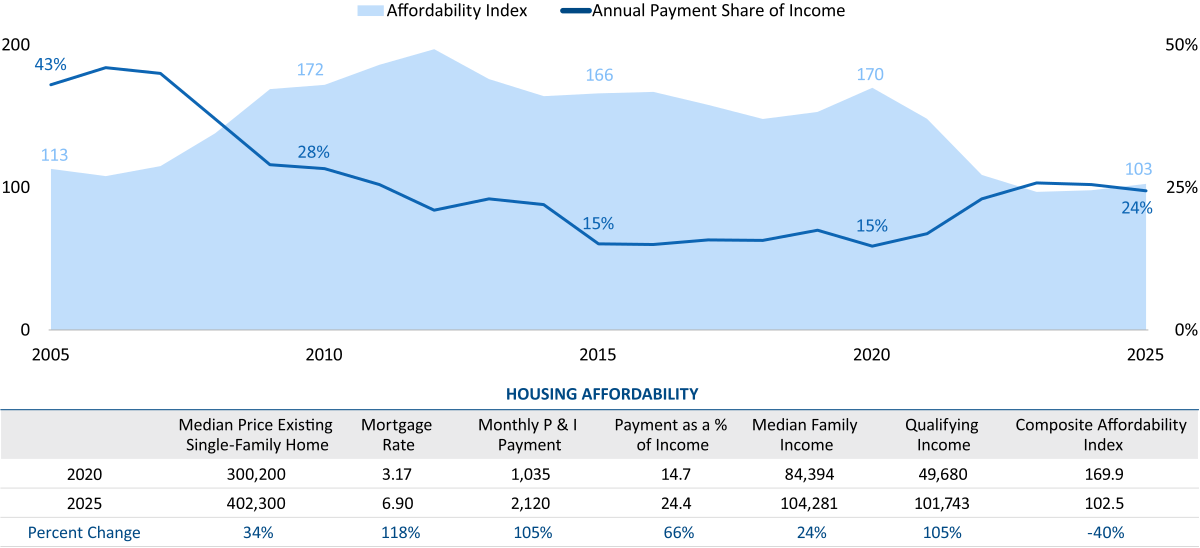
In a nutshell, costs have risen more quickly than income over the past five years. The median price of a home is up about 34% from 2020 at more than $400,000, while the median family income rose about 24% over the same period. In addition, mortgage rates have more than doubled over five years, and the median monthly mortgage payment has also more than doubled over that period. Combining home appreciation and mortgage rates, the average payment has doubled since 2020.
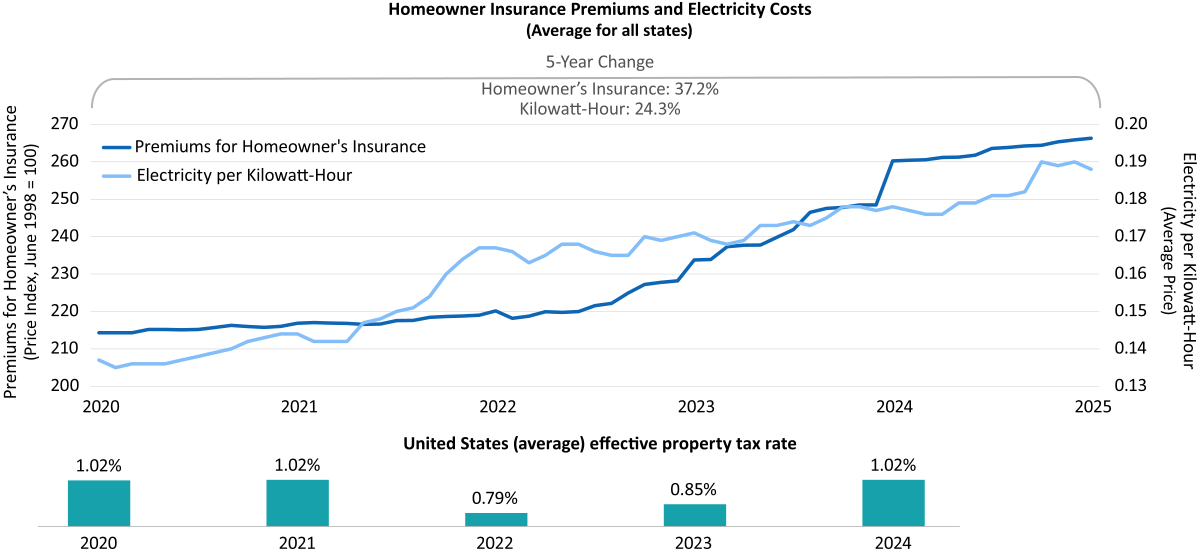
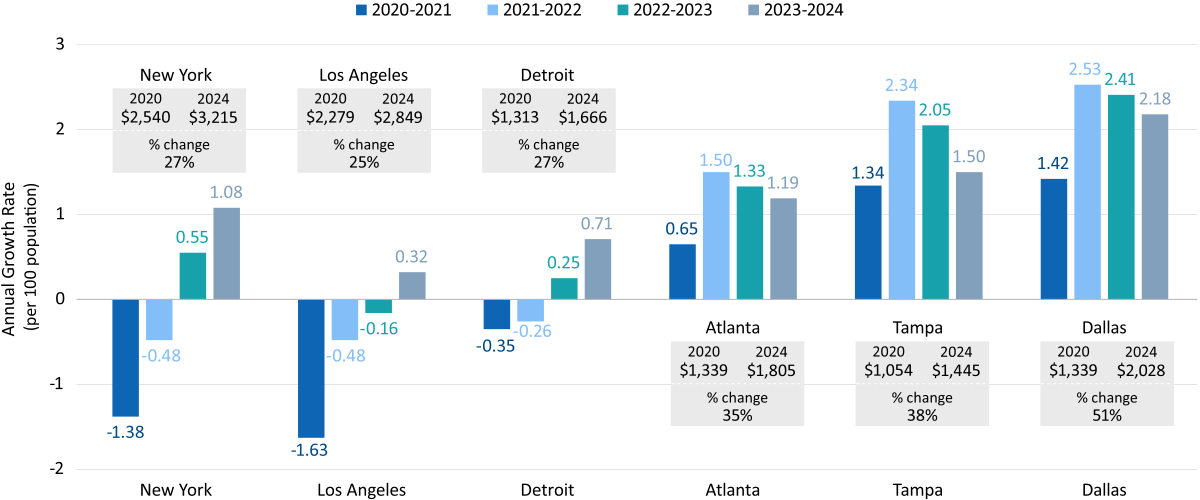
Unfortunately, it doesn’t stop there. Homeowner’s insurance has also increased faster than income, rising 37.2% over five years. Property taxes also have increased more than income, and energy costs have roughly kept pace with rising income. There simply is no relief for would be homebuyers.
Beyond The Mortgage
Who Wins The Affordability Battle?
What do you anticipate for home prices and sales in 2026?
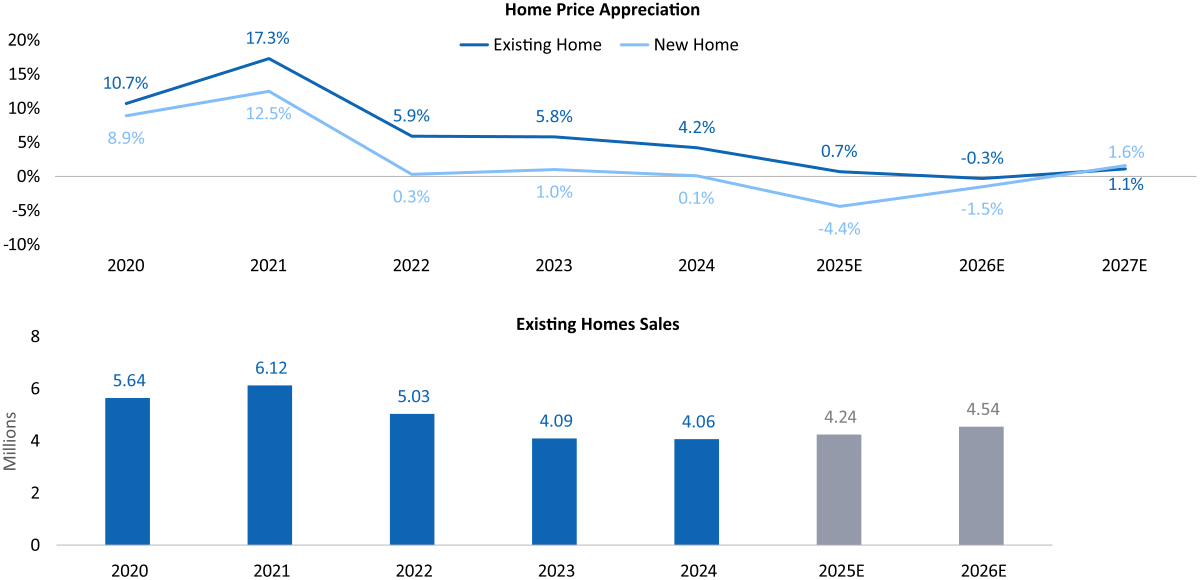
The home price forecast from Zelman – led by the excellent market analyst Ivy Zelman – over the next two years is close to flat. New home prices are expected to decline 1.5% in 2026 and rise 1.6% in 2027, while existing home prices should decline 0.3% next year and rise 1.1% in 2027. Sales activity should increase modestly next year as interest rates decline and increase in 2027.
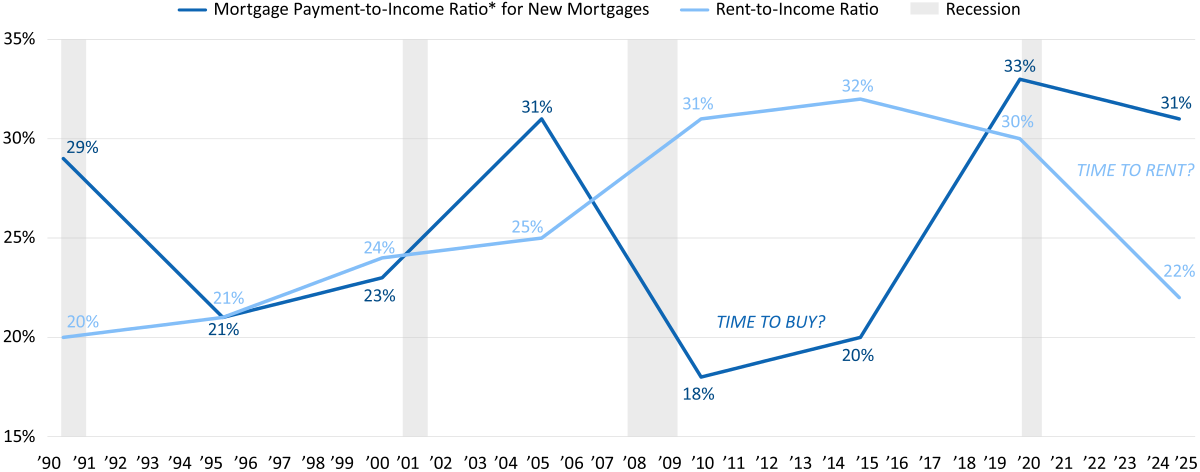
Assuming forecasts are largely correct, those that do purchase a home are unlikely to see much appreciation in the near term in most markets, adding to an argument to rent given lower carrying costs. Hopefully, this price stability helps lead to increased affordability, assuming incomes rise and rates move lower.
Fixed Income Yields and Year-to-Date Returns
Let's talk bonds. Where are you seeing opportunities in fixed income today?
We have been leaning into investment grade corporates for the past three to six months and continue to do so. They have returned close to 8% this year and yielded 4.8% at the end of November. As long as the 10-year Treasury yield remains above 4%, I see duration as a net tailwind, and I believe investment grade corporates can weather a softening economy.
Bank loans have underperformed, but they offer diversification and are yielding about 8.6%. Even if the Fed cuts rates 50 basis points, bank loans will still yield about 8%, which is a healthy carry and hedge against rate volatility, in my view.
Time for the random round. I’ll give you a word or phrase, and you tell me the first thing that comes to your mind. First: Tether buying gold
Tether has earned billions on their popular stablecoin and has a lot of money to play with.
Aggressive private credit marks.
With so much money flowing into private credit, we have seen some minor or idiosyncratic blowups. The aggressive marks are part of the backstory. For example, we might own a first lien trading in the mid-80s, and any second lien should trade significantly lower, perhaps in the 40s. Yet we have seen some private credit funds marking second liens above the first lien because they have the “regulatory freedom” to do that. There's wonkiness going on.
Google, TPU
NVIDIA is still so dominant, but supplies are constrained, and it's a competitive world. It's inevitable that somebody is going to make a play, and if a company can produce a chip with 90% of what an NVIDIA GPU gives you for substantially lower costs, then it can find an audience.
10% of Meta’s advertisements are suspected frauds
I thought it was higher. Let’s say at least 10%.
What are you watching?
Landman. Another Taylor Sherridan hit.
Favorite Christmas ornament?
Every year we place an ornament on our tree that we purchased while traveling.
Let's close with a personal reflection.
The holidays are a great time to be with people you want to spend time with and your family – hopefully those are the same people. Every holiday season is a blessing. Pause and remember that.
A 10-year Treasury note is a debt obligation issued by the United States government with a 10-year maturity period.
The Atlanta Fed GDPNow provides a running estimate of real GDP growth for the current quarter using available economic data.
Bank loans (or floating-rate loans) are financial instruments that pay a variable or floating interest rate. A floating rate fund invests in bonds and debt instruments whose interest payments fluctuate with an underlying interest-rate level.
A bond is a fixed-income instrument and investment product where individuals lend money to a government or company at a certain interest rate for an amount of time. The entity repays individuals with interest in addition to the original face value of the bond.
The Bloomberg US Aggregate Bond Index (Agg) is composed of investment-grade U.S. government bonds, invest-ment-grade corporate bonds, mortgage pass-through securities, and asset-backed securities, and is commonly used to track the performance of U.S. investment-grade bonds.
Capital Expenditure (CapEx) is the money a company spends to acquire, upgrade, or maintain long-term, physical assets.
Consumer Confidence measures consumers’ attitudes and optimism about the economy and their personal financial situation.
Coupon refers to the interest payment that a bond issuer promises to pay to a bondholder.
The Department of Government Efficiency (DOGE) is an initiative by the second Trump administration in the United States. Its stated objective is to modernize information technology, maximize productivity, and cut excess regulations and spending within the federal government.
Fixed income refers to assets and securities that pay a set level of income to investors, typically in the form of fixed interest or dividends.
Investment grade refers to the quality of a company's credit. To be considered an investment grade issue, the company must be rated at 'BBB' or higher by Standard and Poor's or Moody's.
An investment-grade bond is a type of bond that is considered to have a relatively low risk of default.
The ISM Manufacturing Index is a monthly economic indicator published by the Institute for Supply Management (ISM) that gauges the health of the U.S. manufacturing sector.
Treasury rate (or yield) refers to the interest rate at which the U.S. government borrows money by issuing Treasury securities.
Yield is the income returned on an investment, such as the interest received from holding a security.
A yield curve plots the interest rates of bonds that have equal credit quality but different maturity dates.
Any performance data quoted represents past performance, which does not guarantee future results. Index performance is not indicative of any fund’s performance. Indexes are unmanaged and it is not possible to invest directly in an index. For current standardized performance of the funds, please visit www.AristotleFunds.com.
The views expressed are as of the publication date and are presented for informational purposes only. These views should not be considered as investment advice, an endorsement of any security, mutual fund, sector or index, or to predict performance of any investment or market. Any forward-looking statements are not guaranteed. All material is compiled from sources believed to be reliable, but accuracy cannot be guaranteed. The opinions expressed herein are subject to change without notice as market and other conditions warrant.
Investors should consider a fund’s investment goal, risk, charges and expenses carefully before investing. The prospectus contains this and other information about the fund and can be obtained at www.AristotleFunds.com. It should be read carefully before investing.
Investing involves risk. Principal loss is possible.
A full list of holdings can be found at www.aristotlefunds.com and are subject to risk and to change at anytime. Any discussion of individual companies is not intended as a recommendation to buy, hold or sell securities issued by those companies.
Aristotle Funds and Foreside Financial Services, LLC are not affiliated with Pacific Life Fund Advisors LLC.
Foreside Financial Services, LLC, distributor.