
February 2026
Gold Rush
Download PDFWe recently sat down with Dominic Nolan, CEO of Aristotle Pacific Capital, to get his analysis of credit markets, the Fed’s upcoming leadership change, and opportunities in fixed income. We conclude with a speed round of questions and answers, and a personal reflection.
Market Performance
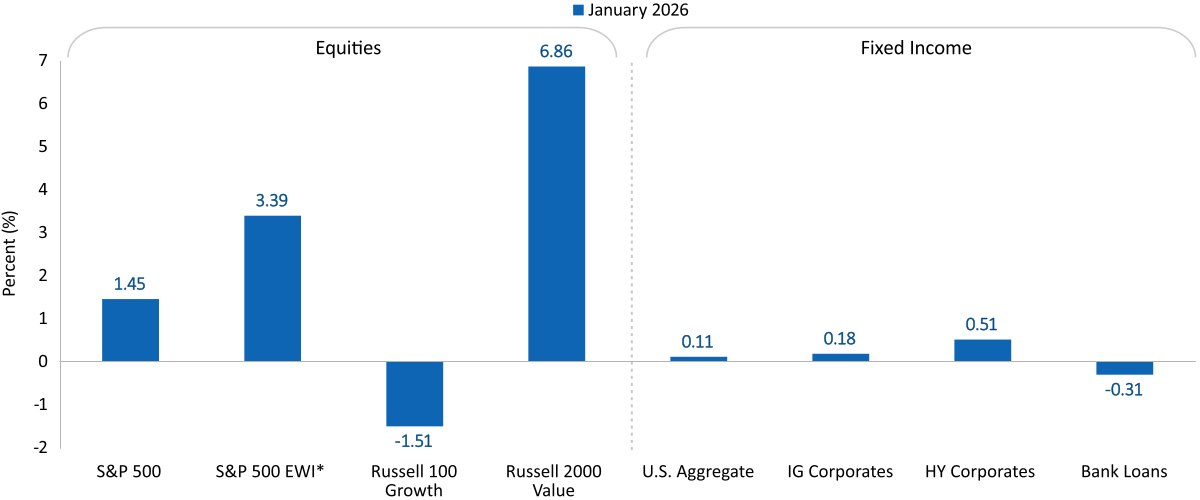
Stocks got off to a good start in January. What happened?
Stocks benefited from a degree of seasonality as January often begins positively, couple this with optimism about the strength of the economy and corporate earnings as a decent launch point. The Russell 2000 Value Index rose nearly 7% in January, a monstrous move for that index and notable shift after a long period of lagging the S&P 500 Index, which rose about 1.5%. Meanwhile, the Russell 1000 Growth Index declined ~1.5%. We are seeing a compression of the large valuation dispersion between growth and value, which is a healthy development for the broader market in my opinion.
The bond market sent mixed signals, and it’s too early to draw conclusions. The Bloomberg US Aggregate Bond Index rose just 11 basis points (bps) in January, while high yield corporates led performance, rising 51 bps.
Mag 7 + Broadcom
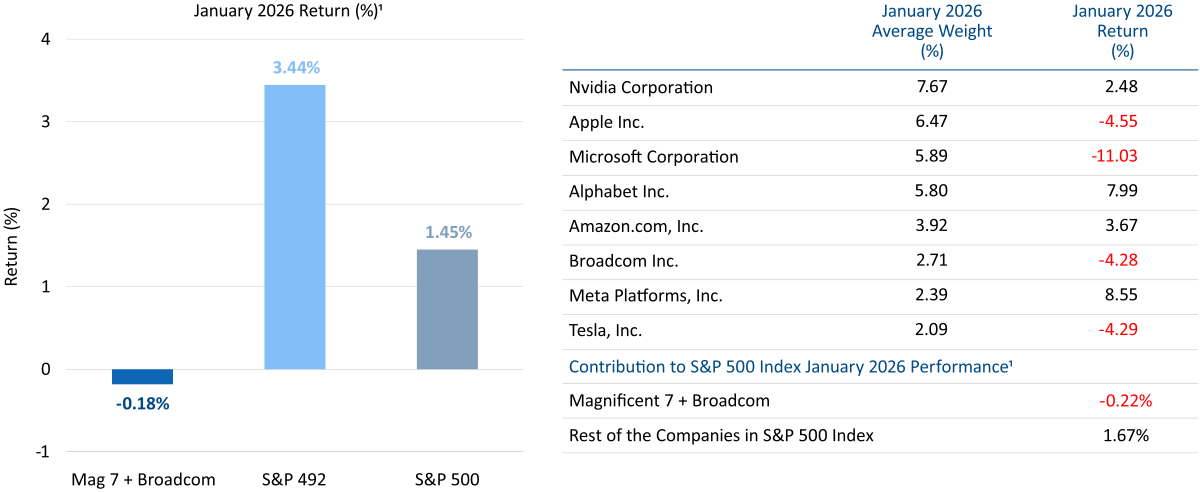
With growth down last month, how did the Magnificent 7+1 perform?
Performance was mixed, with earnings driving the dispersion. Meta led the pack, rising ~8.6% in January due to strong fourth-quarter 2025 results and positive comments on AI ad monetization. Microsoft had the worst month, declining ~11% due to modest growth in cloud sales and investor concerns that AI could eventually replace many software applications. The Mag 8 group was down 22 basis points, meaning the S&P’s 1.5% gain is thanks to the other 492 companies in the index.
The Apprentice: Fed Edition
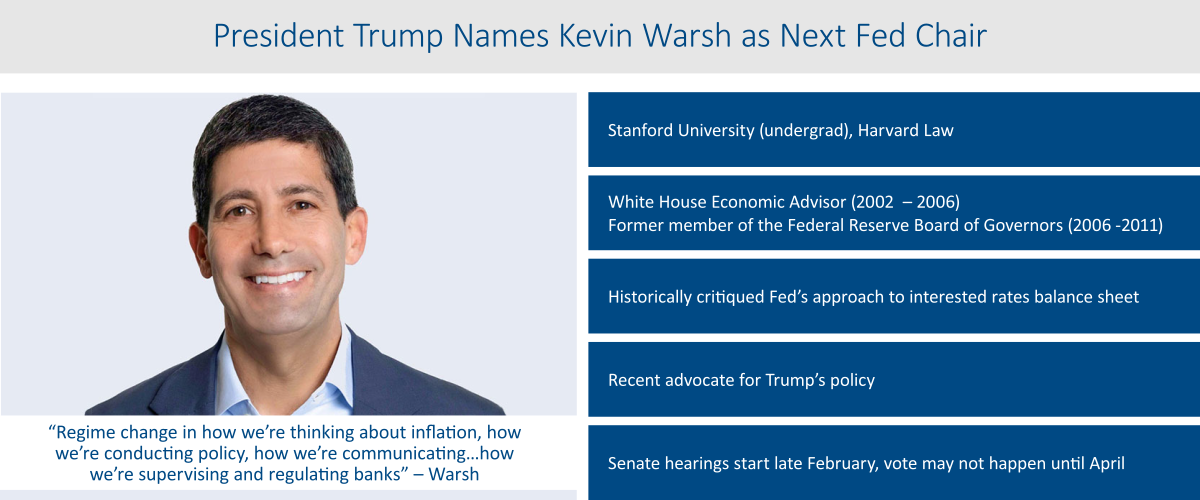
President Donald Trump has named Kevin Warsh to succeed Jerome Powell as chair of the Federal Reserve when his term ends in May. Your thoughts?
The confirmation process may not be easy. However, Warsh checks many qualification boxes, from his education at Stanford University and Harvard Law School to his career in finance to serving as a Fed governor during two presidential administrations.
He has criticized the Fed, particularly its balance sheet expansion, and the Street views him as hawkish, which strikes me as overstated. I see a near zero chance of even being nominated if he leans hawkish on interest rates given the President’s public statements.
My base case is that under his leadership the Fed shrinks its balance sheet, which somewhat pressures the long end of the yield curve, while cutting short-term rates. Lower rates reduce the cost of the budget deficit, incentivize leverage, and typically support asset prices. However, rate cuts can be viewed as inflationary, leading to higher long-term rates and thus higher financing costs. Yet if he doesn’t cut rates, he should be prepared to be called many things in the press.
His path becomes easier if productivity rises – which could occur with wider AI adoption – easing inflationary pressure and thus facilitating rate cuts. Alternatively, AI-related job losses could raise the U.S. unemployment rate, which also likely would lower inflation and facilitate rate cuts. Both scenarios are uncertain. Historically, new Fed chairs have faced early challenges, as Paul Volcker did with inflation and Ben Bernanke did with the 2008 financial crisis, and Powell with the pandemic shutdown.
Fed Futures
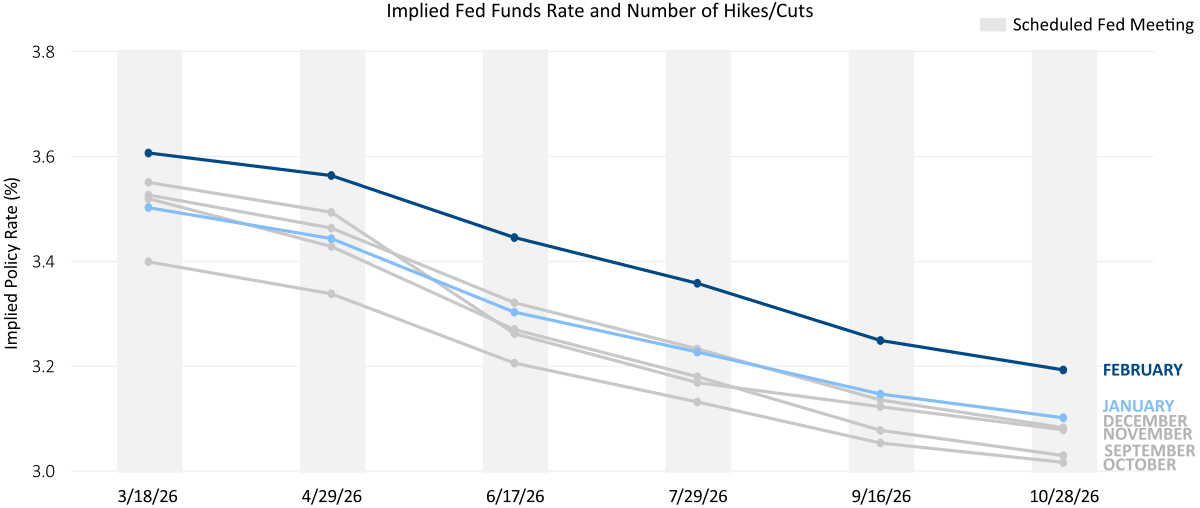
How did the market react to the nomination?
Markets are still digesting the implications. Ten-year Treasury yields initially moved slightly higher after he was nominated – consistent with balance sheet reduction pressuring the long end of the curve – then the yields dipped back down.
Fed futures are still indicating about two rate cuts. If Powell’s Fed takes no action on rates through the end of his term, that would give Warsh room to enact one or two cuts in pretty short order, and then we'll see if conditions indicate a third cut is feasible by year end.
Economic Dashboard
What’s your view on the U.S. economy?
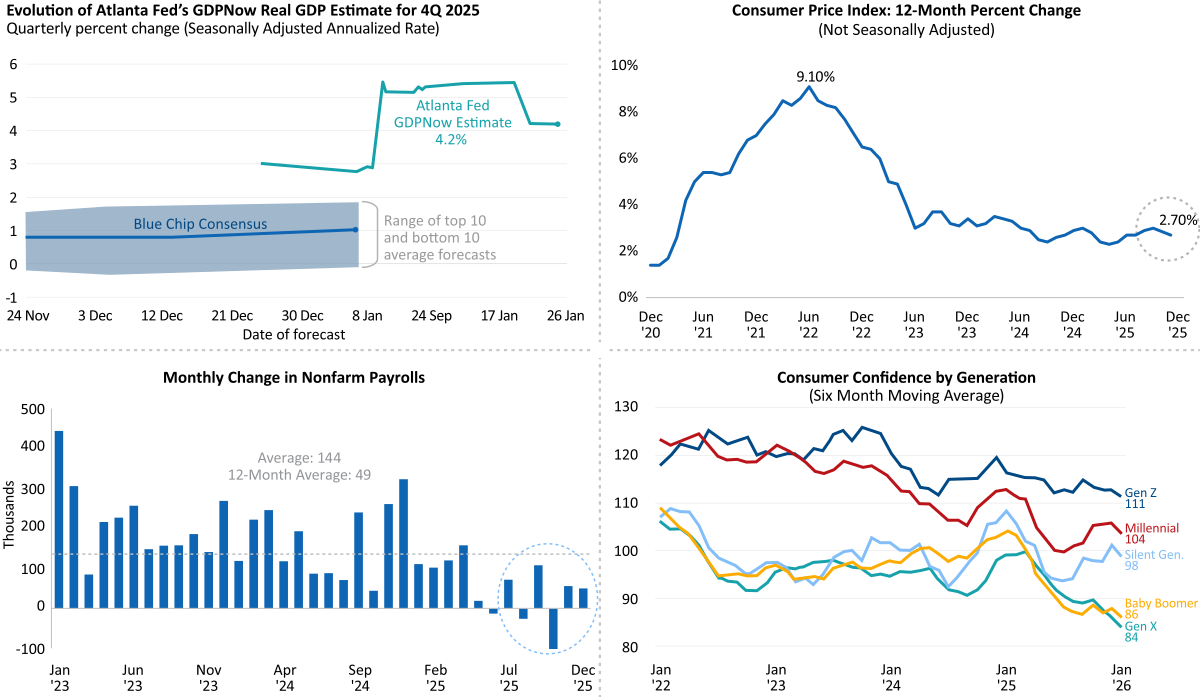
The outlook is mixed but includes upside potential. Employment data continues to suggest a softening labor market. The Consumer Price Index rose 2.7% year-over-year in December, the same as November – as we have this discussion, the CPI for January has yet to be released – which is higher than the Fed would prefer but not concerning.
The key data point to watch is fourth-quarter 2025 GDP growth. Several economists have estimated a roughly 1% real growth rate for the quarter; yet the Atlanta Fed’s GDPNow estimate currently is showing ~4% growth for the quarter – if that proves to be true it will be a remarkable upside surprise. For 2026, I see a case for 3%+ GDP growth supported by productivity gains, investment, and tax refunds.
A Strategic Reserve?
Let’s shift to our special topic: The Gold Rush. Why was 2025 such a strong year for gold?
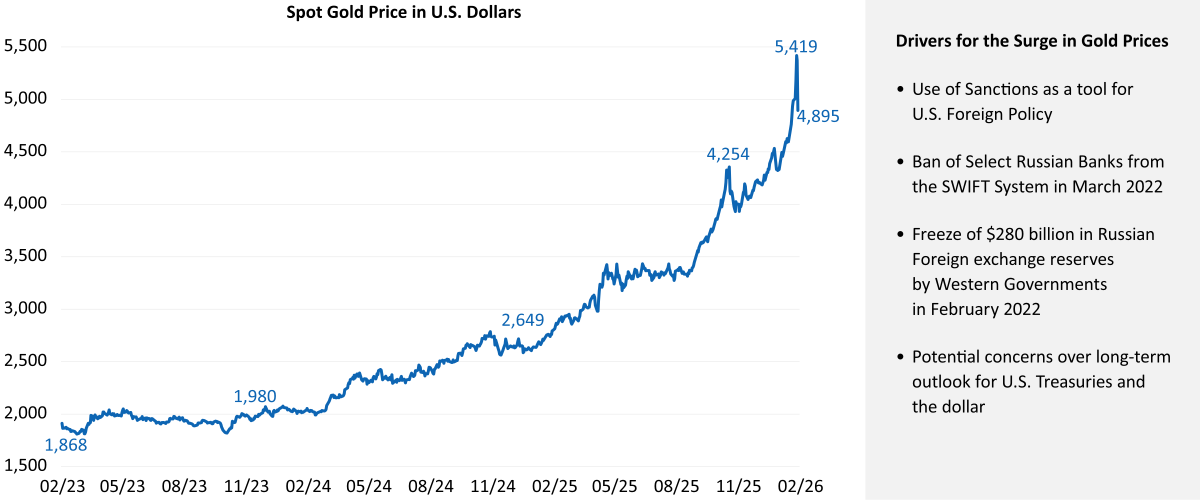
Gold has been rising for more than two years, and 2025 was remarkable. Several tailwinds exist, though none alone explain the magnitude of the rise.
For some context, U.S. sanctions as a foreign policy tool created an incentive to marginally move away from our financial system. The consequences of Russia’s invasion of Ukraine likely have been more significant. Russian banks were removed from the SWIFT payment processing system, and about $280 billion in Russian exchange reserves were frozen by Western governments. Some countries see these actions and may have reconsidered where to park incremental reserves.
In addition, with ever-expanding U.S. government debt, there are concerns over the long-term outlook for U.S. Treasuries and the dollar. Ultimately, the dollar’s value depends on trust and transparency. If those weaken, investors tend to gravitate to gold.
Precious Metals Take the Crown
How are other commodities performing?
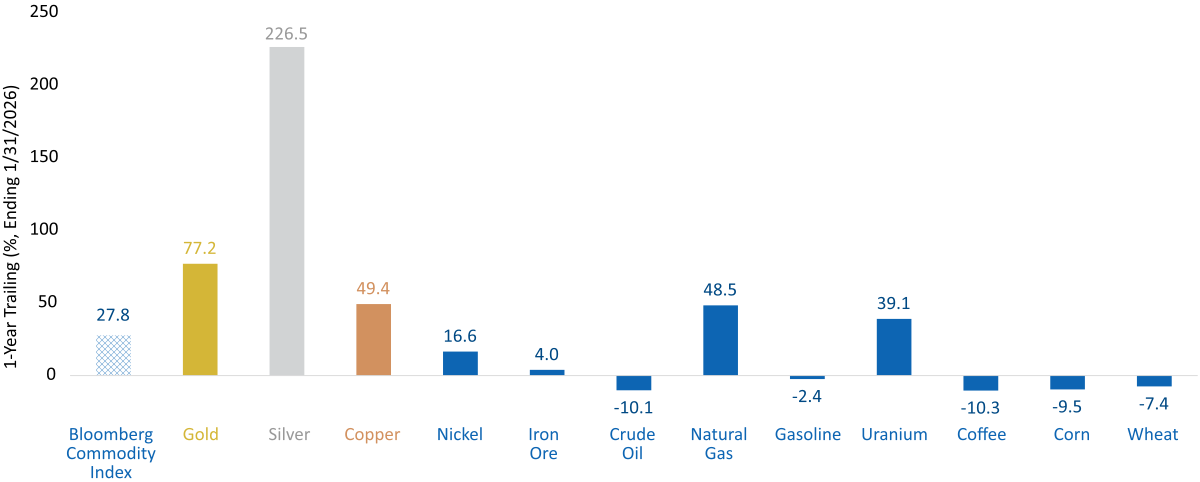
The commodity rally has been concentrated. Silver really stands out – the metal rose an incredible 226.5% in the 12 months through the end of January. Silver is unique because it has both decorative and industrial uses, such as in semiconductors, solar panels, batteries, and medicine. Looking again at gold, 2025 was its highest performing year since 1979, and for the 12 months through January it rose 77.2%.
However, while copper, nickel, natural gas, and uranium all posted double-digit returns for the 12 months ending in January, several other commodities declined in value, including crude oil, coffee, corn and wheat.
The Gold-Oil Relationship
How do you assess the drivers of gold value?
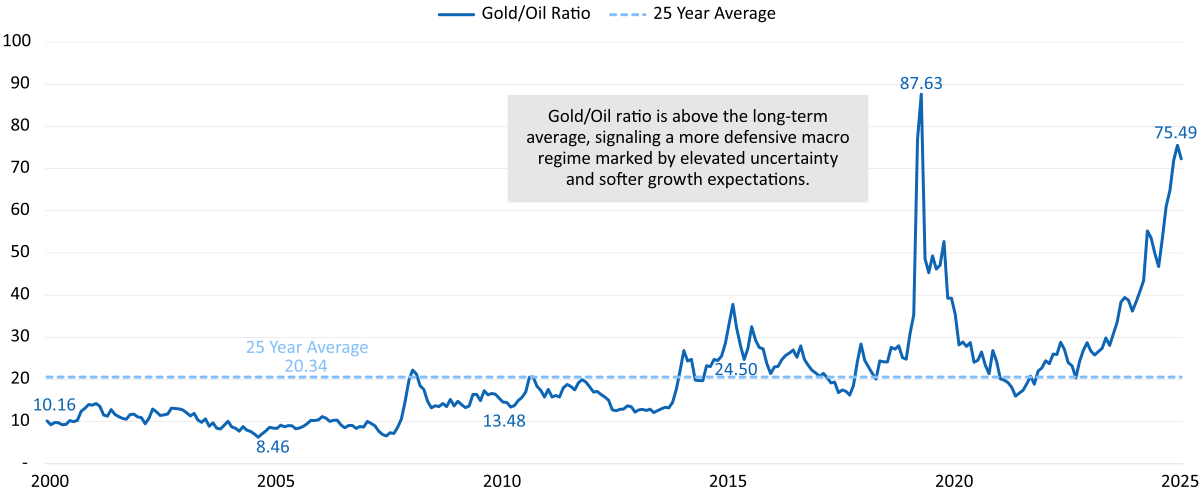
A few key ratios indicate whether gold is rising as an inflation hedge or a lack of trust in the dollar and perhaps other assets. One key metric is the ratio of gold to oil – the amount of oil barrels one could purchase with an ounce of gold. At the end of January, one ounce of gold bought about 75 barrels of oil, far above the long-term average of ~20 barrels. The ratio has spiked dramatically over the past year or so. If inflation were the main tailwind, we would see a steady climb in the ratio rather than a sudden spike, since energy is a key factor in inflation. Thus, the recent ratio spike suggests failing trust is the bigger driver, and over the past 25 years, the ratio was higher only once: during the COVID pandemic.
Rushing Out the Gate
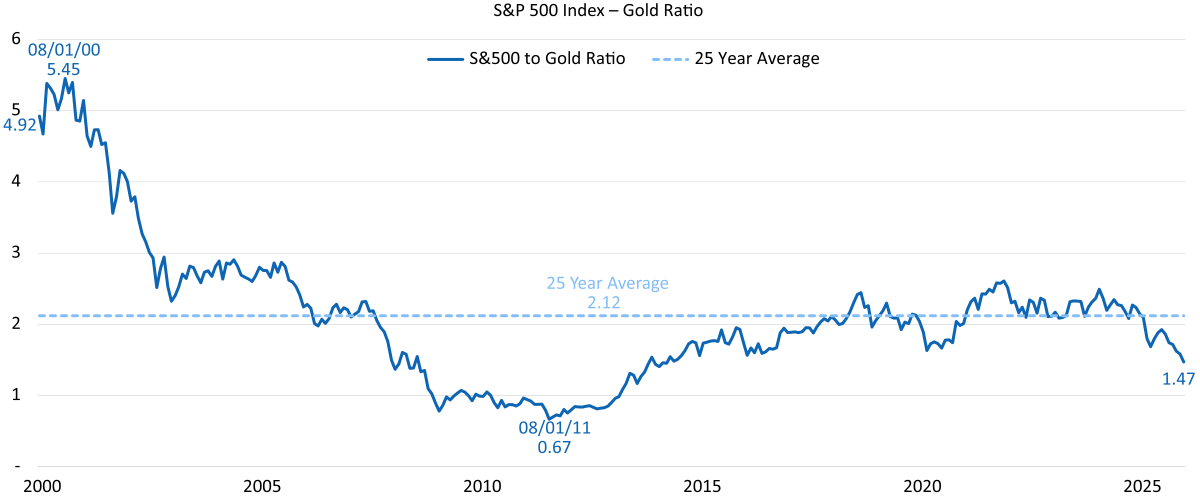
Comparing the S&P 500 Index to gold is another informative metric. Large cap stock prices tend to rise with inflation, thus if inflation were driving asset prices, we would expect large cap stocks and gold to rise in unison, and for the ratio – how many ounces of gold a unit of the S&P 500 could buy – to be stable. Instead, the ratio has been declining and ended January at about 1.5, below the 25-year average of about 2.1.
Gold's Share of Global FX Reserves is on the Rise
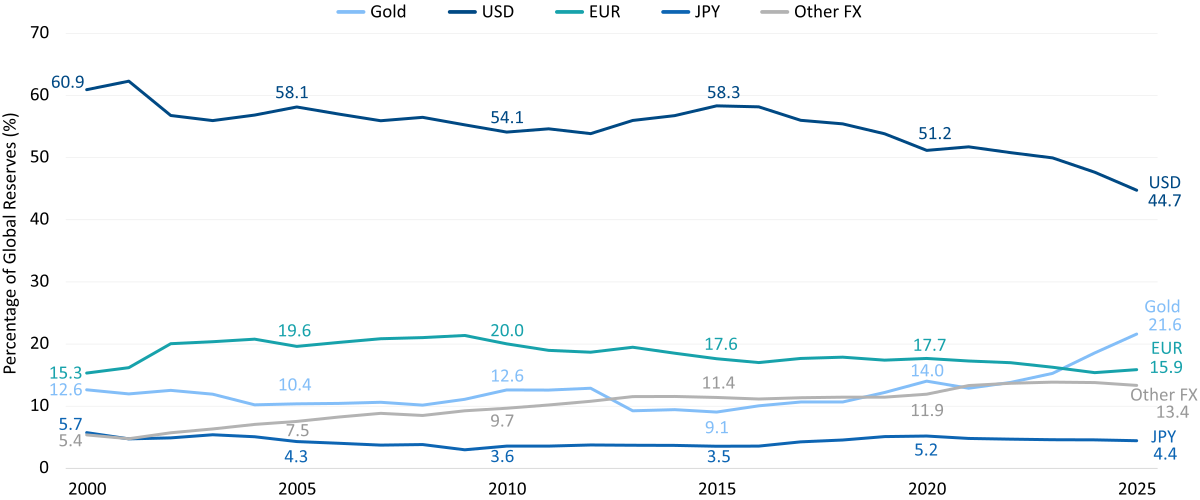
Finally, consider gold’s share of global FX reserves. The U.S. dollar’s share has fallen roughly 15 percentage points over the past 25 years to 44.7% at the end of 2025. To be sure, the dollar is still the largest holding, but that’s a substantial decline. Gold, meanwhile, has risen about 9 percentage points to 21.6% over the same period. The three biggest central bank buyers of gold in 2025 might surprise: Poland, Kazakhstan and Brazil. China was also in the top 10, and they have been reducing their U.S. Treasury exposure for years.
Tether Isn't Just Buying T-Bills
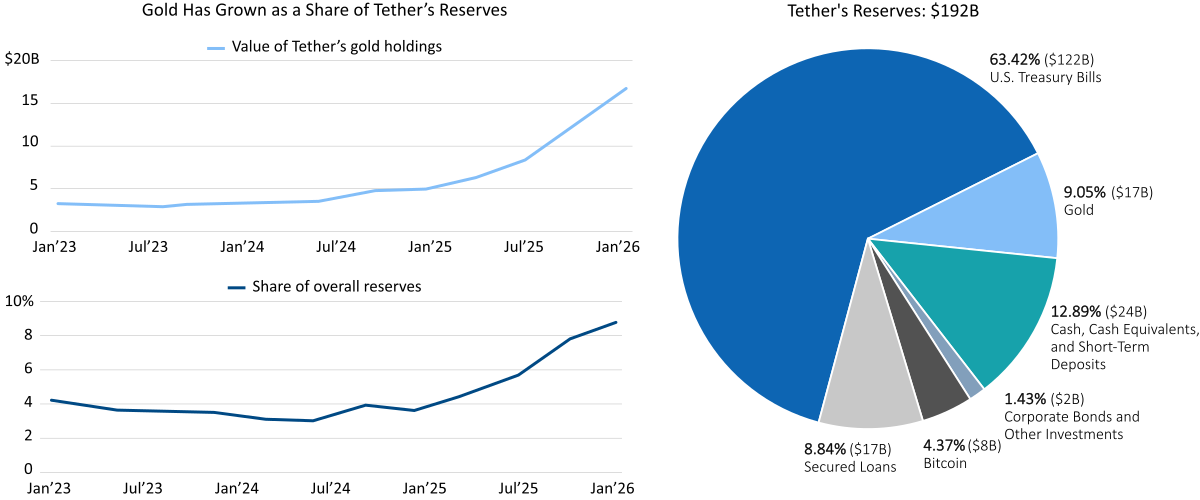
What role is Tether playing in the gold story?
Alongside the central banks of the world, Tether Holdings SA has become one of the biggest players in the gold market. According to a Bloomberg interview with Tether’s CEO Paolo Ardoino, the company has been buying one to two tons of gold a week, bought more than 70 tons in 2025, and holds a total of roughly 140 tons. They hoard their gold in a former nuclear bunker in Switzerland, and it serves as one of the assets backing Tether’s stablecoin, along with U.S. Treasuries. Ardoino expects geopolitical rivals to the U.S. to eventually launch a gold-backed alternative to the dollar, according to Bloomberg. Bottom line: one can think of Tether as the largest marginal buyer of gold.
What are the implications of gold’s rise?
I view gold’s rise as a reflection of decisions rather than a driver of one. The Trump administration’s economic objectives are using more radical financial incentives to push the agenda. This tactic disincentives marginal use of our financial system, and thus, our currency by other countries and central banks. Under those circumstances, the dollar becomes a pressure release valve, and the dollar’s value could weaken for years. A weaker dollar tends to translate to higher demand for gold. This is potentially a negative trend for the U.S. balance sheet and the government’s ability to borrow in the future.
More broadly, a softening dollar and rise in gold reflects a broader challenge to U.S. hegemony, in my view. We have been a singular power since the collapse of the Soviet Union in the early ‘90s. Now there is another economic power on the rise, as well as others seeking to challenge the dominance of the U.S. and our currency.
Fixed Income Yields and Year-to-Date Returns
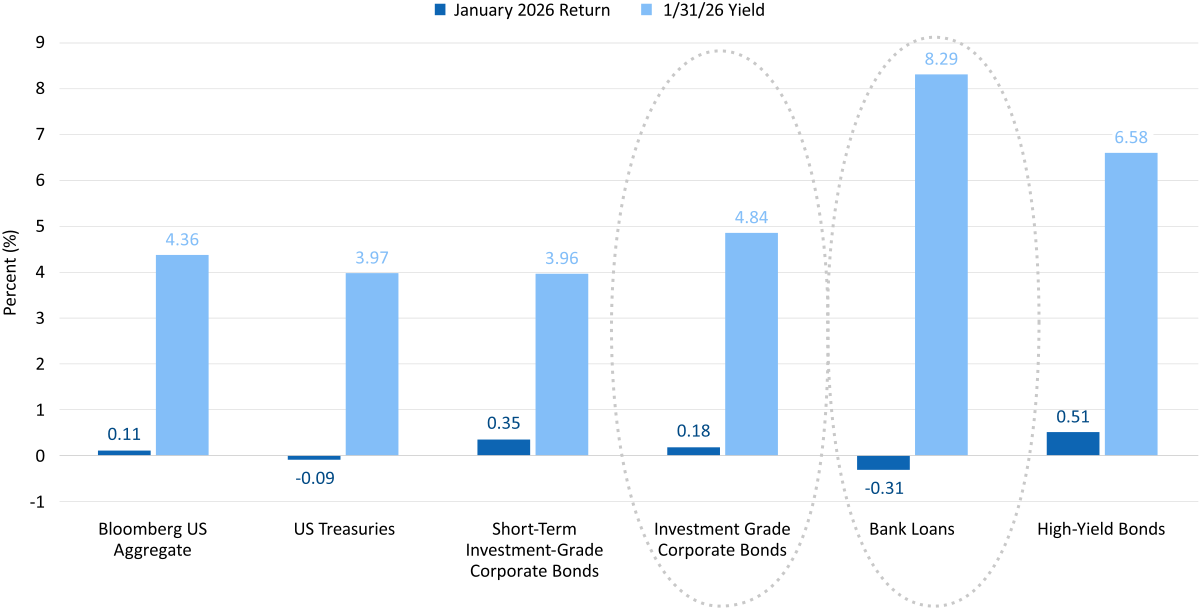
Let’s turn to bonds. Where are you seeing opportunities in fixed income?
In 2025, we pivoted to invest-grade corporate bonds, and duration was a helpful tailwind. In 2026, as discussed, if the new Fed chair reduces its balance sheet, we likely will see pressure on the intermediate to longer sections of the yield curve. Still, I expect longer-term rates to settle below 4% and continue to favor an overweight to duration, though a more modest overweight.
Also, it’s worth noting that floating-rate loans can hedge interest-rate risk. As rates have moved and we have seen volatility play out, I think a floating-rate component can add more value to a portfolio.
Let's close with a personal reflection.
Lately, I have asked a few people whether there is real chaos or simply reports of chaos. I sense a societal panic. My advice, particularly to my kids and other young adults that I speak with, is to remember “the message for the masses is for commercial purpose.” Media reports generally come from profit-seeking businesses, and they exist to gather and steer emotion as much as to inform. So, please don't panic because you're being told to panic.
A 10-year Treasury note is a debt obligation issued by the United States government with a 10-year maturity period.
The Atlanta Fed GDPNow provides a running estimate of real GDP growth for the current quarter using available economic data.
Bank loans (or floating-rate loans) are financial instruments that pay a variable or floating interest rate. A floating rate fund invests in bonds and debt instruments whose interest payments fluctuate with an underlying interest-rate level.
A bond is a fixed-income instrument and investment product where individuals lend money to a government or company at a certain interest rate for an amount of time. The entity repays individuals with interest in addition to the original face value of the bond.
The Bloomberg US Aggregate Bond Index (Agg) is composed of investment-grade U.S. government bonds, invest-ment-grade corporate bonds, mortgage pass-through securities, and asset-backed securities, and is commonly used to track the performance of U.S. investment-grade bonds.
Capital Expenditure (CapEx) is the money a company spends to acquire, upgrade, or maintain long-term, physical assets.
Consumer Confidence measures consumers’ attitudes and optimism about the economy and their personal financial situation.
Coupon refers to the interest payment that a bond issuer promises to pay to a bondholder.
Fixed income refers to assets and securities that pay a set level of income to investors, typically in the form of fixed interest or dividends.
Investment grade refers to the quality of a company's credit. To be considered an investment grade issue, the company must be rated at 'BBB' or higher by Standard and Poor's or Moody's.
An investment-grade bond is a type of bond that is considered to have a relatively low risk of default.
The ISM Manufacturing Index is a monthly economic indicator published by the Institute for Supply Management (ISM) that gauges the health of the U.S. manufacturing sector.
Treasury rate (or yield) refers to the interest rate at which the U.S. government borrows money by issuing Treasury securities.
Yield is the income returned on an investment, such as the interest received from holding a security.
A yield curve plots the interest rates of bonds that have equal credit quality but different maturity dates.
Any performance data quoted represents past performance, which does not guarantee future results. Index performance is not indicative of any fund’s performance. Indexes are unmanaged and it is not possible to invest directly in an index. For current standardized performance of the funds, please visit www.AristotleFunds.com.
The views expressed are as of the publication date and are presented for informational purposes only. These views should not be considered as investment advice, an endorsement of any security, mutual fund, sector or index, or to predict performance of any investment or market. Any forward-looking statements are not guaranteed. All material is compiled from sources believed to be reliable, but accuracy cannot be guaranteed. The opinions expressed herein are subject to change without notice as market and other conditions warrant.
Investors should consider a fund’s investment goal, risk, charges and expenses carefully before investing. The prospectus contains this and other information about the fund and can be obtained at www.AristotleFunds.com. It should be read carefully before investing.
Investing involves risk. Principal loss is possible.
A full list of holdings can be found at www.aristotlefunds.com and are subject to risk and to change at anytime. Any discussion of individual companies is not intended as a recommendation to buy, hold or sell securities issued by those companies.
Aristotle Funds and Foreside Financial Services, LLC are not affiliated with Pacific Life Fund Advisors LLC.
Foreside Financial Services, LLC, distributor.