November 2026
Markets After Midterms
Download PDFWe recently sat down with Dominic Nolan, CEO of Aristotle Pacific Capital, to get his insights on financial markets after the midterm elections, the Fed’s next move, and opportunities in fixed income. We close with a personal reflection.
Market Performance
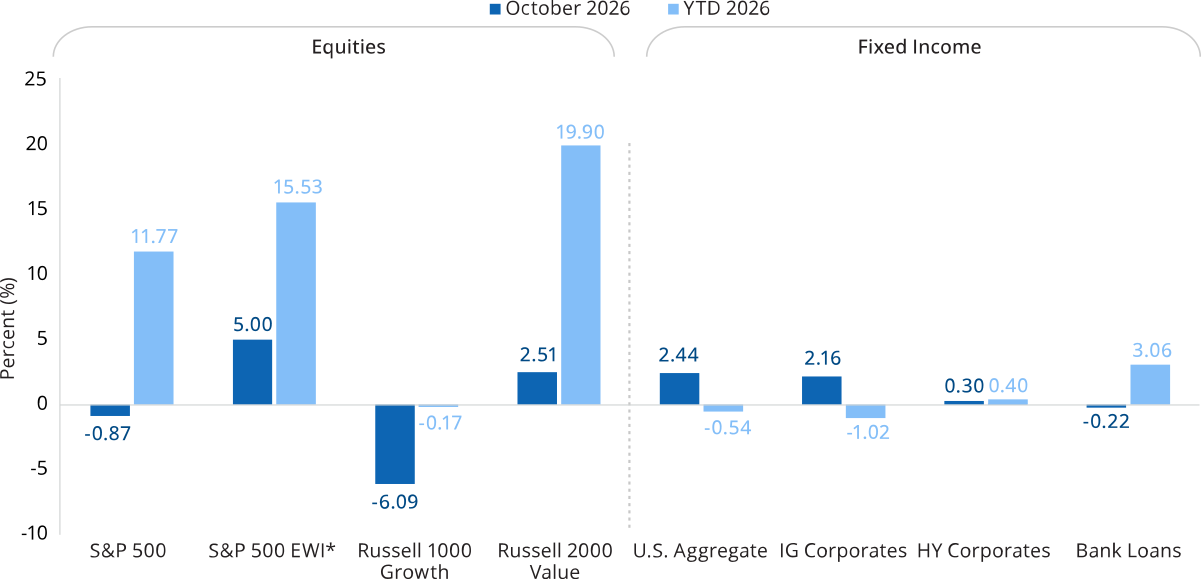
Stocks and bonds were mixed in October. What drove the equity sell-off in the final week?
Earnings did not meet lofty expectations. For example, Intel disappointed on fourth-quarter earnings guidance, and Alphabet reported lower-than-expected search revenue growth for the third quarter. Investors shifted a bit toward safer assets as they weighed how the election results might affect AI and data center policies.
Looking at the numbers, the S&P 500 index fell 87 basis points (bps) in October but remained up nearly 12% for the first 10 months of the year. Value continued to outperform growth; the Russell 1000 Growth index declined 6% in October and is essentially flat for the year so far, while the Russell 2000 Value index returned 2.5% last month and is up nearly 20% for the year. For bonds, the flight to safety helped investment grade corporates return a little more than 2% in October, though they remain negative for the year.
Mag 7 (& Co.)
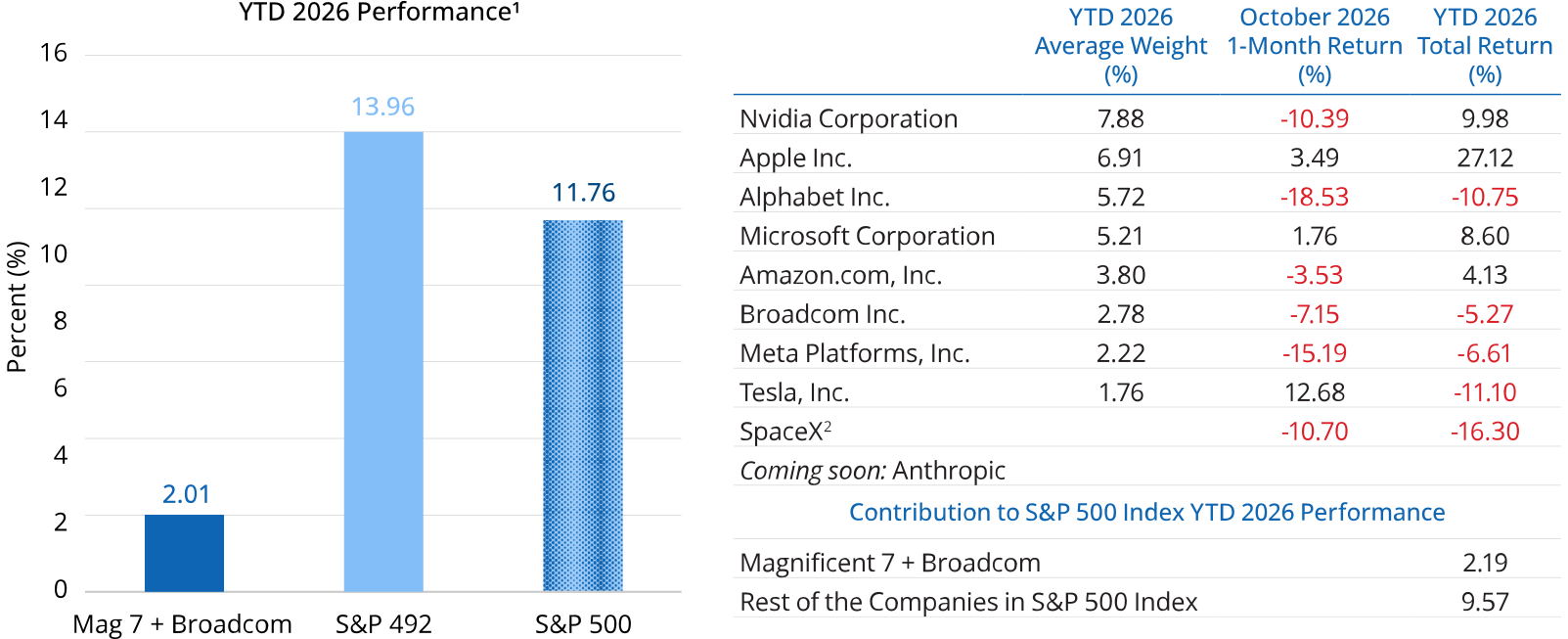
In addition to Alphabet’s miss on search revenue that you mentioned, how did the Mag 7 (and company) perform?
October was a challenging month for the group, with concerns over artificial intelligence and capital expenditure weighing on the sector. Alphabet led the way down, declining more than 18% over the month; it reported $9 billion in negative free cash flow for the third quarter and said it plans about $200 billion in capex this year and “significantly” more next year. Clearly, the other 492 stocks – not the Mag 7 or Broadcom – are driving positive S&P returns. However, if hyperscalers slow down, many of those other stocks likely also will slow down. We are seeing just the beginning of an adjustment post midterm. It will take time for the dust to settle on policies related to data centers and AI more broadly, and time for clarity on how that will affect capex and debt issuance related to the AI build out, which in turn could impact economic activity across many industries.
As we have this conversation, Anthropic’s estimated valuation for its initial public offering has trended down again, dropping from an initial estimate of $2 trillion, according to press reports, to $1.4 to $1.5 trillion after its financials were released last month, and then to between $1.1 trillion and $1.3 trillion after the election.
YTD U.S. Treasury Yield Curve
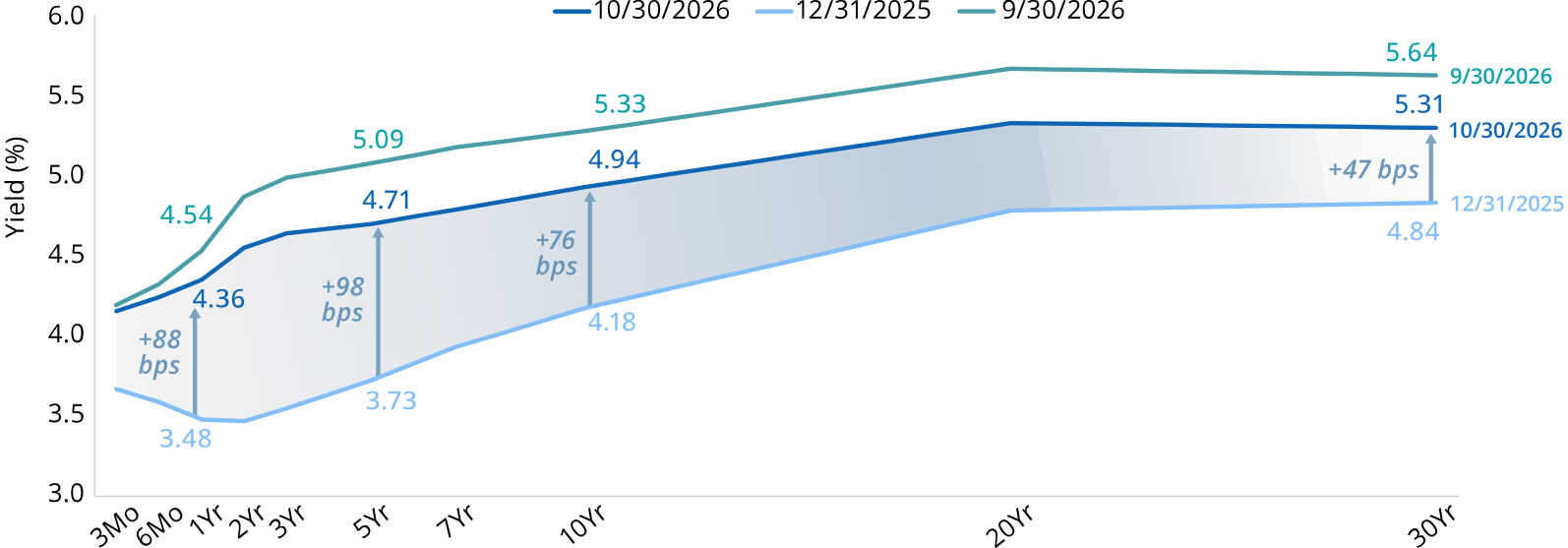
U.S. Treasury yields drifted lower in October but are still above where we started 2026. Do you think we'll end the fourth quarter with the 10-year Treasury yield above 5%?
I think that’s unlikely due to the uncertainty around the political climate.
At the end of October, the 10-year yield was 4.9%, or 76 bps above where it started the year. As we have this discussion in early November, that yield is in the 4.8% range, having drifted down nearly 50 bps from the peak of about 5.3% a month ago.
I believe it’s likely that the uncertainty and friction surrounding AI, the Iran conflict, and energy will mostly keep the yield below 5%, but time will tell.
The Federal Open Market Committee left rates unchanged at their October meeting. What's the market pricing for the FOMC’s final meeting of 2026?
Currently, the market is pricing about an 80% probability that the FOMC will hike in December. A lot can happen between now and then, and new macro data will be available, so we will see. As of today, a hike of 25 bps seems likely.
Economic Dashboard
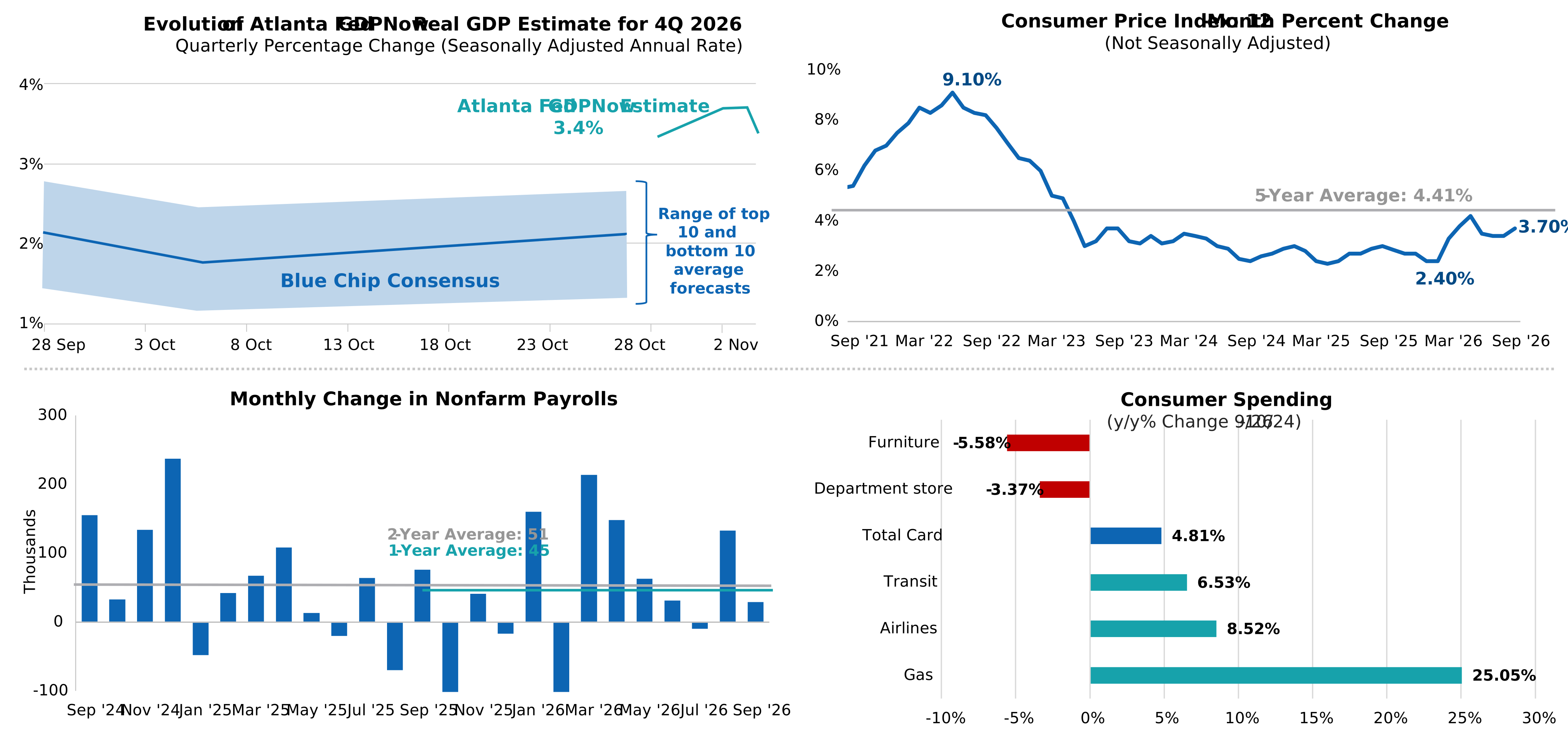
Let’s turn to the economy. What's the current data telling us?
I view the economy as resilient and uneven. The Atlanta Fed’s GDPNow indicator, updated on November 4, is estimating real GDP annualized expansion of 3.4% for the fourth quarter, which is a healthy growth rate. Meanwhile, the Consumer Price Index remains elevated. Post-COVID inflation had settled in the mid 2% range, but since the U.S.-Iran conflict began, it has hovered in the high 3% range.
Looking at spending according to Bank of America credit card data, consumers spent 25% more on gas from late September to late October than they did over the same period a year earlier. I think it’s clear they have not increased driving by 25%; they are simply paying higher prices, which they are reminded of every time they get gas. In addition, airline and transit spending increased, though not as much, while department store and furniture spending declined. The data indicates consumers have been forced to spend more on what they need and less on what they want.
While the job numbers have been erratic, the recent Bureau of Labor Statistics release stated the economy added 165,000 jobs in October and unemployment dipped to 4.1%. The BLS also revised September’s previously abysmal 29,000 jobs up to 60,000 jobs added, and August’s total increased by 53,000 jobs to now total 186,000 jobs.
Bottom line: People are paying more for essentials, which is only being partially offset by wage growth, and those invested in balanced portfolios generally are seeing modest returns. Also, housing remains challenged and affordability has gotten worse, and these trends impacted the midterms.
Well, that leads to our special topic: Markets after Midterms. How unusual were the election results?
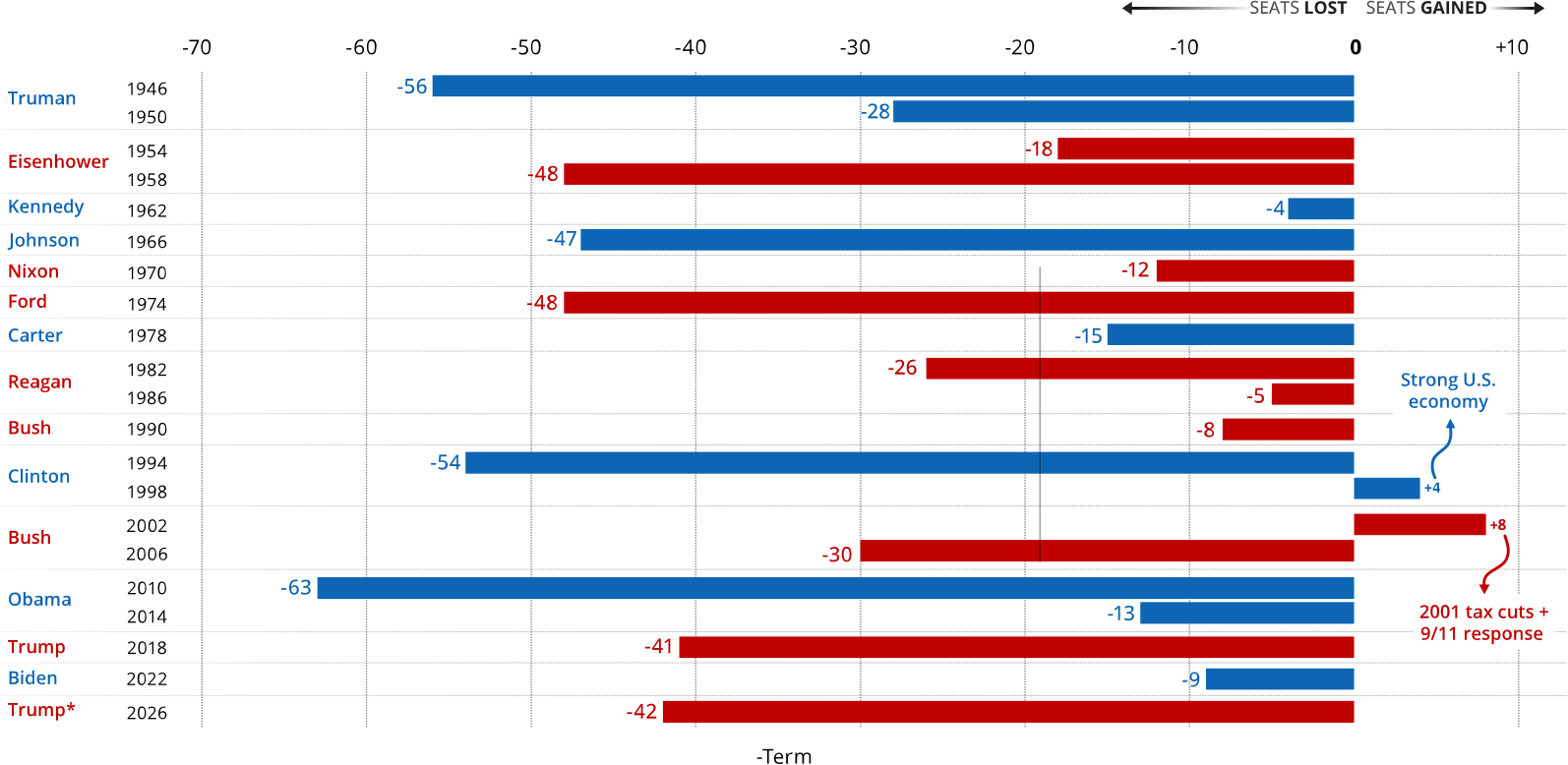
Since 1946, the sitting president’s party has lost seats in the House of Representatives in the midterm election all but twice: while President Bill Clinton was in office, Democrats gained four seats in 1998 amid a strong U.S. economy, and while President George W. Bush was in office Republicans gained eight seats in 2002, following the 9/11 attack and tax cuts of 2001. Under President Barack Obama, Democrats lost more than 60 seats in 2010, which provides context to Republicans losing an estimated 40 seats or so this election – as of this conversation some races are unresolved.
Only 2 U.S. Presidents Have Won House Seats Since 1946
But even with that context, the results amount to a rebuke of this administration and reflect voter frustration over the economy. The Democrats have exceeded all expectations and currently are on track to win about 260 seats. In addition, they are on track to win at least 54 seats in the Senate, also exceeding expectations.
2026 House Election Flipped Key Battlegrounds
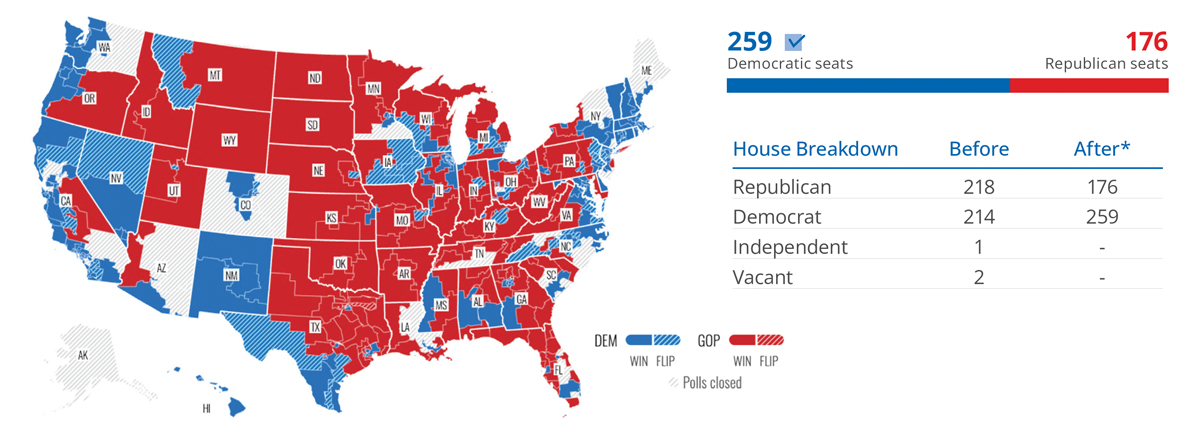
Going into the election, President Trump’s approval rating had been declining across polls, nearly inversely to rising gas prices. Considering high gas prices, overall elevated inflation, and the tendency of the House to switch parties, it’s understandable that we saw not a blue wave, but a blue tsunami.
House: Polls vs. Kalshi Predictions (10 Closest Races)
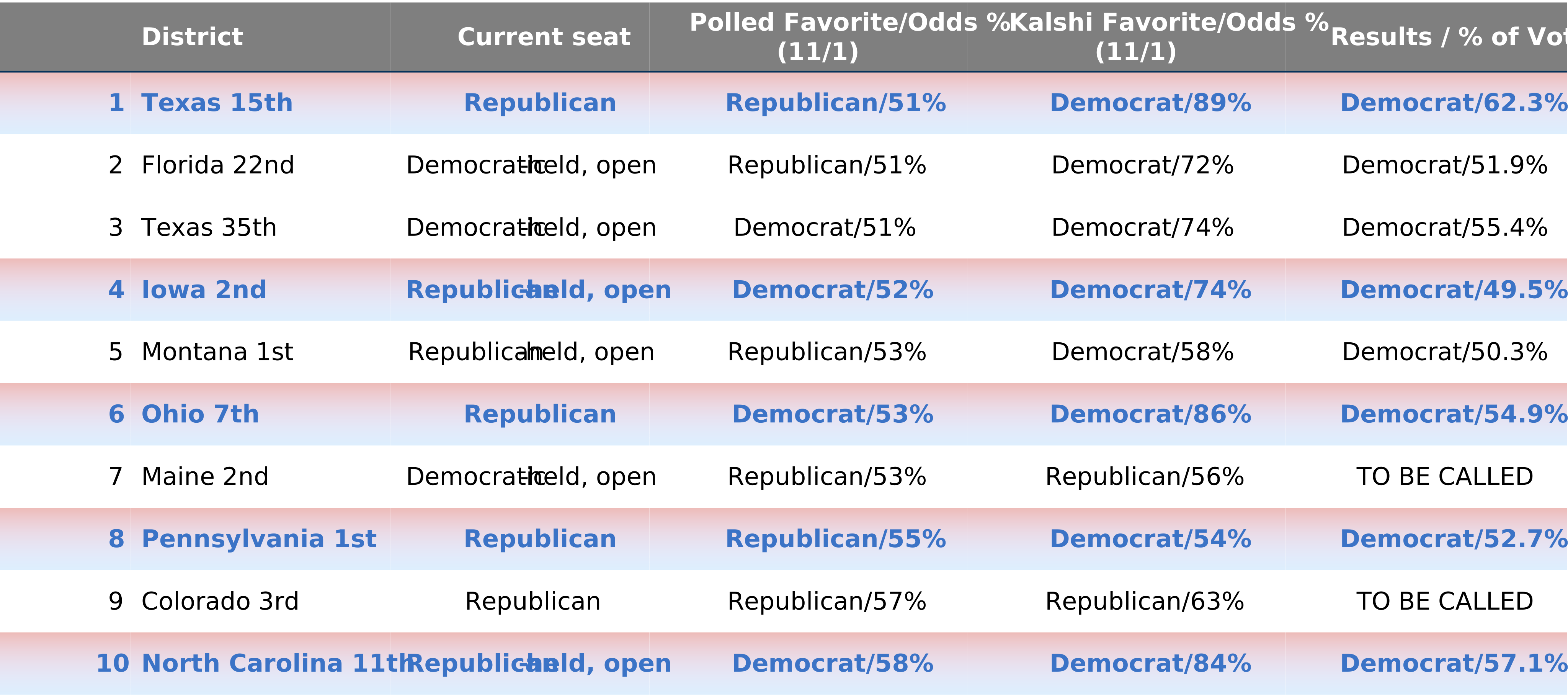
Who was better at predicting the results: voter polls or prediction markets?
We reviewed 10 close House races going into the election across red, blue and purple states. Of the eight races that have been called as of this discussion, the polls correctly indicated the winner in half the races; the Kalshi Prediction Market odds correctly indicated the winner for all eight (based on polls and betting odds at 12 am PST on November 1). The prediction markets also accurately forecasted the red wave two years ago.
Senate: Polls vs. Kalshi Predictions (10 Closest Races)
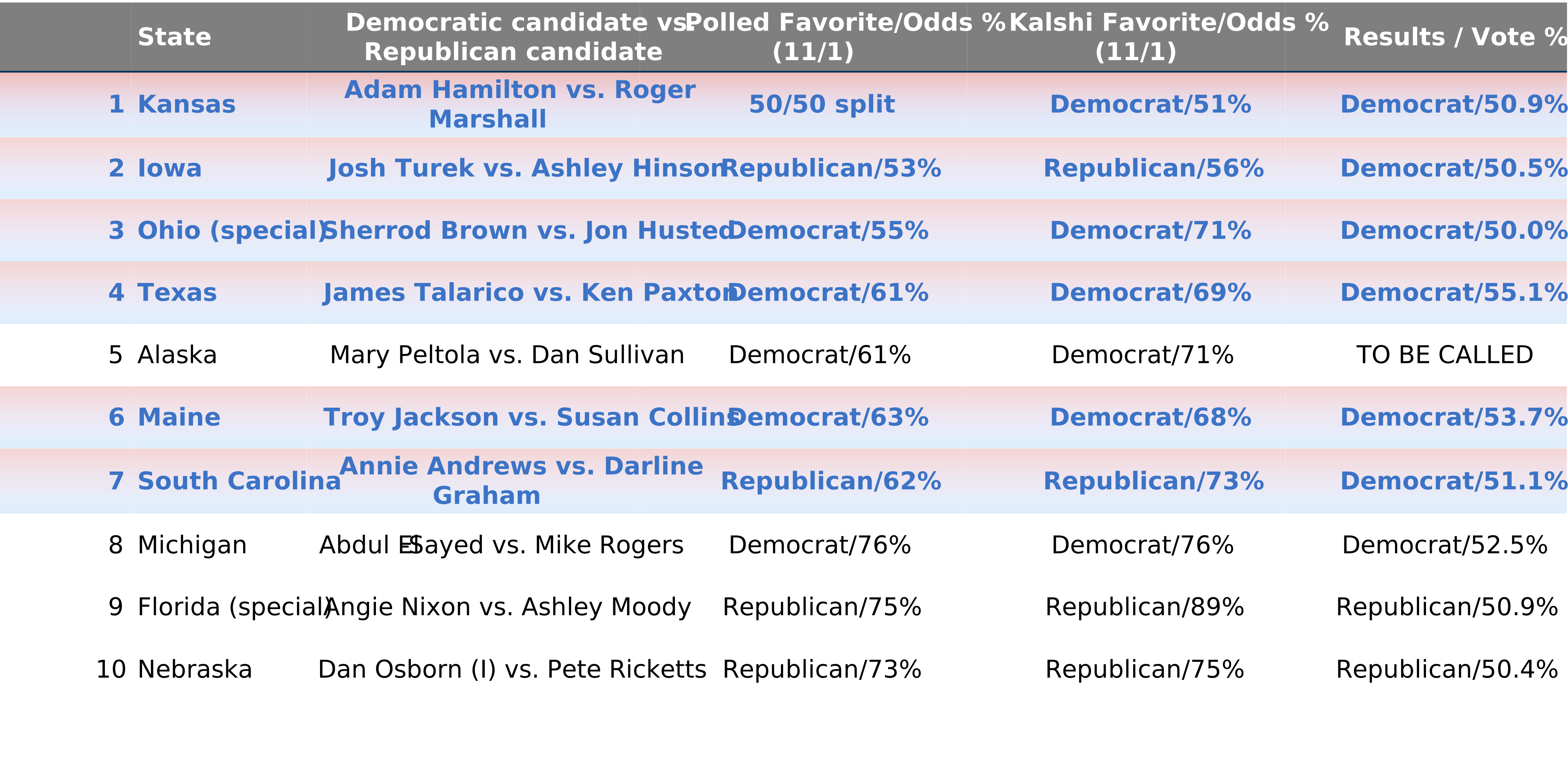
For the Senate, which was harder to call, the polls and prediction markets were more closely aligned. We also reviewed 10 close races, and of the nine that have been called so far, Kalshi odds ended up being correct seven out of nine times. That’s one better than the polls, which were evenly split on the Kansas race, so did not indicate a winner, while the prediction market accurately forecast the Democrat would win.
My view is follow the money not the media – polls are entertaining, prediction markets are more telling.
Governors: Before & After
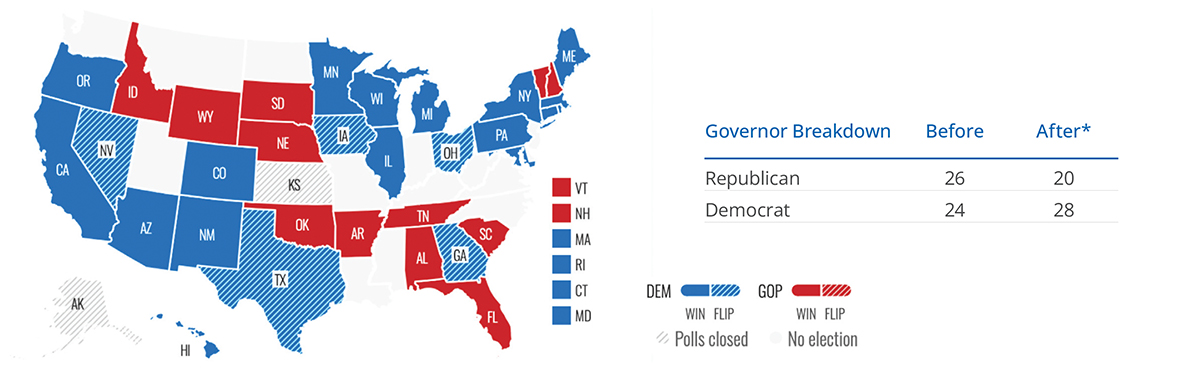
How did the pendulum swing for governor races?
Republicans typically have done well in governor races. They went into election day holding 26 of the 50 governorships; post election they are on track to hold 20 (with Alaska and Kansas not called yet).
Taking a step back from the red versus blue narrative, there were some positive firsts for the country. Keisha Lance Bottoms in Georgia became the first Black woman elected to governor in the country, and Deb Haaland, a citizen of the Pueblo of Laguna, in New Mexico will be the first Native American woman governor. In addition, some states elected their first female governor, and other states elected their first Black governor. Also, Gina Hinojosa will be the first Latina governor of Texas, and Xavier Becerra is the first Latino elected governor in California.
Notable Ballot Measures & Voter Initiatives
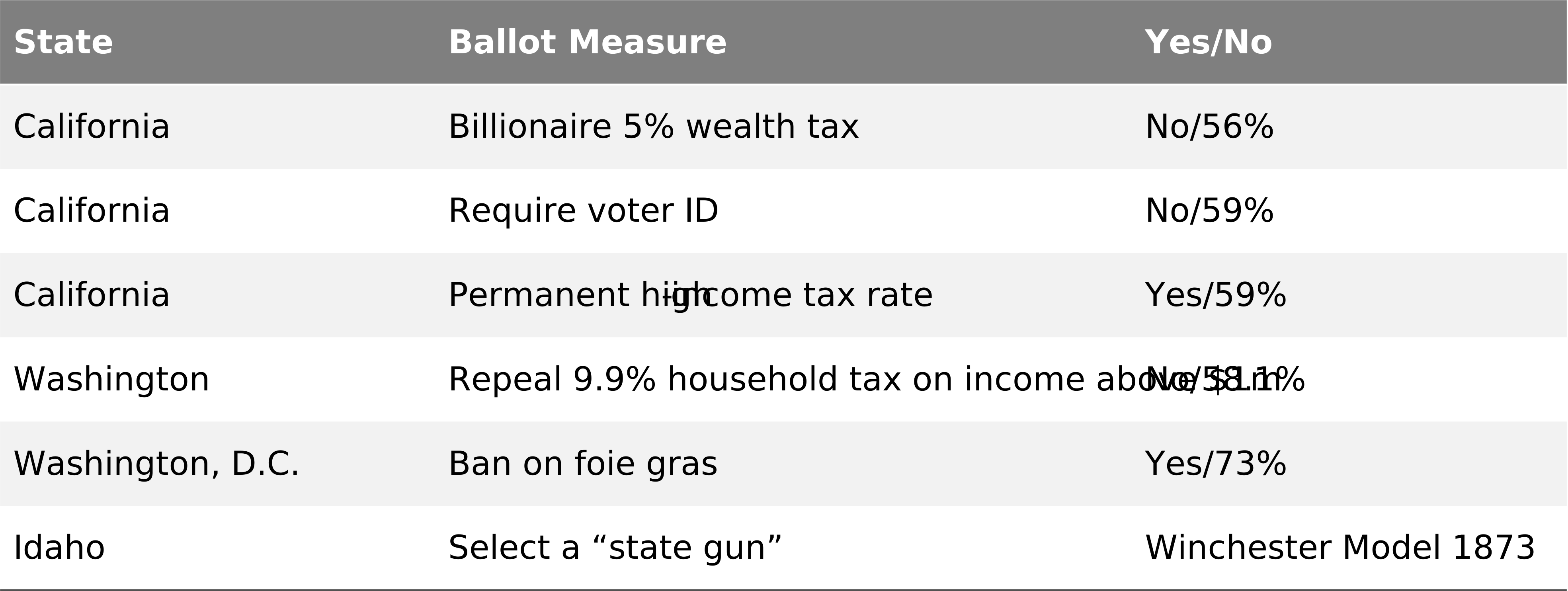
Did any of the ballot measure results surprise you?
As a taxpayer in California and not a billionaire, I am happy that voters here appear to have rejected the billionaire wealth tax; last I checked, 54% of voters came out against it, with more than 70% of votes counted. I think passing that proposition would have seriously undermined the concept of private property. If you own an asset that has already been taxed, and the Legislature thinks they can continue to tax you, I see that as a violation of your right to own property.
In contrast, the high-income tax rate proposition in California is on track to pass with 60% of voters; it is a permanent extension of existing tax code and a sign that despite rejecting the wealth tax, California voters are not in favor of lower taxes for the wealthy. Similarly, Washington voters rejected a measure to repeal a 9.9% tax on income above $1 million.
Democratic Socialists of America (“DSA”) Elections
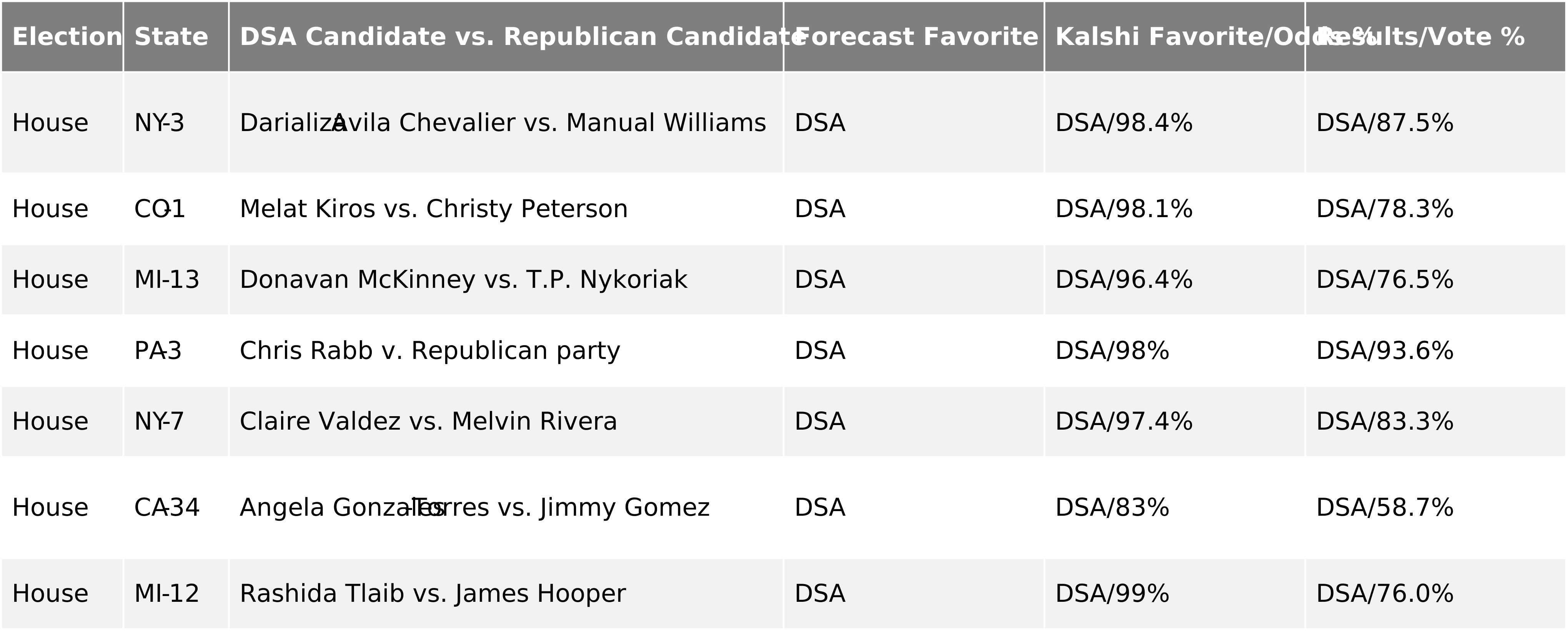
Any thoughts on the Democratic Socialists of America (DSA) candidates?
For the most part, DSA candidates for the House won by a landslide. The DSA folks have a reputation for being far left and could be equated to the inverse of the MAGA movement within the Republican Party. However, the reality is some DSA candidates that won by wide margins are considered moderate-left Dems. Time will tell if the DSA label correlates with actively pushing a progressive agenda.
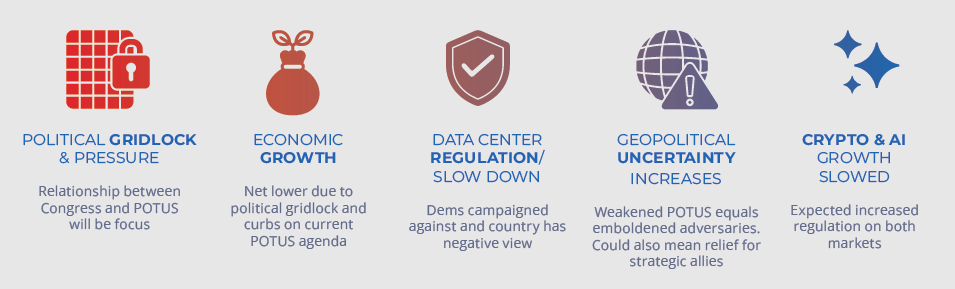
How do you see the election results impacting U.S. markets?
I expect the new Congress will put bills targeting popular themes before the president, such as limits on data centers, labor protections, etc., putting him in a position to sign or veto – and the Democrats may feel they win either way. Of course, there is a chance Congress and the president work together on some initiatives.
However, the likely outcome is more political gridlock. I anticipate marginal downward pressure on growth from that gridlock, as well as from curbs on spending related to the president’s agenda and data center regulation.
Also, with the president weakened by the election outcome, foreign adversaries could feel emboldened, and we could see a rise in geopolitical uncertainty. I would not be surprised to see oil prices trend upward.
Finally, I expect crypto legislation such as the CLARITY Act will lose momentum.
Opportunities in Fixed Income
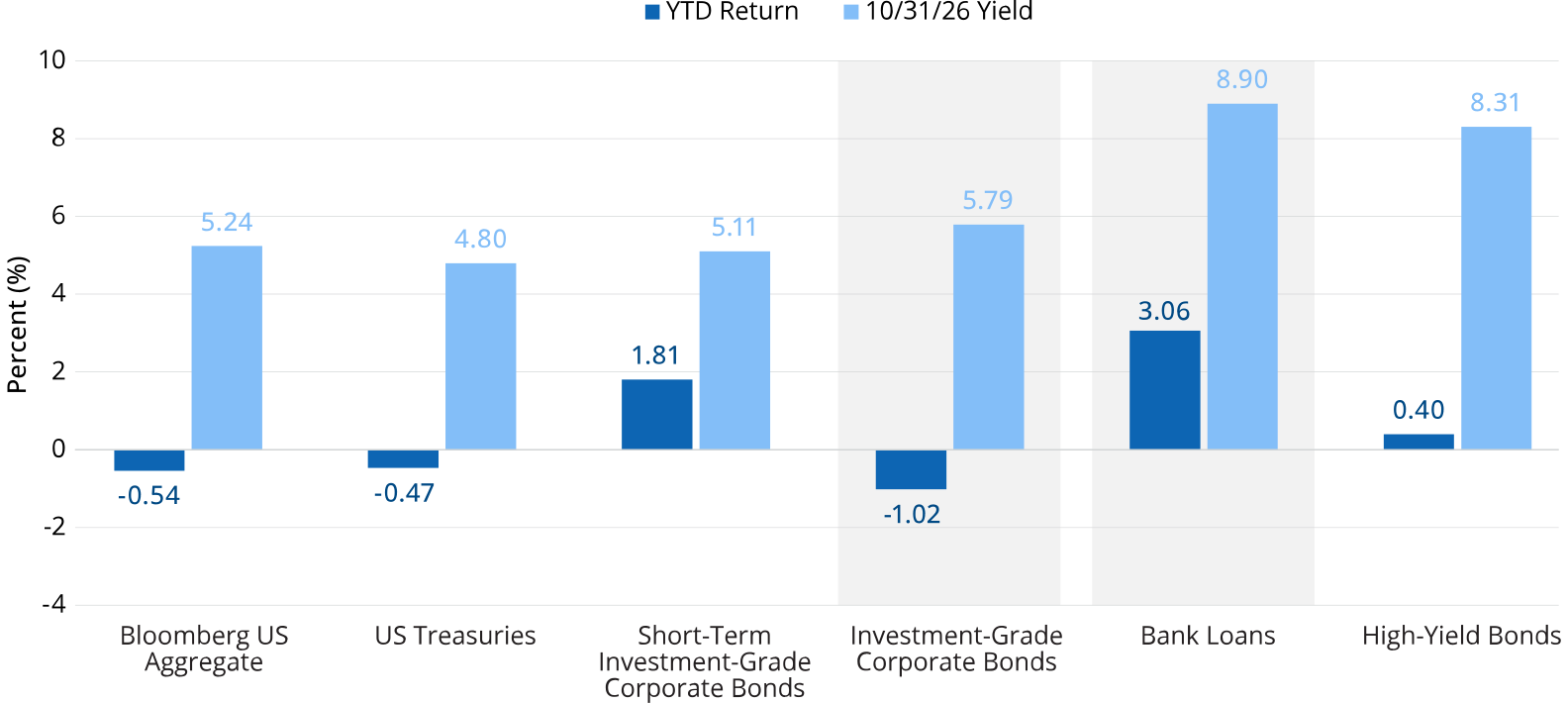
Let’s shift to bonds. Where do you see opportunities in fixed income?
We have favored duration for the past few months. That positioning initially detracted from performance, then yields declined about 50 bps. As we have this discussion, the 10-year yield is in the 4.8% range, and I believe that bond is trading closer to fair value.
I think it makes sense now to slightly reduce duration and complement that with an allocation to floating-rate bank loans, which recently have been yielding close to 9%. As we discussed earlier, the Fed is expected to hike in December, which could lift floating-rate payments. I believe credit quality generally is better in the broadly syndicated loans, which are accessible to investors via publicly traded vehicles, than the credit quality of illiquid loans in private credit vehicles. Investors could consider exposure to short-term loans or short-term investment grade fixed income, anticipating another Fed hike.
Let's close with a personal reflection.
Whether you like the outcome of the election or not, I think it’s worth taking a moment to recognize that voting is our most important right, and the integrity of the elections is critical. The people have a voice, and they made their voice heard, just as they did two years ago. Some people abroad, including leaders in Iran, may be giggling at the outcome, but I would remind them that it is because of our democratic system that such peaceful changes of power can occur; it is something we have that many of our adversaries lack. Now let's hope those newly elected will work for the people of this country and not the system.
A 10-year Treasury note is a debt obligation issued by the United States government with a 10-year maturity period.
The Atlanta Fed GDPNow provides a running estimate of real GDP growth for the current quarter using available economic data.
Bank loans (or floating-rate loans) are financial instruments that pay a variable or floating interest rate. A floating rate fund invests in bonds and debt instruments whose interest payments fluctuate with an underlying interest-rate level.
A bond is a fixed-income instrument and investment product where individuals lend money to a government or company at a certain interest rate for an amount of time. The entity repays individuals with interest in addition to the original face value of the bond.
The Bloomberg US Aggregate Bond Index (Agg) is composed of investment-grade U.S. government bonds, investment-grade corporate bonds, mortgage pass-through securities, and asset-backed securities, and is commonly used to track the performance of U.S. investment-grade bonds.
Capital Expenditure (CapEx) is the money a company spends to acquire, upgrade, or maintain long-term, physical assets.
Consumer Confidence measures consumers’ attitudes and optimism about the economy and their personal financial situation.
Coupon refers to the interest payment that a bond issuer promises to pay to a bondholder.
Fixed income refers to assets and securities that pay a set level of income to investors, typically in the form of fixed interest or dividends.
Investment grade refers to the quality of a company's credit. To be considered an investment grade issue, the company must be rated at 'BBB' or higher by Standard and Poor's or Moody's.
An investment-grade bond is a type of bond that is considered to have a relatively low risk of default.
The ISM Manufacturing Index is a monthly economic indicator published by the Institute for Supply Management (ISM) that gauges the health of the U.S. manufacturing sector.
Treasury rate (or yield) refers to the interest rate at which the U.S. government borrows money by issuing Treasury securities.
Yield is the income returned on an investment, such as the interest received from holding a security.
A yield curve plots the interest rates of bonds that have equal credit quality but different maturity dates.
Yield-to-Worst is the lowest potential yield that can be received on a bond without the issuer defaulting.
Any performance data quoted represents past performance, which does not guarantee future results. Index performance is not indicative of any fund’s performance. Indexes are unmanaged and it is not possible to invest directly in an index. For current standardized performance of the funds, please visit www.AristotleFunds.com.
The views expressed are as of the publication date and are presented for informational purposes only. These views should not be considered as investment advice, an endorsement of any security, mutual fund, sector or index, or to predict performance of any investment or market. Any forward-looking statements are not guaranteed. All material is compiled from sources believed to be reliable, but accuracy cannot be guaranteed. The opinions expressed herein are subject to change without notice as market and other conditions warrant.
Investors should consider a fund’s investment goal, risk, charges and expenses carefully before investing. The prospectus contains this and other information about the fund and can be obtained at www.AristotleFunds.com. It should be read carefully before investing.
Investing involves risk. Principal loss is possible.
A full list of holdings can be found at www.aristotlefunds.com and are subject to risk and to change at anytime. Any discussion of individual companies is not intended as a recommendation to buy, hold or sell securities issued by those companies.
Aristotle Funds and Foreside Financial Services, LLC are not affiliated with Pacific Life Fund Advisors LLC.
Foreside Financial Services, LLC, distributor.