March 2026
Software Reset
Download PDFWe recently sat down with Dominic Nolan, CEO of Aristotle Pacific Capital, to get his analysis of credit markets – including concerns about private lending to software companies – and opportunities in fixed income. We conclude with a personal reflection.
Market Performance
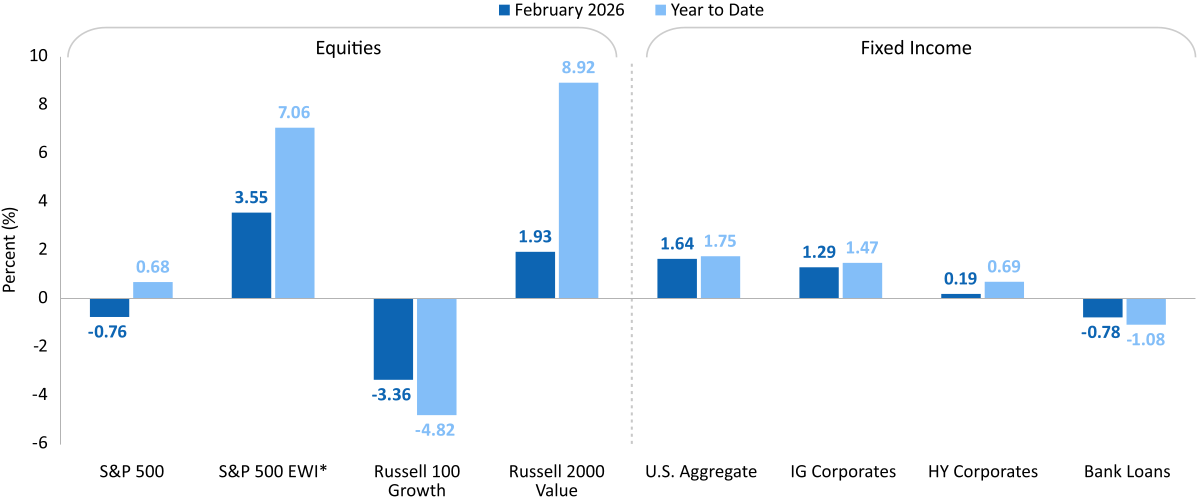
Stock and bond performance were mixed in February. What happened?
Market leadership appears to be shifting from technology, financials, and cyclicals to industrials, energy, and materials. Concerns over artificial intelligence have been driving the sector rotation. The S&P 500 Index declined 76 basis points in February but is still positive year to date by 68 basis points. If investors had instead rotated entirely into cash, the month would have been much worse. The sector rotation is evident in the S&P 500 Equal Weight Index’s performance – it rose 3.6% in February and is up about 7% year to date.
Growth has meaningfully underperformed, with the Russell 1000 Growth Index declining 3.4% in February and down 4.8% year to date. Meanwhile, the big winner is the Russell 2000 Value Index, which rose nearly 2% last month and is up nearly 9% this year. That index has significant industrial exposure.
Fixed income performance was also mixed. The Bloomberg US Aggregate Bond Index increased 1.6% in February, outpacing corporates. Bank loans, represented by the J.P. Morgan Leveraged Loan Index, declined 78 basis points last month.
The macro backdrop also has been mixed, with inflation and tariff headwinds offset by strong corporate earnings. Bottom line: The rally is broadening and the economy seems stable, both of which are good for investors.
Mag 7 + Broadcom
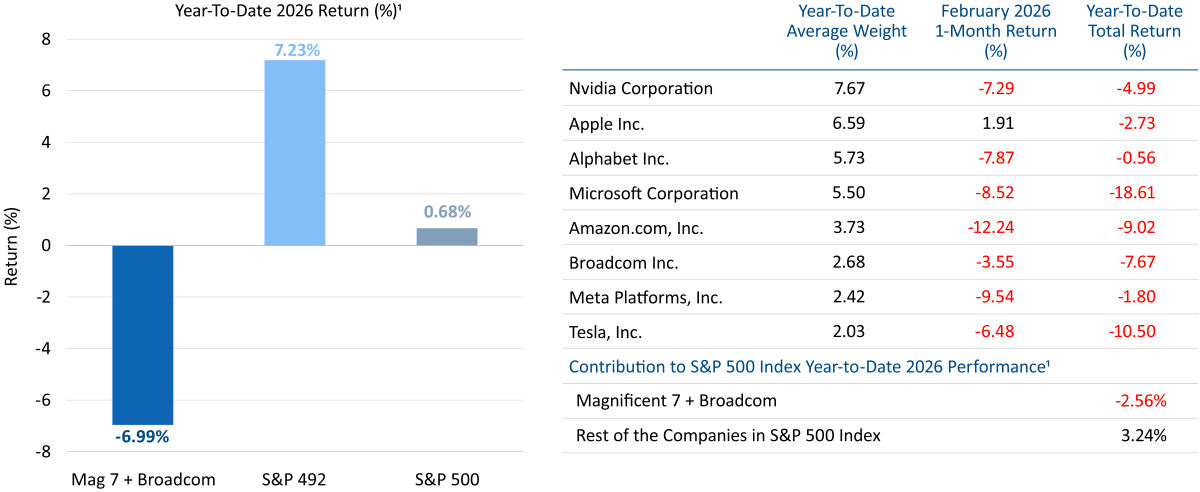
How were the Mag 7+ Broadcom affected by this sector rotation?
February was a rough month for them. Apple had the only positive return, up 1.9% last month. However, Apple and all the rest are down year to date – together, they have declined 2.6%. Meanwhile, the rest of the companies in the S&P 500 are up 3.2% year to date. It’s worth noting that while their stock prices declined, these companies generally are beating earnings expectations.
2025 U.S. Treasury Yield Curve Range
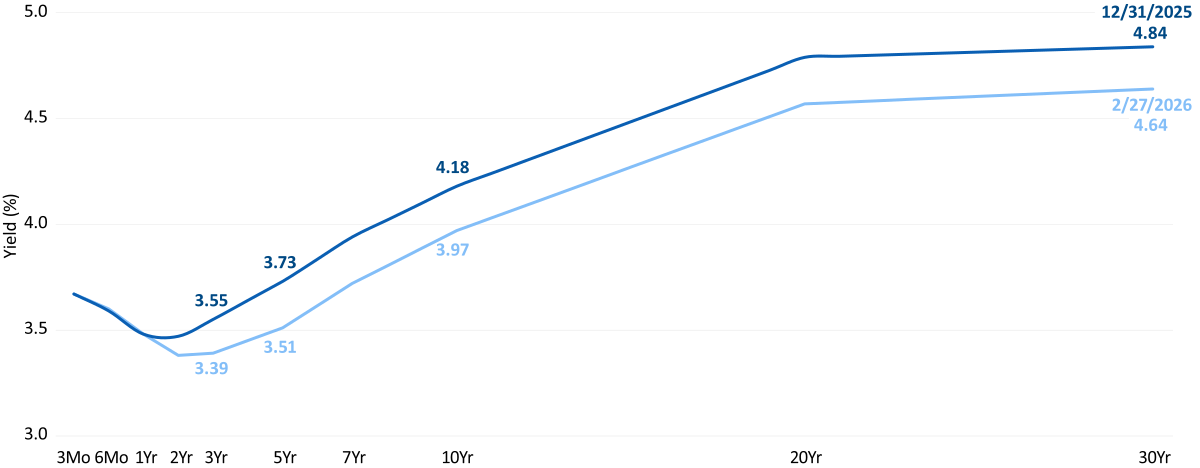
U.S. Treasuries fell during the month. Anything we can take away from the move lower?
Volatility has increased since the targeted strikes began in Iran. The yield on the 10-year Treasury, for example, has swung significantly while remaining range-bound around 4%. We will have to see how tensions play out in the Middle East to better understand where yields settle.
Fed Futures
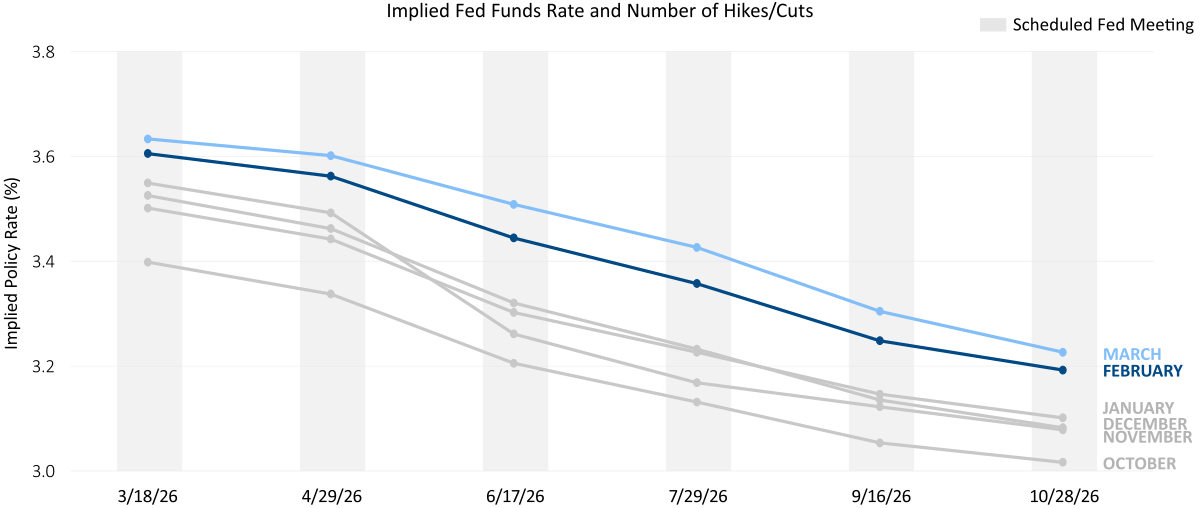
Also in February, the U.S. Supreme Court ruled against the president's use of emergency tariffs under the International Emergency Economic Powers Act. What are the implications?
It should create more uncertainty while being disinflationary. However, President Donald Trump quickly enacted tariffs under Section 122 of the Trade Act of 1974, and those tariffs can reach 15% and remain in place for 150 days. That buys the administration time to enact more permanent tariffs under Section 232 of the Trade Expansion Act of 1962, which require investigation by the Secretary of Commerce – a close friend of the president. So, while there has been a lot of noise around tariffs, they likely will settle at roughly the same level, between 10% to 15% for most countries.
Economic Dashboard
What does all this mean for the U.S. economy?
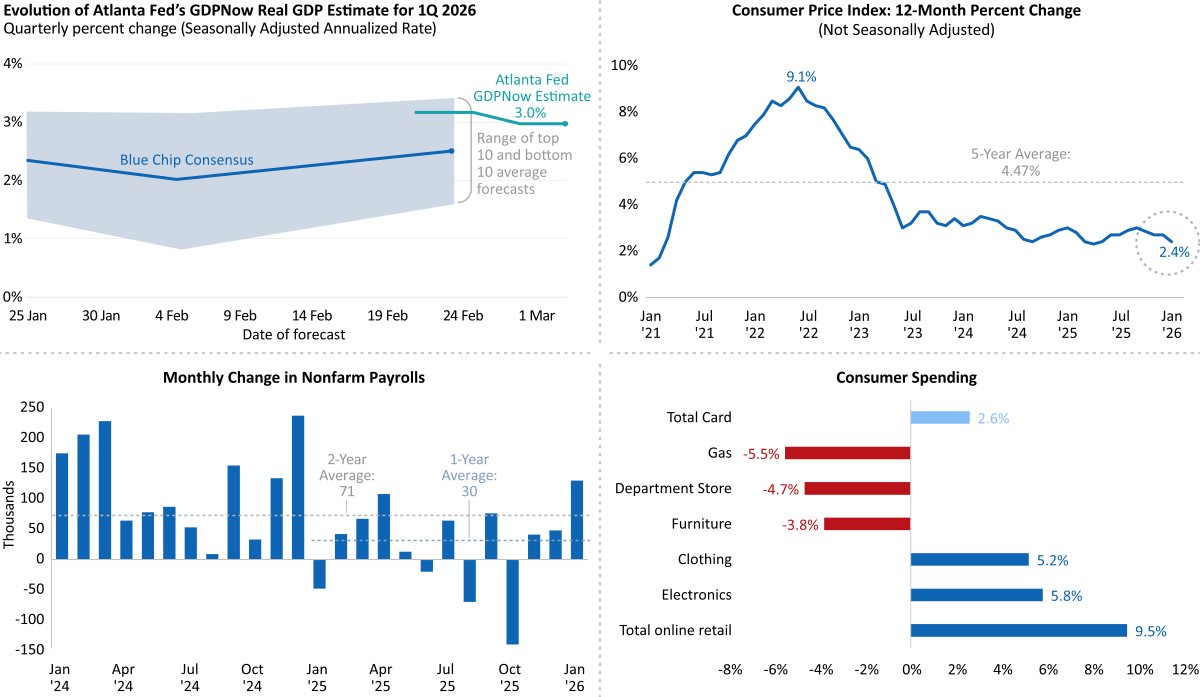
The economy grew 2.2% in 2025 – a decent rate – and is forecasted to expand about the same amount this year. That consensus forecast might be too cautious; I see potential for growth closer to 3%. Unemployment remains low, though the equilibrium is lackluster – layoffs have been modest, but so has hiring. We will see whether the latest report of 92,000 job losses in February disrupts that equilibrium or simply offsets the positive number from January, as is often the case.
In positive news, CPI finally fell below 2.5%, dropping to 2.4% in January. Taken together, the data suggests the economy is holding steady, slowly expanding. Given the downward trend in inflation and the new Fed chair starting in May, we could see lower interest rates boost the housing market and investment in a few months, leading to stronger economic performance in the second half of the year. Of course, higher oil prices and tensions in the Middle East add uncertainty to the outlook.
The 2026 Iran War: Conflict in Context

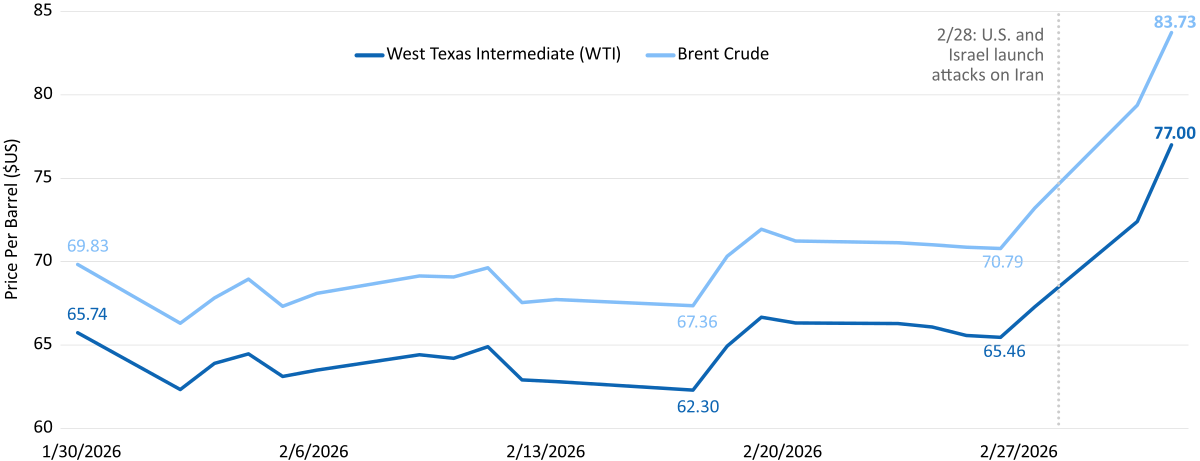
Pronounced Price Response in Oil Future Prices to Iran War
What has been the impact so far from the Iran conflict on the global economy?
It appears the U.S. amassed substantial naval and air power in the area, but not the logistical resources or ground forces that would suggest preparation for a long engagement. While the Trump administration would welcome regime change, I believe its primary goal is to substantially weaken Iran's ballistic missile defenses and nuclear capabilities. The administration has said it is providing an opportunity for Iranians to take control of their country, which differs from its rhetoric on Venezuela, where it indicated a desire for the U.S. to run things there. Still, regime change in Iran is considered unlikely, though the U.S. may be arming rebels to tilt the scales. Time will tell.
The implications for the global economy are potential energy disruption and inflation – 20% of global oil moves through the Strait of Hormuz. We are already seeing war time pricing of oil. The strait must be opened soon, meaning safe for tankers to pass through. It is believed the U.S. naval presence is substantial enough to defend against drones and short-range ballistic missiles from Iran, but if their military can strike one of our ships and possibly kill our troops, then tensions are likely to escalate – that is the key unknown. On the other hand, if the strait is deemed safe and tankers travel unencumbered, then oil prices should plummet.
Software & Services Loans Under Pressure
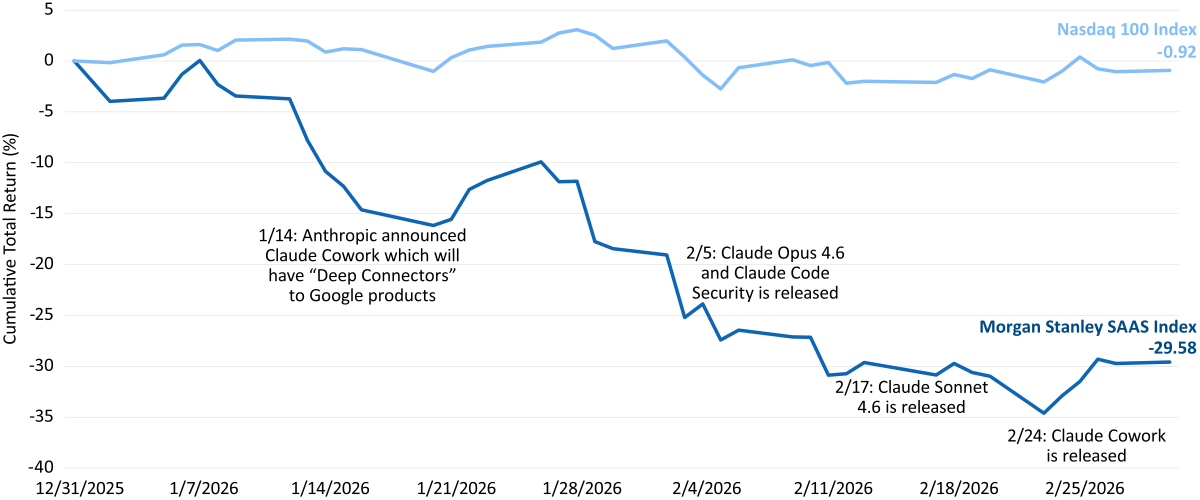
Let’s shift to our special topic. While investors have enjoyed benign credit conditions over the last couple of years, there is debate on whether the sell-off in software companies because of AI advancements will translate to a shift in credit dynamics. What prompted the selling in January, and how has it evolved since then?
Let's frame things first. When we think of the big artificial intelligence engines, such as ChatGPT, Claude, or Gemini, those are the retail side of the business, with free and paid-subscription options.
As advancements built on top of these engines began rolling out, institutional adoption increased, prompting investors to reassess the traditional software-licensing business model. The Morgan Stanley SAAS Index, which tracks software stocks, declined about 30% from the start of the year to the beginning of March, after declining 11% in 2025. After various investment meetings, my sense is that the consensus is this: If a company’s moat is thin, it is likely leaking badly and may soon disappear; if its moat is wide, it probably is still leaking, but AI may help offset that pressure and perhaps even help increase the moat. This is affecting companies with $100 billion or more market capitalizations, such as Salesforce, Uber, Intuit, ServiceNow and Adobe.
I believe enterprise values should decline because growth rates and pricing power are likely to diminish, and because AI is a secular phenomenon – it will be an ongoing concern for some time. We will see winners emerge and losers fall away.
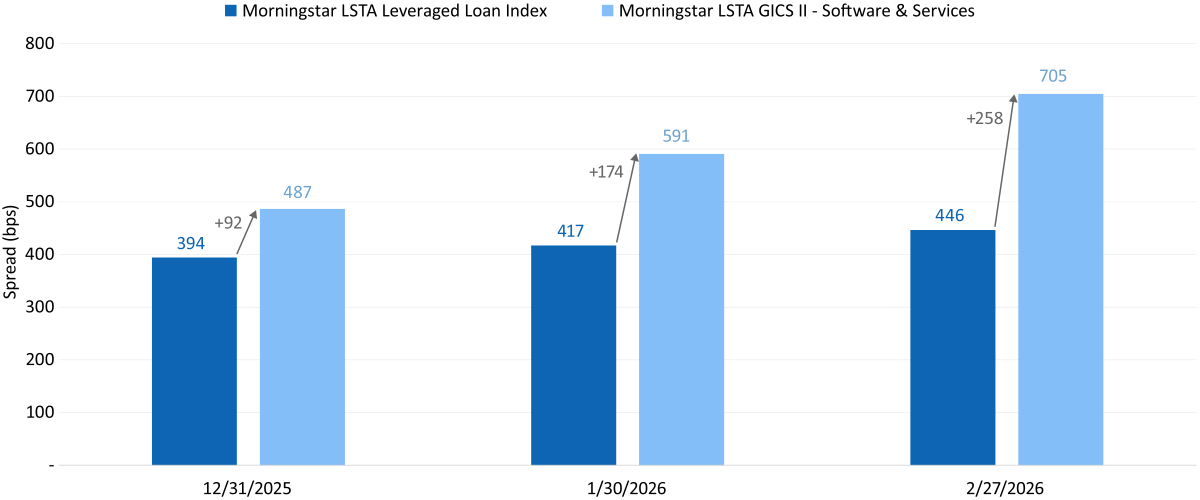
Technology Credit Spreads Diverge from Broader Loan Markets
It seems like software and private credit are joined at the hip. How is the sell-off spilling into fixed income markets?
Floating-rate leveraged loans are either private credit or broadly syndicated loans (BSL) which are listed, traded, and marked daily. We estimate that less than 10% of BSLs are to software companies, while that figure is closer to 20% in private credit. Since the beginning of the year, leveraged-loan spreads have widened about 50 basis points by the end of February, while spreads on leveraged loans to software companies have increased more than 200 bps – a significant weakening in value. BSLs tend to be issued to large, diversified software names, while private credit loans are viewed as having less transparency and more exposure to smaller, less creditworthy software names. Thus, if more private credit funds are forced to sell software loans, we suspect the loan pricing would be even weaker than the broader trend.
Blue Owl Sells $1.4B of Lending Assets, Then Halts Redemptions
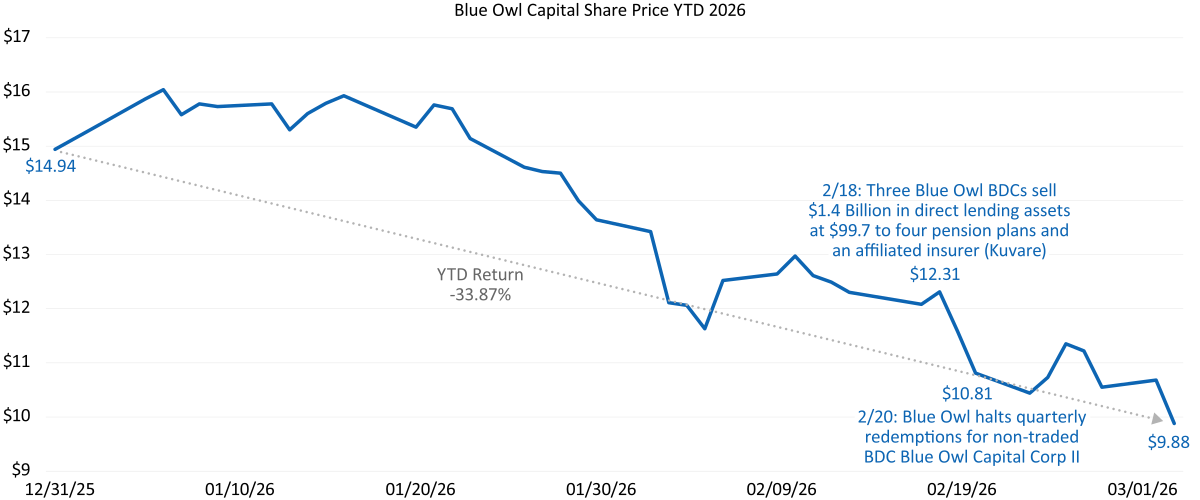
How has the sell-off in software impacted business development companies (BDCs)?
Certain BDCs trade on major stock exchanges, offering investors daily liquidity, while others offer liquidity on a schedule, such as quarterly. The BDCs of concern have been investing in illiquid, or much less liquid, private loans to software companies, and they may employ additional leverage. The cardinal sin in illiquid markets is to be a forced seller; yet some BDCs take that risk if they offer liquid or semi-liquid vehicles to investors and put their money into illiquid investments.
Blue Owl, which has been in the news for efforts to return money to shareholders, has both publicly traded and non-publicly traded BDCs. According to press reports, it has faced increasing withdrawal requests from investors over concerns about exposure to software companies. Last month, it abandoned a plan to reopen withdrawals later this quarter on one of its retail-focused BDCs, shifting to a plan to return 30% of investors’ capital at book value. In a related move, the company announced last month a $1.4 billion sale of credit investments at 99.7% of par value to four entities, including insurer Kuvare, which is an affiliate of Blue Owl. Meanwhile, Blue Owl’s own stock price declined more than 30% from the end of 2025 to the beginning of March.
In private credit, the only ones who truly know what a loan is worth are those involved in the initial transaction. When the original investor attempts to sell, the pool of potential buyers is likely limited, and there is significant risk the highest bidder will value the loan below the seller’s assessment.
Hyperscaler Capex Outpaces Telecom Spending
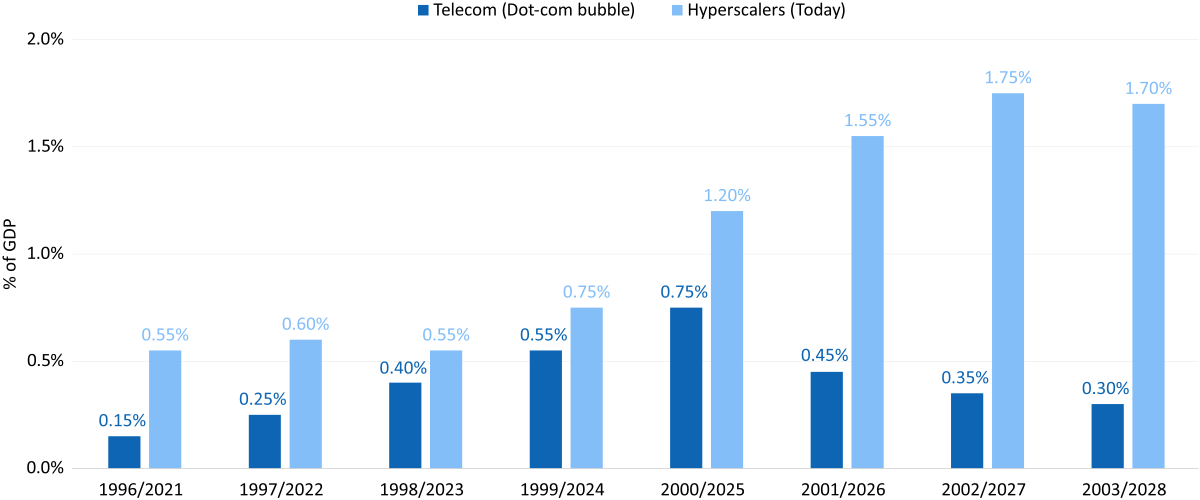
We talked about the pain in software, but let's look at AI a bit more. The capital expenditures for hyperscalers are massive. How does this impact the market and U.S. GDP?
Investment today is much greater than during the heyday of the telecom/dot.com era. Yet investment in that era included “dark” cable that was laid into the ground but not immediately used, while today investment is used as it comes online, which to me suggests an appropriate level of investment for demand. Still, I recognize that hundreds of billions of dollars are being spent on credit and in some cases by entities currently lacking much cash.
Market Disruption and Impact
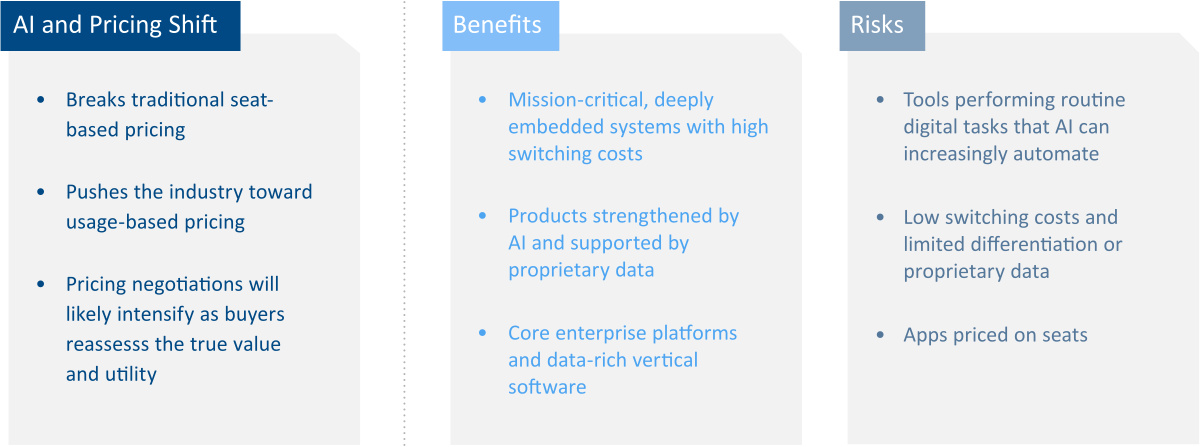
So how do you see this situation playing out?
It’s far too early for definitive conclusions. My expectation is that the traditional model of seat-based pricing for software will be disrupted, meaning enterprises pay a licensing fee per person in their organization who has access to the software, regardless of how much they use it. I expect pricing to shift to either time spent using the software or to the outcome it produces, better reflecting how much the application actually helps each enterprise. AI is likely to disrupt task-based software, while software that is tightly aligned with an organization’s purpose is more likely to endure.
Fixed Income Yields and Year-to-Date Returns
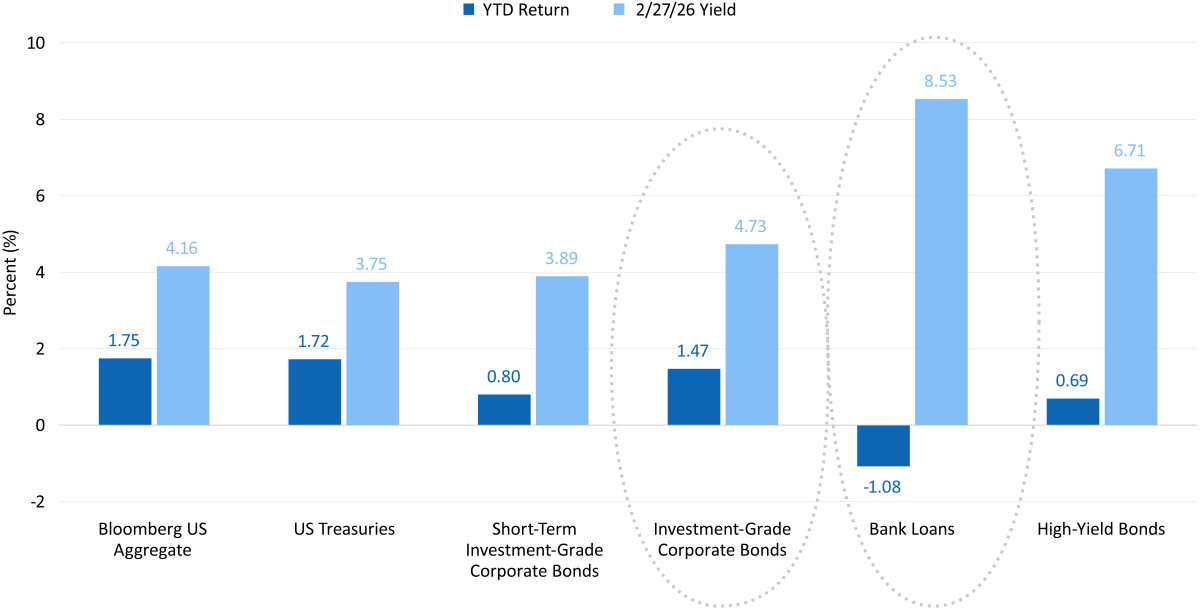
Let's shift gears again. Where are you seeing opportunities in fixed income today?
Broadly speaking, credit is underperforming amid a flight to safety for the reasons we have discussed. However, we still favor an overweight to investment-grade credit. Bank loans and high yield bonds are becoming more interesting – bank loans are yielding about 8.5%, and we expect the Fed will cut rates further. Still, things could move quickly as a result of the military conflict in the Middle East, so it may be prudent to keep some dry powder and favor high-quality fixed income.
Let's close with a personal reflection.
We are facing a high degree of uncertainty with meaningful events occurring at once, from conflict in the Middle East to AI disrupting software. As we try to assess the range of potential outcomes and with President Trump saying that sending U.S. troops into Iran is not off the table, I am reminded of an old poker expression: Play the person, not the cards. In other words, seek to understand the incentives and personalities around you, not simply weigh the rules or facts.
A 10-year Treasury note is a debt obligation issued by the United States government with a 10-year maturity period.
The Atlanta Fed GDPNow provides a running estimate of real GDP growth for the current quarter using available economic data.
Bank loans (or floating-rate loans) are financial instruments that pay a variable or floating interest rate. A floating rate fund invests in bonds and debt instruments whose interest payments fluctuate with an underlying interest-rate level.
A bond is a fixed-income instrument and investment product where individuals lend money to a government or company at a certain interest rate for an amount of time. The entity repays individuals with interest in addition to the original face value of the bond.
The Bloomberg US Aggregate Bond Index (Agg) is composed of investment-grade U.S. government bonds, invest-ment-grade corporate bonds, mortgage pass-through securities, and asset-backed securities, and is commonly used to track the performance of U.S. investment-grade bonds.
Capital Expenditure (CapEx) is the money a company spends to acquire, upgrade, or maintain long-term, physical assets.
Consumer Confidence measures consumers’ attitudes and optimism about the economy and their personal financial situation.
Coupon refers to the interest payment that a bond issuer promises to pay to a bondholder.
Fixed income refers to assets and securities that pay a set level of income to investors, typically in the form of fixed interest or dividends.
Investment grade refers to the quality of a company's credit. To be considered an investment grade issue, the company must be rated at 'BBB' or higher by Standard and Poor's or Moody's.
An investment-grade bond is a type of bond that is considered to have a relatively low risk of default.
The ISM Manufacturing Index is a monthly economic indicator published by the Institute for Supply Management (ISM) that gauges the health of the U.S. manufacturing sector.
Treasury rate (or yield) refers to the interest rate at which the U.S. government borrows money by issuing Treasury securities.
Yield is the income returned on an investment, such as the interest received from holding a security.
A yield curve plots the interest rates of bonds that have equal credit quality but different maturity dates.
Yield-to-Worst is the lowest potential yield that can be received on a bond without the issuer defaulting.
Any performance data quoted represents past performance, which does not guarantee future results. Index performance is not indicative of any fund’s performance. Indexes are unmanaged and it is not possible to invest directly in an index. For current standardized performance of the funds, please visit www.AristotleFunds.com.
The views expressed are as of the publication date and are presented for informational purposes only. These views should not be considered as investment advice, an endorsement of any security, mutual fund, sector or index, or to predict performance of any investment or market. Any forward-looking statements are not guaranteed. All material is compiled from sources believed to be reliable, but accuracy cannot be guaranteed. The opinions expressed herein are subject to change without notice as market and other conditions warrant.
Investors should consider a fund’s investment goal, risk, charges and expenses carefully before investing. The prospectus contains this and other information about the fund and can be obtained at www.AristotleFunds.com. It should be read carefully before investing.
Investing involves risk. Principal loss is possible.
A full list of holdings can be found at www.aristotlefunds.com and are subject to risk and to change at anytime. Any discussion of individual companies is not intended as a recommendation to buy, hold or sell securities issued by those companies.
Aristotle Funds and Foreside Financial Services, LLC are not affiliated with Pacific Life Fund Advisors LLC.
Foreside Financial Services, LLC, distributor.