April 2026
Beyond The Strait
Download PDFWe recently sat down with Dominic Nolan, CEO of Aristotle Pacific Capital, to get his analysis of credit markets, including the implications of disruption in the global oil market and opportunities in fixed income. We conclude with a personal reflection.
Market Performance
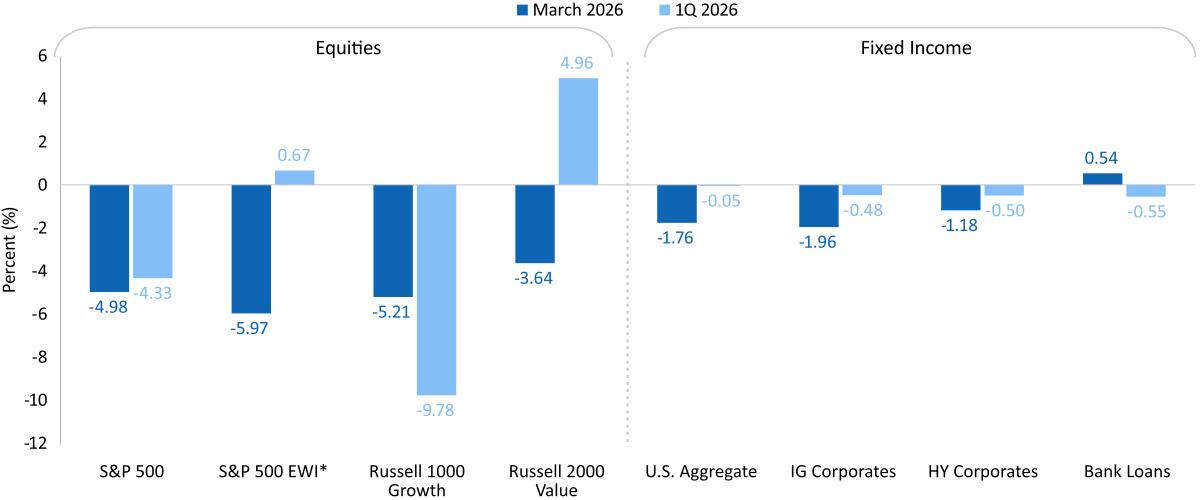
March was a difficult month for stocks and bonds. Was the poor performance all due to the Iran war?
The war was certainly the main headwind to performance. Another theme sector rotation as many equity sectors that outperformed last year have underperformed so far this year and vice versa, with small caps leading the way. The S&P 500 Index fell nearly 5% in March, briefly touching correction territory, and is down about 4.3% for the quarter. The S&P 500 Equal Weight Index declined nearly 6% last month but was slightly positive for the quarter, as investors rotated from technology, financials, and cyclicals to industrials, energy, and materials. The Russell 1000 Growth Index declined 5.2% in March and had a horrible first quarter, down 9.8%. The Russell 2000 Value Index performed better, down 3.6% in March and is up nearly 5% for the quarter.
The war also affected fixed income, though less severely. The oil shock raised inflation expectations, and investors pushed yields up a bit, which drove fixed prices lower. The Bloomberg US Aggregate Bond Index declined 1.8% in March and is essentially flat for the quarter. One bright spot in March was bank loans, returning 54 basis points for the month. Their floating rate nature can help mitigate the consequences of higher rate moves.
Mag 7 + Broadcom
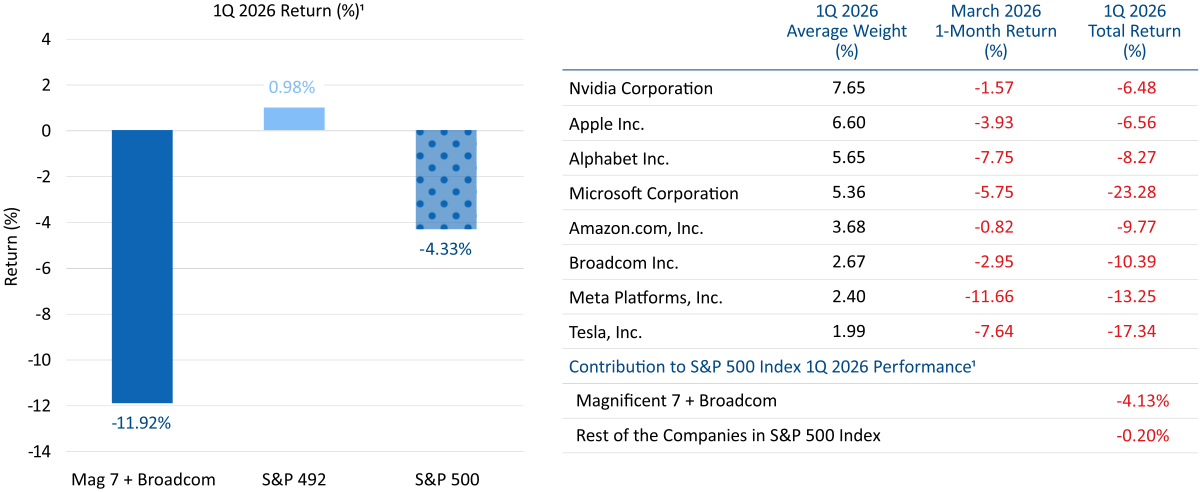
It was also a rough month for the Mag 7 + Broadcom. Any thoughts?
A confluence of headwinds has been battering these stocks, from the war to concerns related to artificial intelligence spending and disruption of software models, with all eight stocks posting negative returns during March. Meta declined the most, down 11.7% last month, on multiple pieces of negative news: the company lost in court – along with Alphabet – over allegations that its social media platforms harmed users’ mental health; it delayed the rollout of its latest AI model, code-named Avocado; and it laid off hundreds of workers, with rumors of more sweeping layoffs to come. Taking a step back, while these eight companies declined about 4% in the first quarter, the average for the rest of the S&P 500 companies was down just 20 basis points (bps).
U.S. Treasury Yield Curve Range
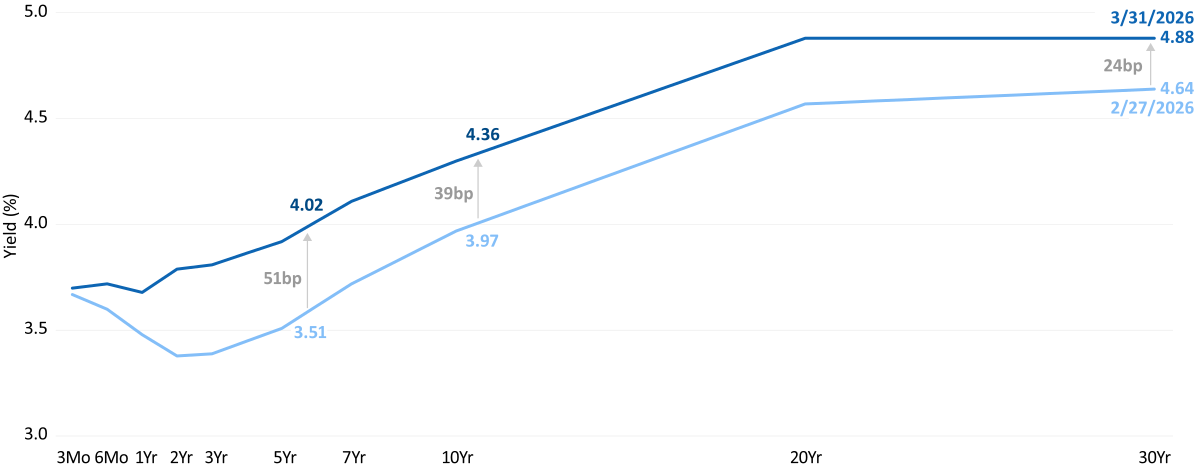
How has the war affected the U.S. Treasury yield curve?
Yields rose across the curve, roughly 25 bps on long end and about 50 bps on the shorter end, from roughly two to seven years to maturity. The 10-year point on the curve rose from just below 4% to about 4.3%. Clearly, the oil shock is raising inflation expectations and changing the market’s outlook on the Fed’s next move, which is why the shorter end of the curve spiked the most.
Fed Futures
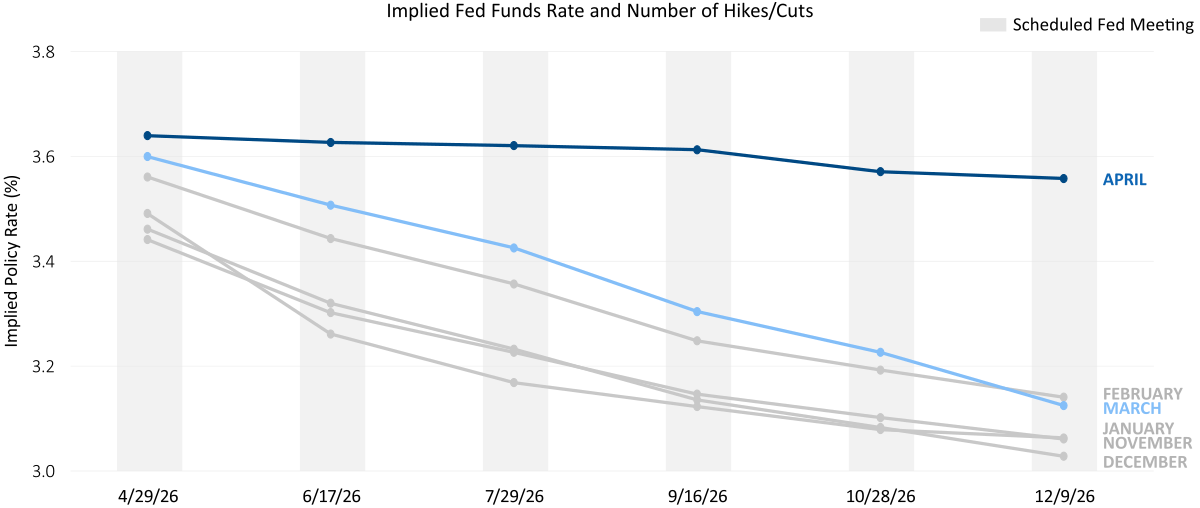
What’s next for Fed policy?
Market expectations for Fed rate cuts have quickly gone from two cuts this year to no cuts. That outlook clearly reflects a hawkish reaction to the energy supply shock and potential for sticky inflation. However, it’s also possible the supply shock drags the economy into a recession and the Fed feels it must ease financial conditions with rate cuts. I think we will get a rate cut or two this year, since economic activity was slowing somewhat before hostilities began. Note that my base case is that the Trump administration finds a way to deescalate the situation or at least restore a significant amount of oil shipping through the Strait of Hormuz within the next 60 days. But I also recognize the situation is highly fluid.
Economic Dashboard
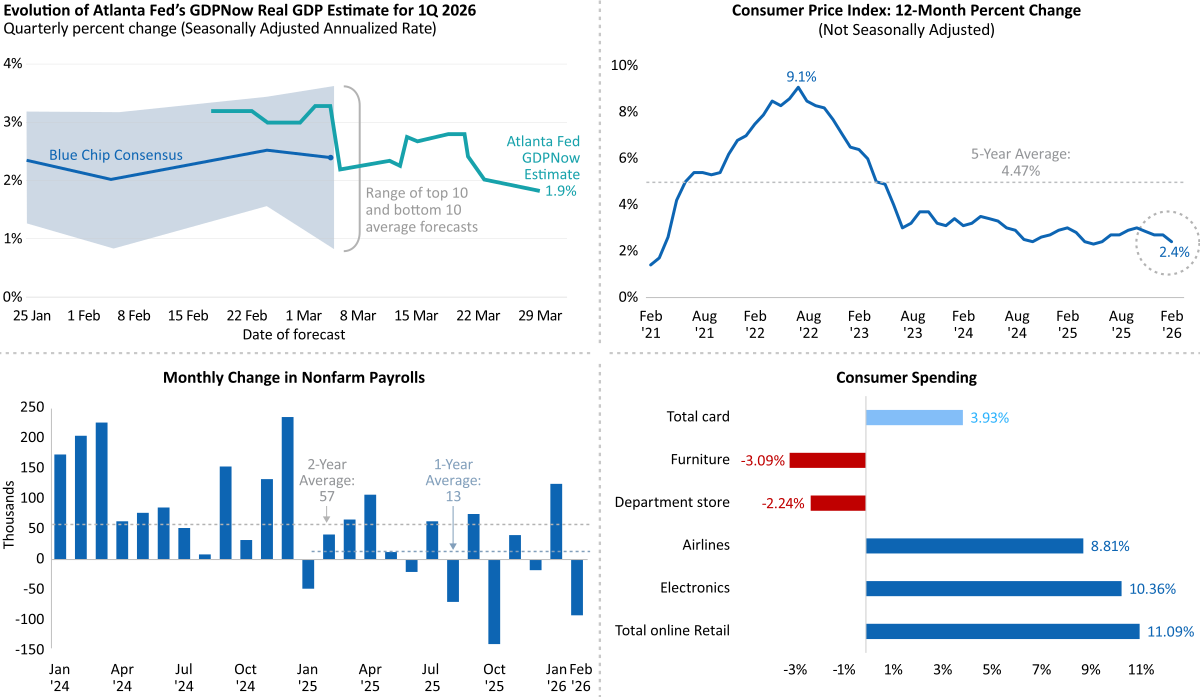
How is the economy holding up?
While macro data points to a stable economy – with inflation close to 2%, GPD growth positive, and the job market moving sideways – that data is backward-looking. It’s extremely difficult to underwrite current events; I don’t see a good historical precedent to use as a framework. We are rewriting history every day, and the usual macro metrics likely will be reset once the conflict with Iran is resolved. In the meantime, the big question for the global economy is: What will it take to open the Strait of Hormuz?
Strategic Leverage Points
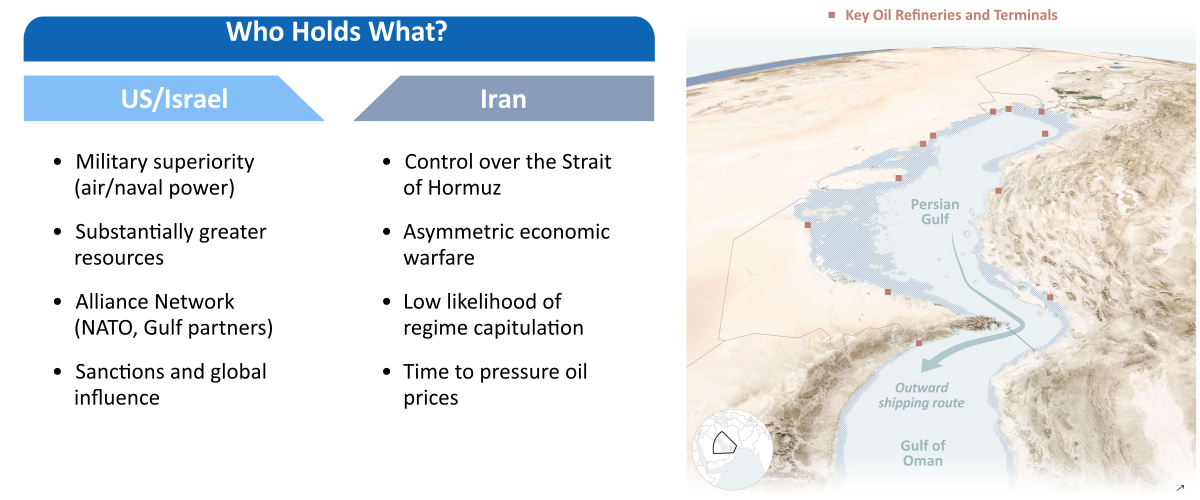
That’s a good segue to our special topic this month. How do you assess the struggle over the Strait of Hormuz?
Let’s start with the strategic leverage points and who controls them, with the caveat that several dynamics are in play and things could change quickly. I think it’s clear the U.S. and Israel have air and naval superiority and greater resources. The U.S. also has alliances that allow us to park ships and planes at allied bases in the region, and we have financial sanctions, which were affecting Iran prior to this conflict.
Yet the most significant leverage point is control of the strait, which is in Iran’s hands. Iran also is employing asymmetric economic warfare. For example, the drones Iran is using are estimated to cost $20,000 to $50,000 each, while interceptor missiles used to shoot them down cost millions of dollars. There also seems to be a low likelihood of regime capitulation in Iran, which means it has time to pressure the global economy with higher oil prices. Time is generally on Iran’s side over the next few months.
Another layer of complication: Even if the U.S. negotiates a deal with Iran, Israel could decide to continue the conflict.
Impact on Shipping Flows
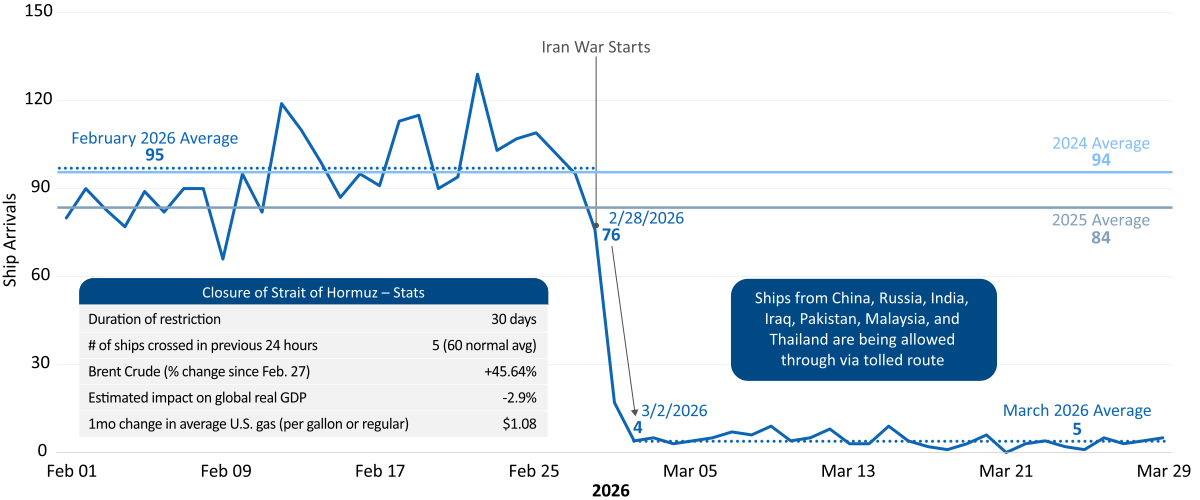
How effective has the closure of the strait been on shipping?
Traffic has declined over 90%. More than 80 ships traversed the strait daily on average in 2025, according to IMF Portwatch, and the U.K. Maritime Trade Operations Center noted that figure was as high as 138 vessels the day before the war. Traffic declined to about five ships a day after the war began, according to several sources, though recent press reports have noted a slight increase in the past couple of weeks, with as many as 16 ships in a day. However, that increased total is still a fraction of pre-war traffic, and those ships tend to be heading to countries in the Middle East and Asia, as well as Russia – few ships are traveling to Western countries. Also, ships are paying Iran a substantial toll to pass the strait.
Where The Barrels Go
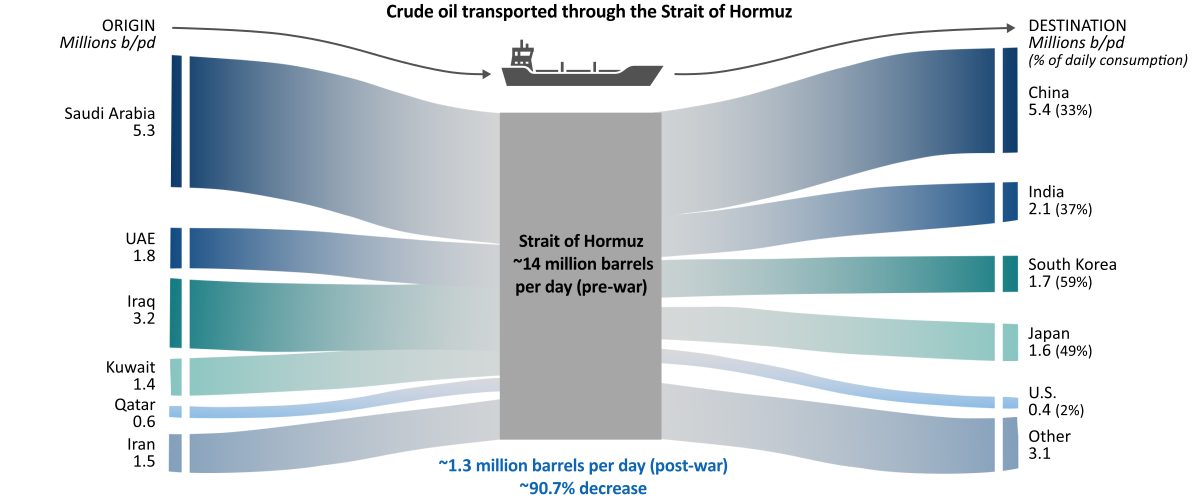
Which countries have been most acutely affected by the drop in oil exports?
South Korea, Japan, India and China top the list of daily oil consumption of oil via the strait before the war, ranging from roughly 30% to 60% of consumption per country. The U.S.’s daily consumption from the strait was about 2%. Yet, while the U.S. is not reliant on that oil, we have seen gas prices spike at home because there is one global oil market, and a shortage in one part of the world typically affects the globe.
From Fuel to Fertilizer
Aside from higher gas prices, how else are U.S. consumers and businesses affected?
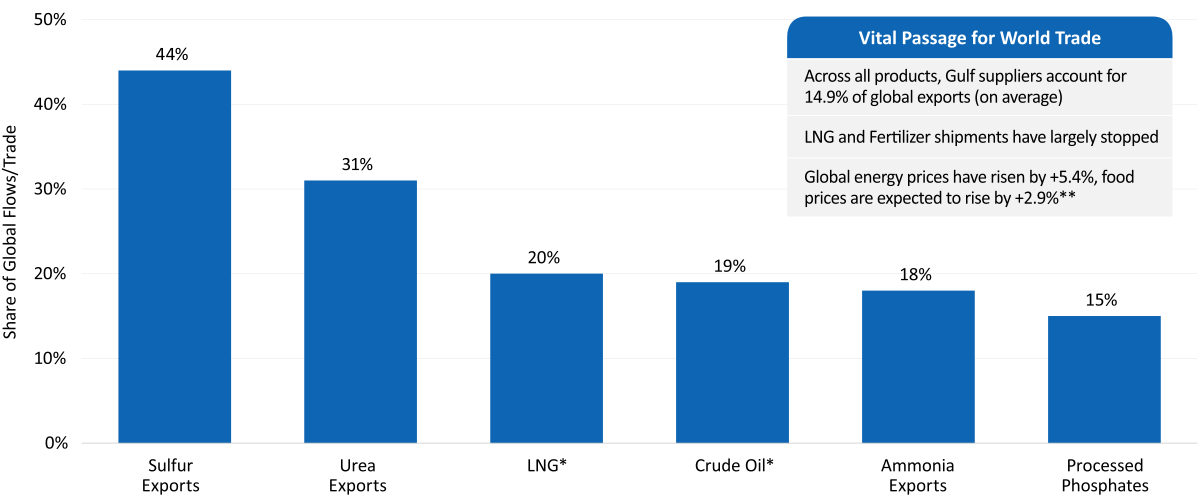
In addition to energy market disruption from the sharp decline in oil and LNG exports, a large portion of the world’s fertilizer and fertilizer ingredients passed through the strait before the war. For example, strait traffic accounted for about 30% of global trade in urea, which is both a widely used nitrogen fertilizer and key ingredient in other fertilizer blends. By one estimate, roughly half of global food production depends on synthetic nitrogen.
U.S. farmers are starting spring planting season, and they are bracing for fertilizer shortages and higher prices. If it costs more to produce crops, and if fewer crops are planted because of fertilizer shortages, then consumers will pay more at the grocery store, on top of already paying more at the gas station. The fertilizer shortages will likely also raise feed costs for animals, potentially driving up prices of beef, pork, poultry and dairy products.
Looking Strait Ahead
What are the long-term implications of these disruptions?
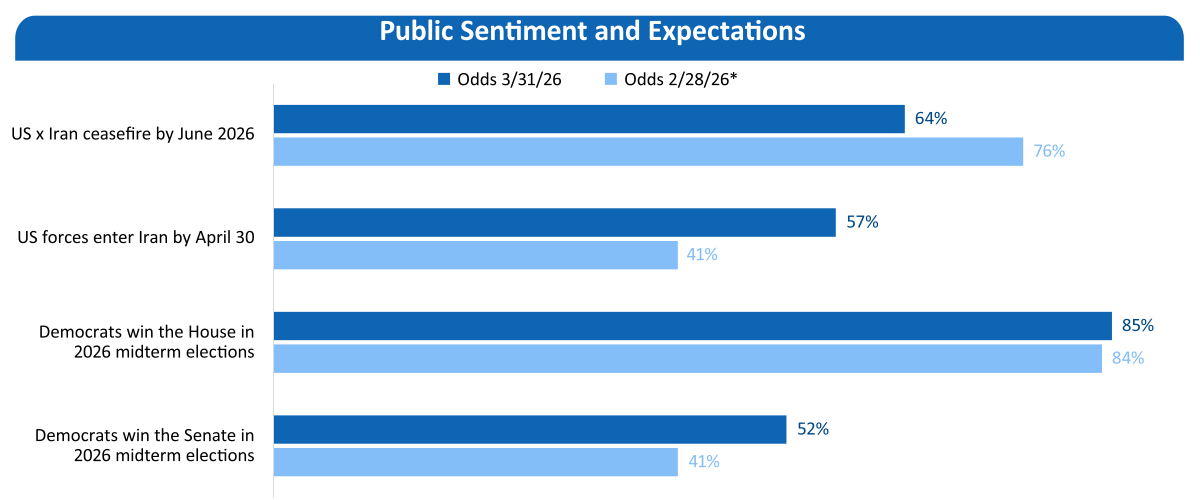
There are near-term and long-term implications. In addition to higher gas prices, near-term ramifications include a general decrease in risk taking, and I expect to see CapEx spending decline as companies wait for greater clarity on transportation costs. Inflation is getting stickier by the day, and, as we have discussed, the Fed is unlikely to cut rates further in the absence of significant economic weakening. Finally, Democrats were already favored to win the House, and now their chances of winning the Senate have increase from ~30% entering the year to about 50%. If they sweep Congress, we could see President Donald Trump’s agenda muted over the final two years of his term, and perhaps more legal challenges to his administration.
Looking over the longer term, the Middle East now is destabilized, and the path forward for Iran is murky. Iran’s regime could become more entrenched and combative. For instance, previously Iran’s leadership seemed to believe having enriched uranium but not a nuclear weapon was enough to deter attacks on their soil. Since that premise has been proven false with these attacks, the regime could shift to a more hardline stance, seriously pursuing nuclear weapons. It’s also possible the regime fails and the country fractures. There is simply too much uncertainty to feel comfortable about predicting the regime’s longevity and priorities over the next few years.
In addition, companies that produce oil outside the Middle East, namely U.S. and Russian companies, should be beneficiaries of higher oil prices and the ability to transport oil freely. Also, China may benefit simply from appearing to be a stable economic and political power. China has not come to Iran’s defense and did not cancel Trump’s planned Beijing visit in May. They have been relatively quiet and steady through this.
Tale of Two Loan Markets
Fixed Income Yields and Year-to-Date Returns
Let’s shift the discussion back to bonds. Where are you seeing opportunities in fixed income today?
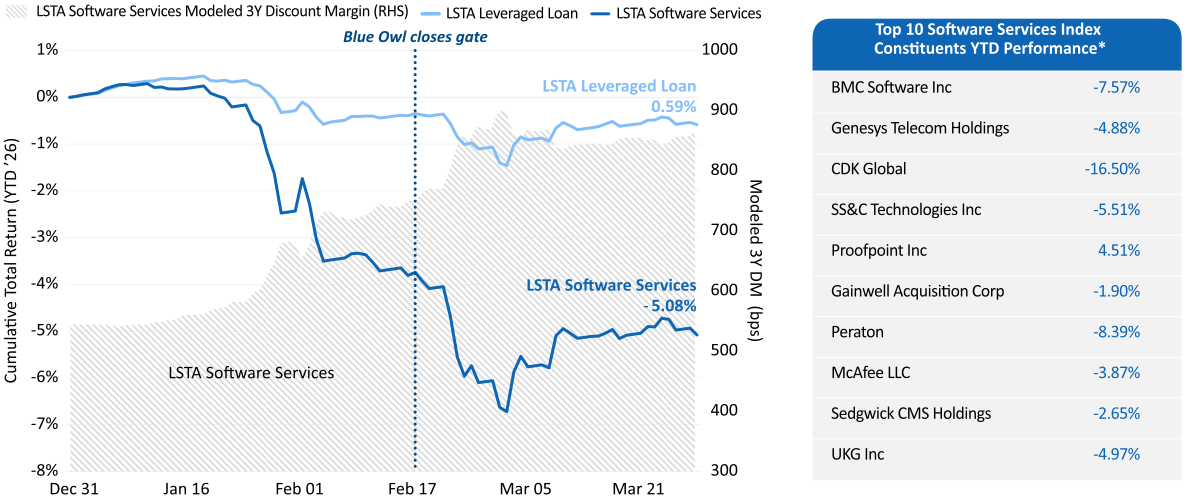
Prior to the Iran war, we saw a selloff in software equities related to concerns over AI disruption of software business models. Also, first-lien loans in software, which sit at the top of the capital structure, underperformed in the first quarter, but over the last few weeks have been resilient through as investor attention has shifted more to the implications of the war.
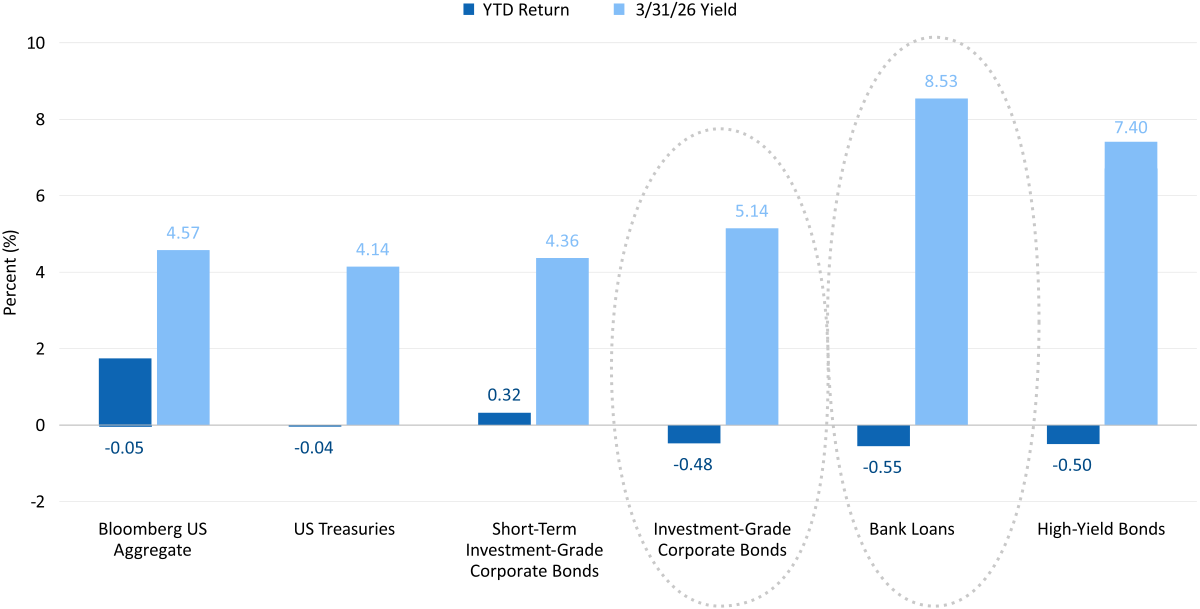
For some time, I have considered duration a tailwind and favored investment-grade corporate bonds. As noted at the beginning of this discussion, IG corporates underperformed in March as yields rose. However, I have also often pointed to the value of maintaining an allocation to bank loans, and they delivered a positive return last month. Bank loans are attractive for at least three reasons: they can help mitigate portfolio volatility, they offer a compelling yield of about 8.5%, and they are senior in the capital structure.
We also continue to favor IG corporate bonds, which yield around 5%, given my base case that the Strait of Hormuz allows much more traffic within the next 60 days, even if it is not fully “reopened.” If the strait is more than 50% open, yields should calm down, and duration could again become a tailwind. Of course, this outcome remains uncertain.
Let's close with a personal reflection.
It's been an interesting month for me personally, and certainly for the world. My reflection is that behind every person, there's a story. I encourage folks to be intentional with those around them and to ask more than the typical questions. Devote some time and focus to them, and you may find that there's substantially more going on than you thought. Whether that reveals the good, bad, or ugly, I think they'll remember your effort and intention.
A 10-year Treasury note is a debt obligation issued by the United States government with a 10-year maturity period.
The Atlanta Fed GDPNow provides a running estimate of real GDP growth for the current quarter using available economic data.
Bank loans (or floating-rate loans) are financial instruments that pay a variable or floating interest rate. A floating rate fund invests in bonds and debt instruments whose interest payments fluctuate with an underlying interest-rate level.
A bond is a fixed-income instrument and investment product where individuals lend money to a government or company at a certain interest rate for an amount of time. The entity repays individuals with interest in addition to the original face value of the bond.
The Bloomberg US Aggregate Bond Index (Agg) is composed of investment-grade U.S. government bonds, invest-ment-grade corporate bonds, mortgage pass-through securities, and asset-backed securities, and is commonly used to track the performance of U.S. investment-grade bonds.
Capital Expenditure (CapEx) is the money a company spends to acquire, upgrade, or maintain long-term, physical assets.
Consumer Confidence measures consumers’ attitudes and optimism about the economy and their personal financial situation.
Coupon refers to the interest payment that a bond issuer promises to pay to a bondholder.
Fixed income refers to assets and securities that pay a set level of income to investors, typically in the form of fixed interest or dividends.
Investment grade refers to the quality of a company's credit. To be considered an investment grade issue, the company must be rated at 'BBB' or higher by Standard and Poor's or Moody's.
An investment-grade bond is a type of bond that is considered to have a relatively low risk of default.
The ISM Manufacturing Index is a monthly economic indicator published by the Institute for Supply Management (ISM) that gauges the health of the U.S. manufacturing sector.
Treasury rate (or yield) refers to the interest rate at which the U.S. government borrows money by issuing Treasury securities.
Yield is the income returned on an investment, such as the interest received from holding a security.
A yield curve plots the interest rates of bonds that have equal credit quality but different maturity dates.
Yield-to-Worst is the lowest potential yield that can be received on a bond without the issuer defaulting.
Any performance data quoted represents past performance, which does not guarantee future results. Index performance is not indicative of any fund’s performance. Indexes are unmanaged and it is not possible to invest directly in an index. For current standardized performance of the funds, please visit www.AristotleFunds.com.
The views expressed are as of the publication date and are presented for informational purposes only. These views should not be considered as investment advice, an endorsement of any security, mutual fund, sector or index, or to predict performance of any investment or market. Any forward-looking statements are not guaranteed. All material is compiled from sources believed to be reliable, but accuracy cannot be guaranteed. The opinions expressed herein are subject to change without notice as market and other conditions warrant.
Investors should consider a fund’s investment goal, risk, charges and expenses carefully before investing. The prospectus contains this and other information about the fund and can be obtained at www.AristotleFunds.com. It should be read carefully before investing.
Investing involves risk. Principal loss is possible.
A full list of holdings can be found at www.aristotlefunds.com and are subject to risk and to change at anytime. Any discussion of individual companies is not intended as a recommendation to buy, hold or sell securities issued by those companies.
Aristotle Funds and Foreside Financial Services, LLC are not affiliated with Pacific Life Fund Advisors LLC.
Foreside Financial Services, LLC, distributor.