
May 2026
Guidance Among the Volatility
Download PDFWe recently sat down with Dominic Nolan, CEO of Aristotle Pacific Capital, to get his analysis of credit markets, his view of the Fed’s next move, and his insights on how companies are navigating elevated market and geopolitical volatility. We conclude with a personal reflection.
Market Performance
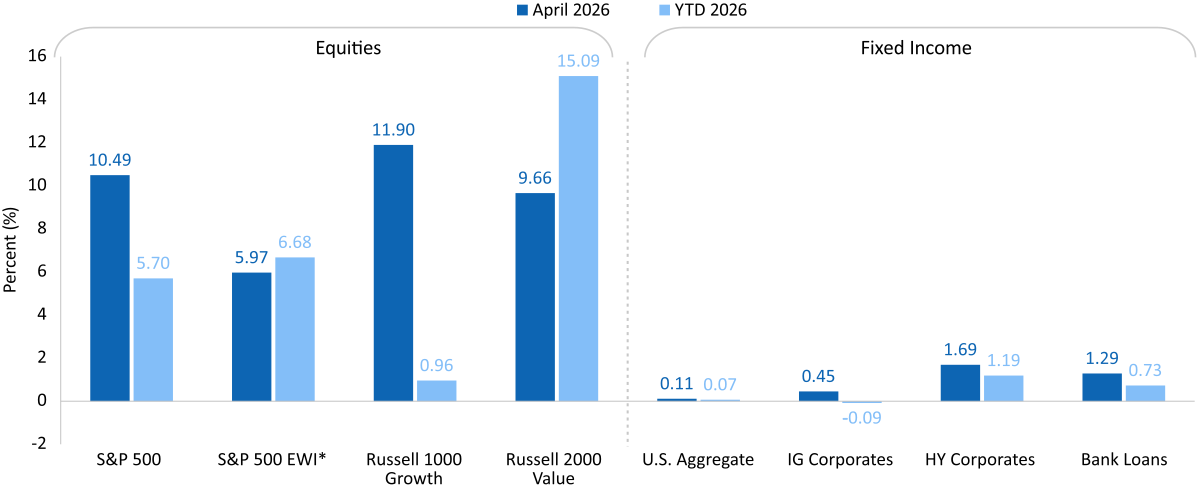
April was a strong month for stocks and bonds. What happened?
First, a de-escalation in geopolitical tensions led to a “relief” rally. Second, earnings were generally above expectations, which we will discuss in more detail. Those developments contributed to the S&P 500 Index gaining nearly 10.5% in April, bringing its year-to-date return to 5.7%. The S&P 500 Equal Weight Index rose nearly 6% in April and is up 6.7% for the year. The standout was the Russell 1000 Growth Index, gaining nearly 12%, though for the year it is up about 1%. The Russell 2000 Value Index also had a strong April, with a 9.7% rise, and it has climbed more than 15% year to date. So, across the board, equities had a strong April.
Fixed income was largely flat, with the Bloomberg US Aggregate Bond Index up less than 1% for the month and year to date. High yield performed well, gaining 1.7%, while bank loans returned 1.3% and is up 73 basis points (bps) for the year thus far.
Mag 7 + Broadcom
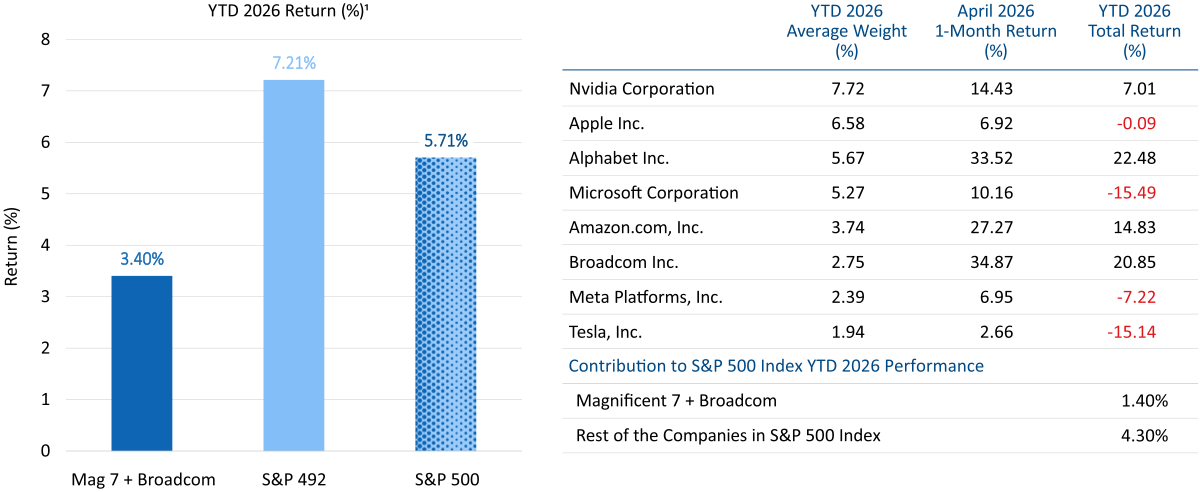
Thoughts on the Mag 7 + Broadcom?
They all had a positive month, with AI optimism continuing to drive returns. Broadcom led the group, returning nearly 35% on news that it will develop and supply custom AI chips for Google and additional computing capacity to Anthropic. Interestingly, while Meta was up nearly 7% and reported its biggest year-over-year quarterly revenue jump in nearly five years, investors remain wary about the level of capex. Citing a rise in costs, Meta increased its projected capital spending for the year by $10 billion, to a new range of $125 billion to $145 billion.
U.S. Treasury Yield Curve Range
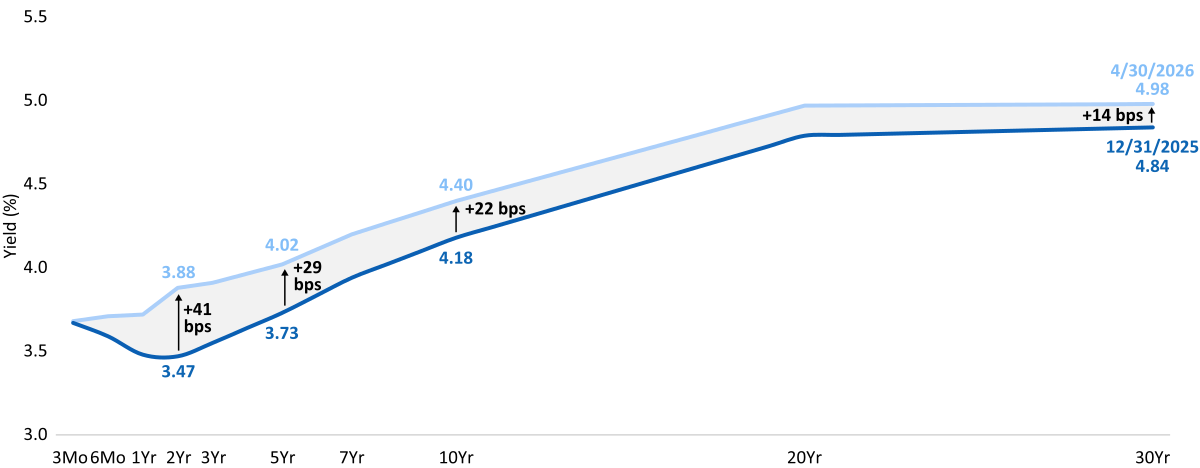
U.S. Treasury yields rose across intermediate and long maturities in April. What drove rates higher?
Markets are adjusting to the supply shock. The Iran war began more than two months ago, and investors have recently been realizing that shortages in materials and energy are likely to persist. In addition, the economy is performing better than many had expected, considering geopolitical uncertainty, the software correction in markets, and concerns over a potential “AI bubble.” These factors are leading to a public mindset of higher growth and higher inflation, which drove the yield curve about 40 bps higher for two-year maturities and close to 15 bps higher for 30-year maturities.
Fed Futures
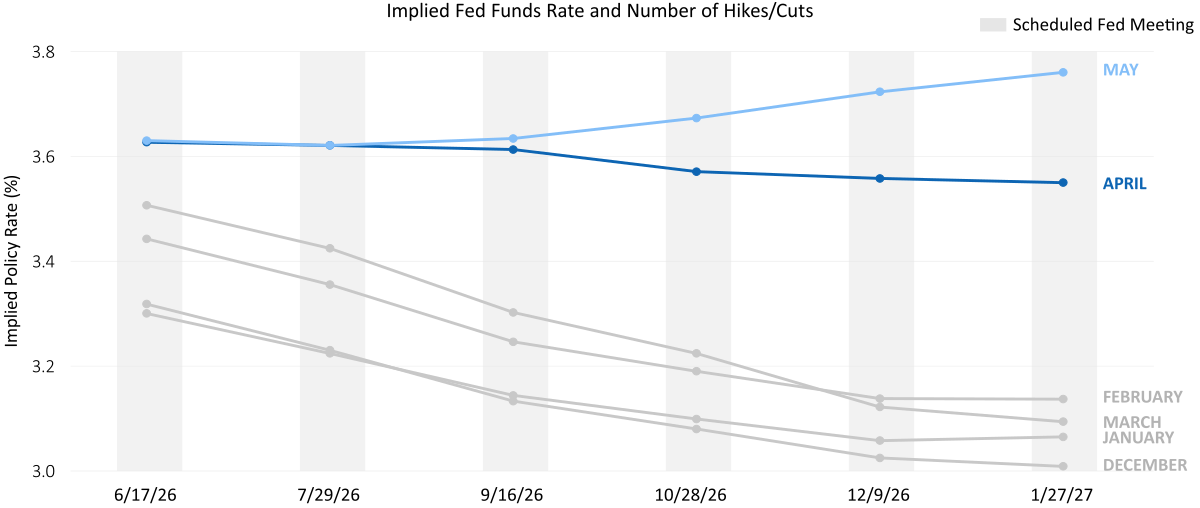
There were numerous Federal Reserve headlines last month from the Kevin Warsh nomination to the April FOMC meeting. How does this translate into future Fed policy?
I don't think anyone expects a rate hike this year. On the likelihood of rate cuts by year end, market analyst forecasts range from zero to three cuts for the remainder of 2026. Personally, I think the Fed will cut once or twice, but we'll see – a lot can change.
Markets seemed to have digested Warsh’s Senate confirmation hearings. I believe Warsh is planting a flag on the Fed remaining independent, and under his leadership, I expect the Fed will reduce its balance sheet and evolve its communications.
Economic Dashboard
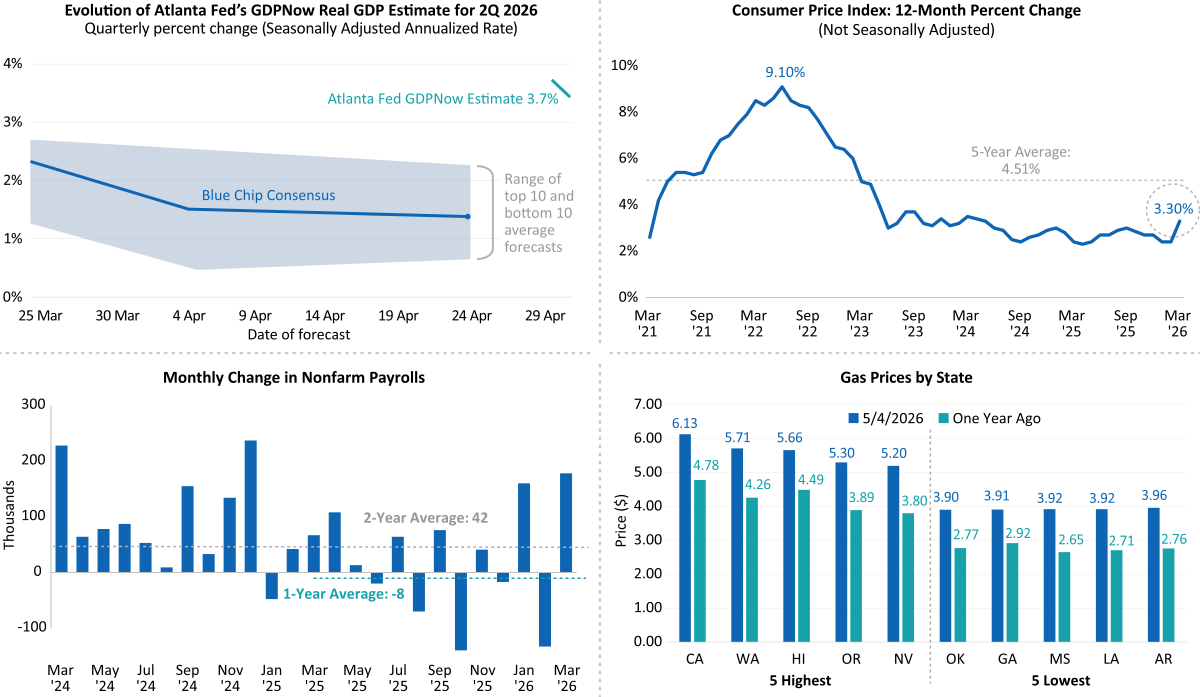
What can we learn from the latest economic data?
The overarching theme is that economic activity was disrupted by the supply shocks and now is resetting. In addition, the economy continues to demonstrate resilience. While it is early in the second quarter as we have this conversation, the Atlanta Fed’s GDPNow “live” estimate for economic growth this quarter is 3.7%, indicating solid growth. Other estimates vary, but I think we can safely say the economy is expanding at roughly a 2-3% real rate and 4% to 5% nominal rate. Meanwhile, other key data is mixed. U.S. inflation is back above 3% due to the spike in energy prices, and nonfarm payrolls have bounced around so far this year.
Underneath the headline jobs numbers, I think we are seeing some interesting trends. I believe we are seeing a shift from white-collar to industrial hiring, which is potentially a positive trend for the country. Also, certain sectors are hiring, including healthcare, construction and logistics. Demographics are driving healthcare employment, while the AI boom and industrialization, such as from onshoring manufacturing, are driving much of the expansion in construction and logistics. Also, while we have seen the news reports about layoffs at tech firms such as Meta and Amazon, folks should keep in mind those companies dramatically grew their workforces over the past several years and now are trimming a relatively small portion of their total employees as they find a new equilibrium.
Finally, we are keeping an eye on the implications of high gas prices. It’s too early to say how much this will ultimately affect inflation and economic activity; but it is worth noting that the longer this goes on, the worse the effects will likely be.
Earnings Season So Far
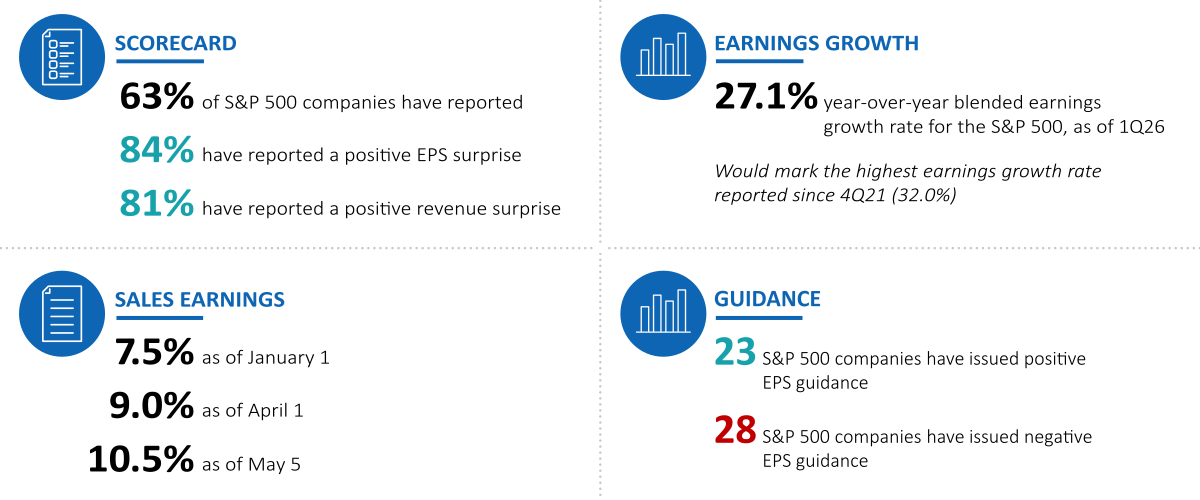
Let's shift to our special topic. With the first quarter defined by rapid advancements in AI technology and potentially the largest supply shock since COVID, how are companies navigating volatility? What are earnings releases telling us so far?
For the 89% of S&P 500 companies that have reported earnings as of May 8, 84% issued a positive earnings surprise and 80% a positive revenue surprise, based on a summary from FactSet. Further, their blended earnings growth rate year-over-year was 27.7%, which will be the highest since 2021 if that figure holds when all companies have reported. These companies are overdelivering.
However, the supply chain shock could significantly affect future earnings. Thus far, there is nearly an equal balance of companies reporting negative guidance for the second quarter versus the mean expectation of analysts as there are those reporting positive guidance. Even if that shifts definitively positive as more companies report, numerous companies clearly are facing or expecting headwinds.
While time will tell if the supply shock disrupts these companies, so far, I think the key takeaways are that our biggest companies generally remain quite profitable, productivity is increasing, the AI infrastructure trend is real, and the economy is doing well enough.
Guidance by Sector
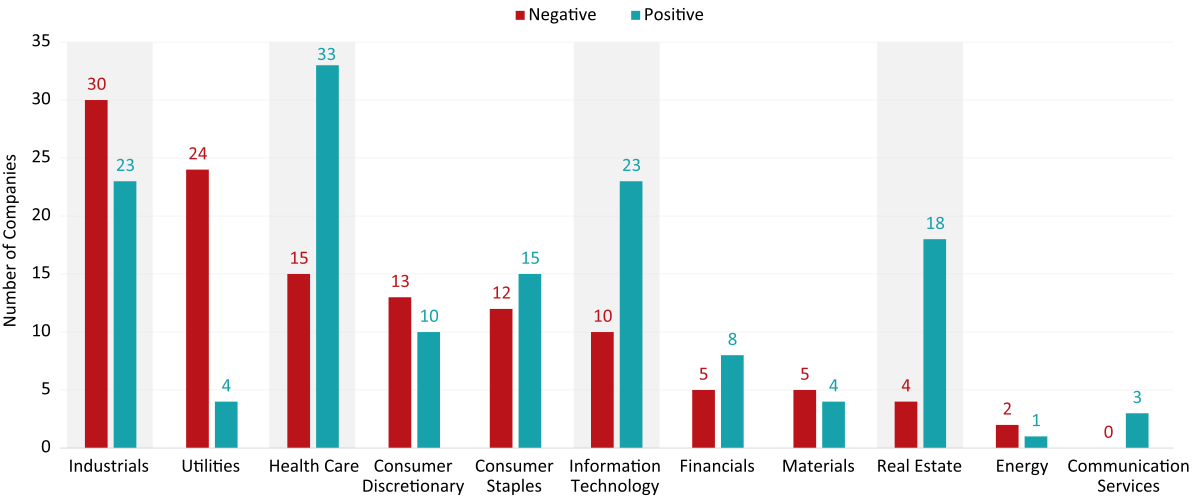
What can we discern from sector outlooks?
Companies in different sectors are expecting significant disparities in performance. Looking at full guidance for the fiscal year 2026/2027 as of May 8, utilities overwhelmingly have issued negative guidance vs. analysts’ expectations – 24 negative company forecasts versus four positive ones – and the picture is mixed in industrials with slightly more positive than negative. Consumer discretionary, materials and energy also tilted negative, though their total number of companies are smaller. On the opposite end of the spectrum, most S&P 500 companies in healthcare, consumer staples, information technology, real estate, and financials expect earnings to surpass mean analysts’ forecasts in the second quarter.
Earnings Revisions Split
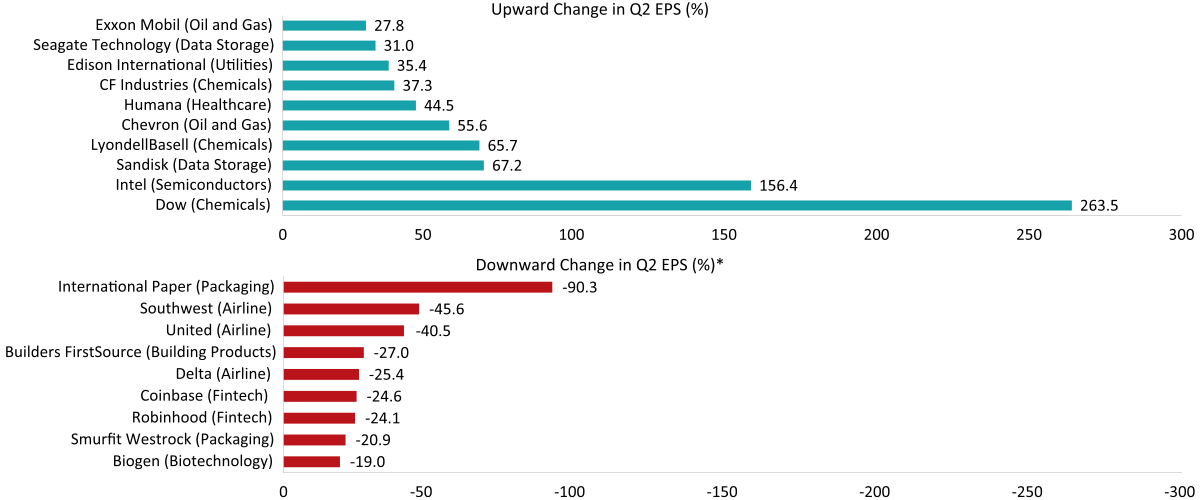
Are individual companies standing out?
Two chemical companies that had cut dividends within the past year due to a decline in their cash – Dow and LyondellBasell – have recently reported large gains in expected second quarter 2026 earnings, as the supply shock drives up petrochemical prices and they can produce them far from the Strait of Hormuz. In contrast, companies in certain other sectors have a harder time passing through costs to customers. For example, travelers generally buy plane tickets in advance, so there is a delay before airlines can raise prices, and even then, they carefully test what their customers will tolerate. That helps explain the demise of Spirit and large declines in second-quarter earnings guidance from Southwest, United, and Delta.
Sector Performance vs. Forward Earnings
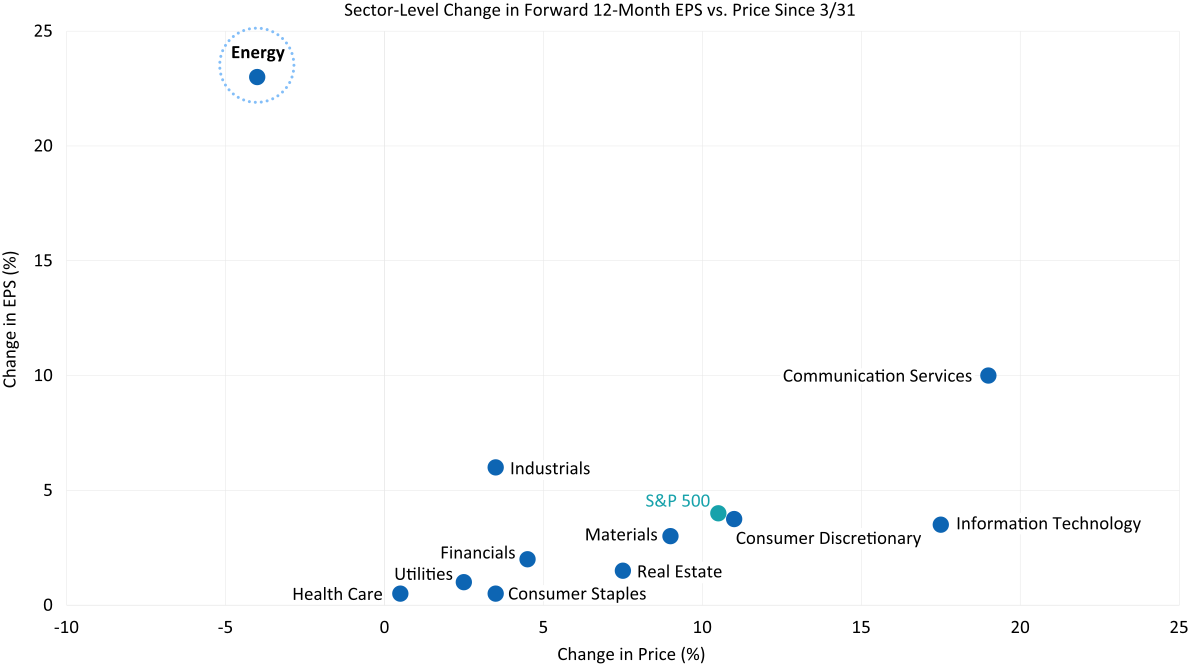
Have investors come around to the unloved energy sector?
The short answer is no. While energy companies raised their 12-month earnings forecasts in April, their stock prices drifted down a bit. This suggests investors see the increase in earnings as likely temporary because the increase in energy prices is likely temporary. In addition, I imagine there are many Wall Street veterans scarred from the debt-financed shale boom of the early 2010s that turned to a debt bust when oil prices declined.
Still, I expect even after some kind of lasting resolution to the Iran war occurs, oil prices will settle higher than they were before the conflict. The question is what energy companies will do with their cash windfalls – increase dividend payments, invest in exploration etc. To be sure, we should invest in energy infrastructure in this country. While the shine has worn off energy alternatives, I think nuclear and solar are still important for meeting long-term energy needs and are worth investing in.
Earnings Commentary
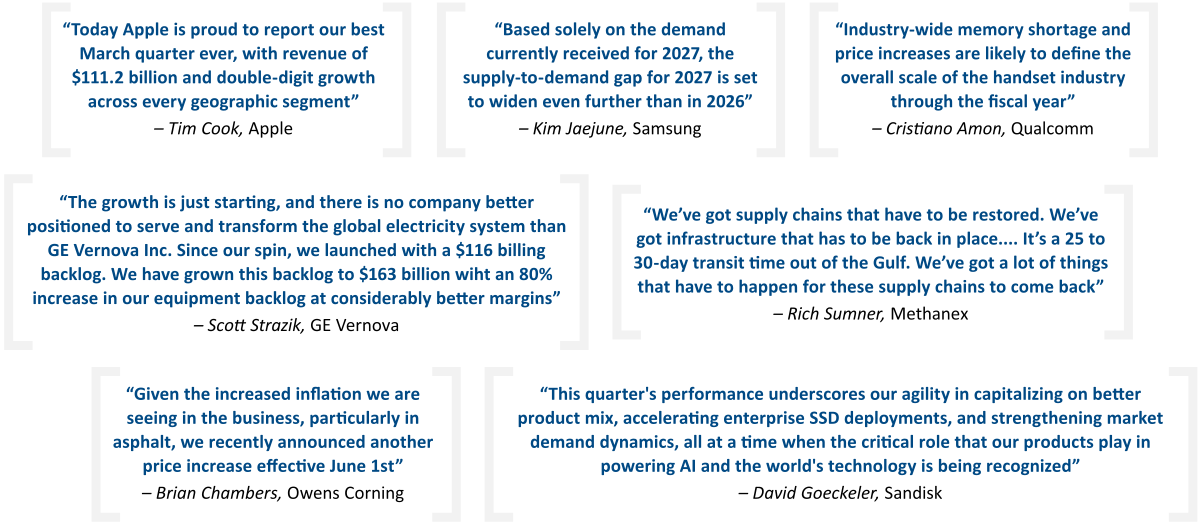
Last question on this topic: Is there anything we should take away from CEO comments on earnings calls?
Several CEO comments emphasize the points shared earlier about strong current earnings, with some companies facing headwinds due to the supply shock. Tim Cook, for example, said “Apple is proud to report our best March quarter ever, with revenue of $111.2 billion and double-digit growth across every geographic segment.” The number speaks for itself: $112 billion is a monster revenue figure for a single quarter.
Yet, that quote is a look backward. Looking forward, Qualcomm CEO Cristiano Amon said, “Industry-wide memory shortage and price increases are likely to define the overall scale of the handset industry through the fiscal year.” Note that certain raw materials needed for memory chips are blocked by the closure of the Strait of Hormuz.
In another example, Methanex CEO Rich Sumner said, “We've got supply chains that have to be restored. We've got infrastructure that has to be back in place…. it's a 25 to 30-day transit time out of the Gulf. We've got a lot of things that have to happen for these supply chains to come back.”
Thus, every day the Strait of Hormuz is shut, it just pushes out inflation. I expect for hardware, food, and other affected items, we are likely to see elevated prices for the rest of the year.
Fixed Income Yields and Year-to-Date Returns
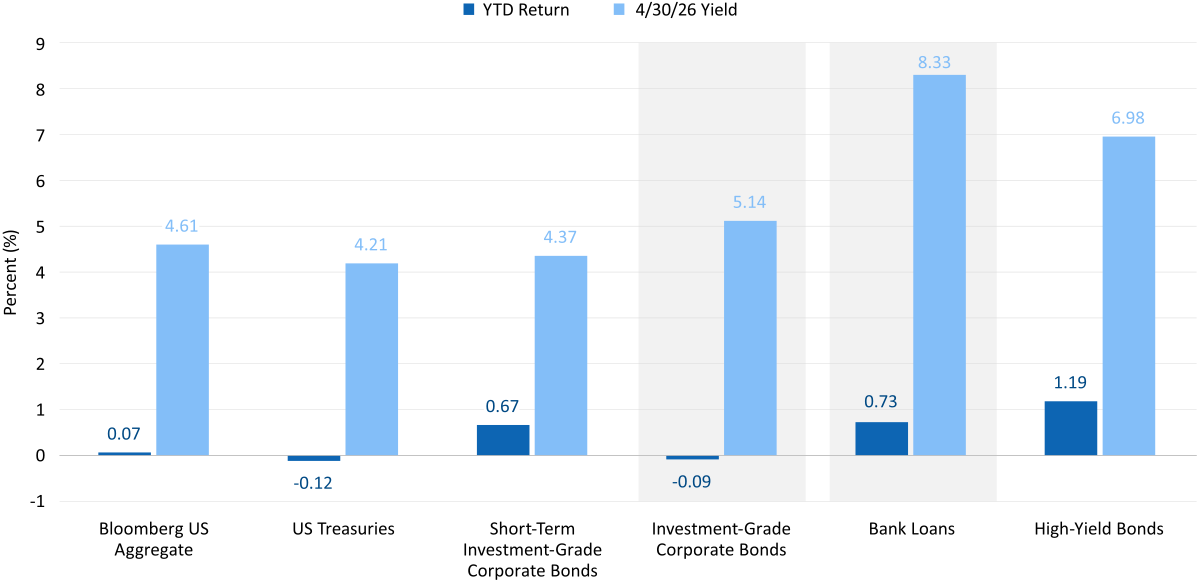
Let’s shift to bonds. Where are you seeing opportunities in fixed income today?
I’ll start with high-level trends and then drill down to asset classes. My base case is interest rates will remain elevated for a while longer. If the de-escalation with Iran holds, that geopolitical stability would be good for spreads. As I have said, I believe the AI build-out is real regardless of whether valuations are justified. Finally, credit conditions are fine, but with spreads tight, credit markets don't have much cushion to weather significant negative shocks.
With that backdrop in mind, I remain very positive on investment-grade credit. IG bonds offer yields of about 5%, and their credit risk generally is low. In addition, since no one can be sure where interest rates will be in the future, there is an argument for an allocation to floating-rate bank loans. Bank loans had a positive return in the first quarter, which was challenging for fixed income, and they yield more than 8%. Finally, there is a case for high yield bonds, which had a strong first quarter relative to the other fixed income sectors. Investors could consider HY bonds, which are typically short maturity than investment grade, that could benefit if the Fed cuts rates at least once this year, which I expect.
Let's close with a personal reflection.
I have heard a lot lately about kids going through the college admissions process. My son is now 23, and he was 17 when he went through the process, which was difficult. Also, my daughter went through it just a couple years ago. I said to them, you are so different today than you were at 17. Whether you like it or not, colleges consider your 17-year-old or 16-year-old self. The level of ups and downs that these high school seniors go through is unfortunate. We often tell our kids that things are rarely as good as they seem or as bad as they seem, and I say that is especially true for this process. I recommend harnessing whatever opportunity you get and learning from it. But don't let the colleges’ judgment of you at 16 or 17 stay with you.
A 10-year Treasury note is a debt obligation issued by the United States government with a 10-year maturity period.
The Atlanta Fed GDPNow provides a running estimate of real GDP growth for the current quarter using available economic data.
Bank loans (or floating-rate loans) are financial instruments that pay a variable or floating interest rate. A floating rate fund invests in bonds and debt instruments whose interest payments fluctuate with an underlying interest-rate level.
A bond is a fixed-income instrument and investment product where individuals lend money to a government or company at a certain interest rate for an amount of time. The entity repays individuals with interest in addition to the original face value of the bond.
The Bloomberg US Aggregate Bond Index (Agg) is composed of investment-grade U.S. government bonds, invest-ment-grade corporate bonds, mortgage pass-through securities, and asset-backed securities, and is commonly used to track the performance of U.S. investment-grade bonds.
Capital Expenditure (CapEx) is the money a company spends to acquire, upgrade, or maintain long-term, physical assets.
Consumer Confidence measures consumers’ attitudes and optimism about the economy and their personal financial situation.
Coupon refers to the interest payment that a bond issuer promises to pay to a bondholder.
Fixed income refers to assets and securities that pay a set level of income to investors, typically in the form of fixed interest or dividends.
Investment grade refers to the quality of a company's credit. To be considered an investment grade issue, the company must be rated at 'BBB' or higher by Standard and Poor's or Moody's.
An investment-grade bond is a type of bond that is considered to have a relatively low risk of default.
The ISM Manufacturing Index is a monthly economic indicator published by the Institute for Supply Management (ISM) that gauges the health of the U.S. manufacturing sector.
Treasury rate (or yield) refers to the interest rate at which the U.S. government borrows money by issuing Treasury securities.
Yield is the income returned on an investment, such as the interest received from holding a security.
A yield curve plots the interest rates of bonds that have equal credit quality but different maturity dates.
Yield-to-Worst is the lowest potential yield that can be received on a bond without the issuer defaulting.
Any performance data quoted represents past performance, which does not guarantee future results. Index performance is not indicative of any fund’s performance. Indexes are unmanaged and it is not possible to invest directly in an index. For current standardized performance of the funds, please visit www.AristotleFunds.com.
The views expressed are as of the publication date and are presented for informational purposes only. These views should not be considered as investment advice, an endorsement of any security, mutual fund, sector or index, or to predict performance of any investment or market. Any forward-looking statements are not guaranteed. All material is compiled from sources believed to be reliable, but accuracy cannot be guaranteed. The opinions expressed herein are subject to change without notice as market and other conditions warrant.
Investors should consider a fund’s investment goal, risk, charges and expenses carefully before investing. The prospectus contains this and other information about the fund and can be obtained at www.AristotleFunds.com. It should be read carefully before investing.
Investing involves risk. Principal loss is possible.
A full list of holdings can be found at www.aristotlefunds.com and are subject to risk and to change at anytime. Any discussion of individual companies is not intended as a recommendation to buy, hold or sell securities issued by those companies.
Aristotle Funds and Foreside Financial Services, LLC are not affiliated with Pacific Life Fund Advisors LLC.
Foreside Financial Services, LLC, distributor.