
January 2026
The 2026 Playbook
Download PDFWe recently sat down with Dominic Nolan, CEO of Aristotle Pacific Capital, to get his outlook for 2026, including the likelihood of further rate cuts and opportunities in fixed income. We conclude with a personal reflection.
Market Performance
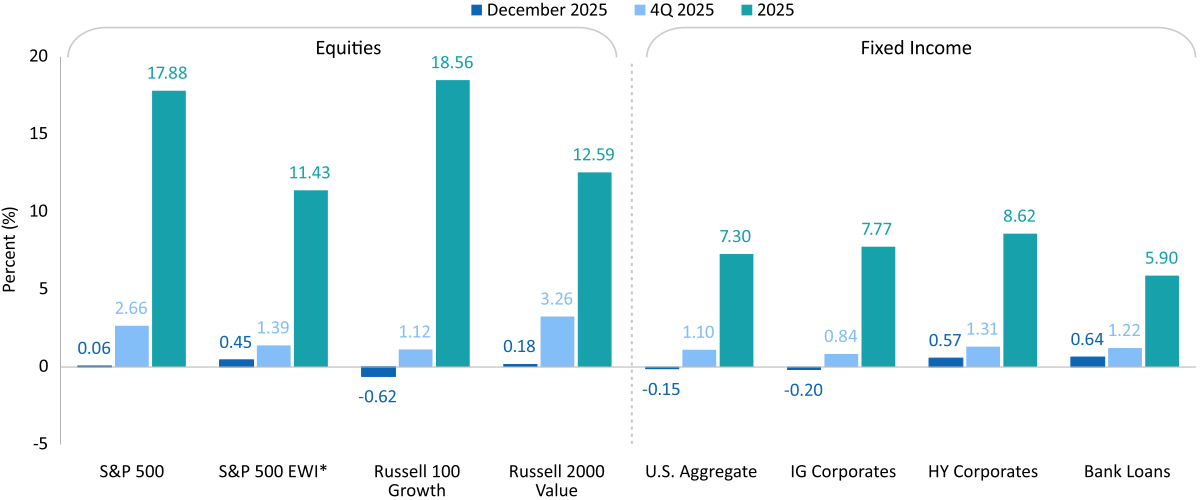
December was largely flat for asset prices, but investors generally enjoyed strong returns in 2025. What’s your reflection on the year?
December was largely flat for asset prices, but investors generally enjoyed strong returns in 2025. What’s your reflection on the year?
It was a very good year for equities, and a solid year for fixed income. The S&P 500 Index rose 17.9% in 2025, and the Russell 2000 Value Index finished up 12.6%. Meanwhile, the Bloomberg US Aggregate Bond Index gained 7.3%. High yield led fixed-income sectors with an 8.6% return, and bank loans, while on the low end of performance, still returned 5.9%. In short, “safe” assets returned roughly 6% to 9%, while equities gained 11% to 19%, making for a strong year overall.
Several tailwinds supported markets in 2025. With inflation manageable, the Fed continued the rate-cutting cycle it began in 2024, lowering financing costs. Companies in the S&P 500 grew earnings by roughly 12% over last year, and capital expenditure on artificial intelligence continued at a robust pace.
Risks include the ongoing effects of tariffs and broader geopolitical tensions. Interest rates remain somewhat elevated, and valuations are a concern given that S&P returns outpaced earnings growth by several percentage points in 2025.
Mag 7 + Broadcom
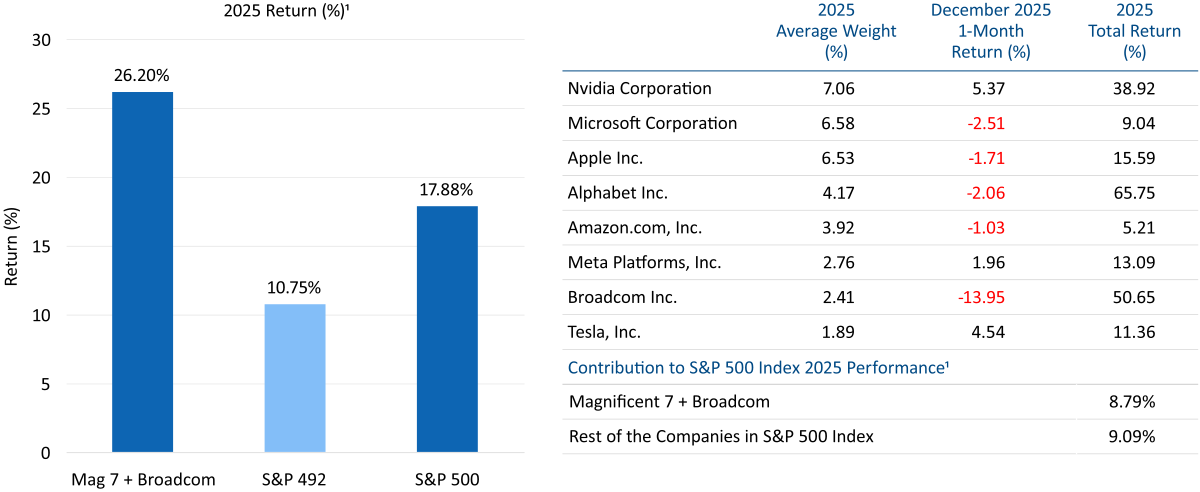
The Magnificent 7 plus Broadcom outperformed the market, but performance varied widely. Your thoughts?
Indeed, the “Magnificent 8” returned an average of 26.2% in 2025, far outpacing the market, with all eight posting positive returns. AI was the dominant theme, and Nvidia became the first company to surpass $5 trillion in market capitalization. Alphabet led the group with a 65.8% gain, while Amazon lagged with a 5.2% return. These mega caps accounted for nearly half of the S&P 500’s return last year and a large share of its earnings.
U.S. Treasury Yield Curve
Fed Futures
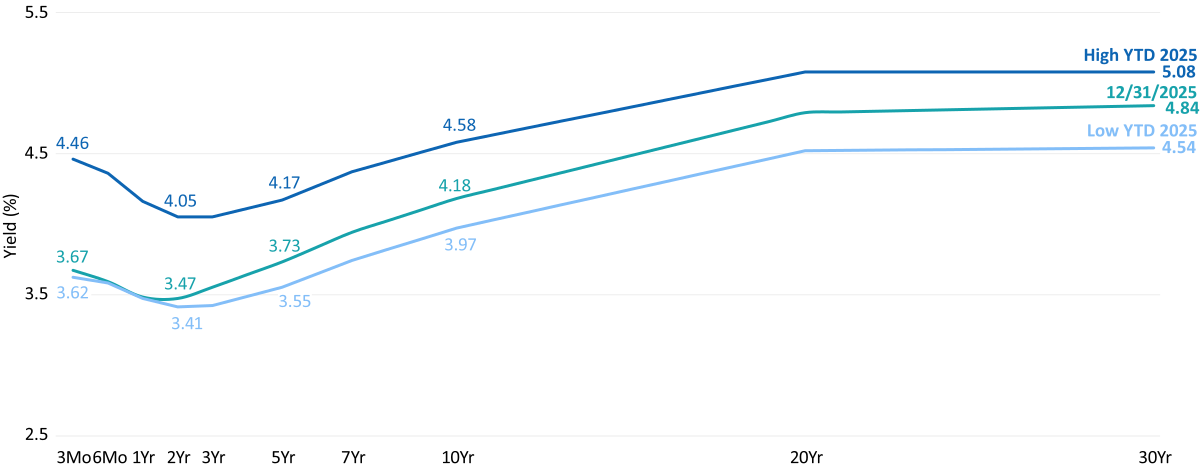
The U.S. Treasury yield curve steepened in December and over the course of the year. What does that tell us?
The good news is the curve is no longer inverted. The two‑year Treasury yield ended the year near 3.5% and the 10‑year yield close to 4.2%. One could joke that the inverted yield curve has predicted 10 of the last six recessions. Seriously, once the curve inverts, recession chatter tends to escalate. However, the most recent inversion lasted more than two years, a recession did not materialize, and now the curve is upward sloping. That said, the Fed is well into an easing cycle and long-end yields have declined less than many expected, myself included.
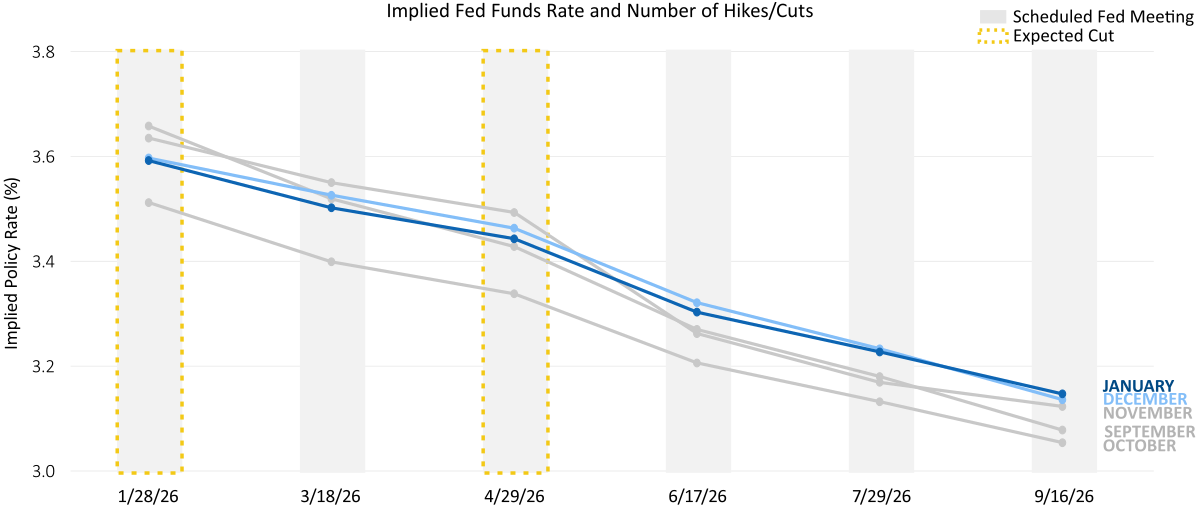
The Federal Open Market Committee cut the federal funds rate by 25 basis points in December. What are your expectations for Fed policy in 2026?
The base-case expectation is two additional cuts, bringing the federal funds rate to a target range of 3.00% to 3.25%. If the long end of the curve remains in the range of 4.2% on the 10-year Treasury to about to 4.8% on the 30-year, the yield curve would be steep, which would normally imply downward pressure on long-term rates. However, in this cycle we have seen instances of long-term rates rising after a Fed cut, likely reflecting concerns that aggressive easing could reignite inflation. A key wildcard is who will succeed Fed Chair Jerome Powell when his term as chair ends in May. All told, the base case is the federal funds rate falls to 3% and remains there for some time, assuming the economy stays resilient.
The Fed also announced it would purchase $40 billion in Treasury bills per month through April 2026. Your thoughts?
It’s anticipatory; the Fed is facilitating market liquidity without responding to an acute stress event. For example, JP Morgan has moved close to $350 billion out of its Fed account since 2023, while simultaneously buying more Treasuries. Bottom line: This is a temporary measure with minimal cost to taxpayers.
Economic Dashboard
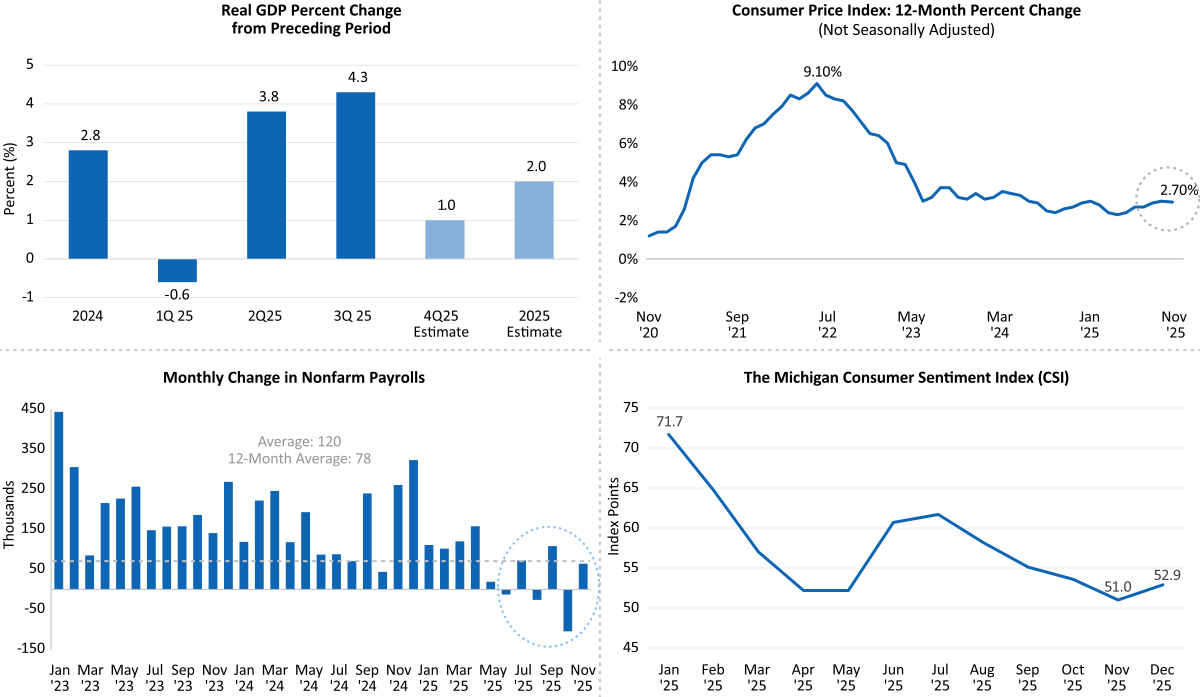
How is the economy doing as we head into 2026?
Economic data suggest we had another resilient year. Growth in the first quarter of 2025 was distorted by the tariffs, and GDP contracted slightly (-0.6%) before rebounding with roughly 4% growth over the next two quarters. If the economy expanded at about a 1% rate in the fourth quarter as expected, full-year growth should be about 2%, which is a comfortable pace. Inflation, meanwhile, has proven more stubborn than many of us expected. The final Consumer Price Index release of the year pegged inflation at 2.7% in November, where it has hovered for several months. That level is not ideal, but it is also not alarming.
The elephant in the room is the labor market. The unemployment rate in December was 4.4%, up from 4% at the start of the year, but still low. However, hiring slowed significantly last year. The economy added 584,000 jobs in 2025 – excluding the pandemic that was the weakest performance in more than a decade. Before 2025, the economy added roughly 2 million to 3 million jobs annually going back more than a dozen years, again excluding the rise and fall of jobs during and immediately after the pandemic. The labor market is a soft spot in the economy, with potential ramifications. For example, if unemployment ticks up to 5%, we could see jobs joining affordability as a focal point in the mid-term elections.
GDP: Year-End Forecasts for 2026 by Major Banks
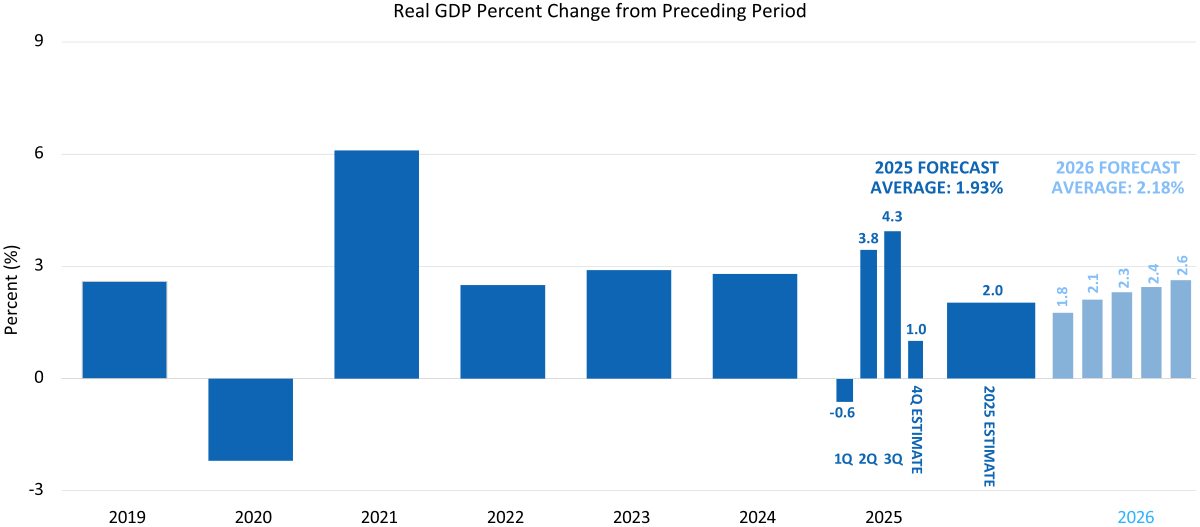
Shifting to our special topic this month, the playbook for 2026: What are your thoughts on the outlook for the economy?
Large banks, on average, forecast GDP growth of 2.2% in 2026, suggesting another year of economic resilience. A year ago, these banks forecasted 1.9% expansion for 2025, close to the now estimated 2%. I believe it’s likely real GDP growth will be higher than 2.2%. However, nominal GDP growth might come in lower than many expect, since I anticipate inflation will moderate this year, and nominal GDP is inflation plus real growth.
10-Year Treasury Rates: Year-End Forecasts for 2026 by Major Banks
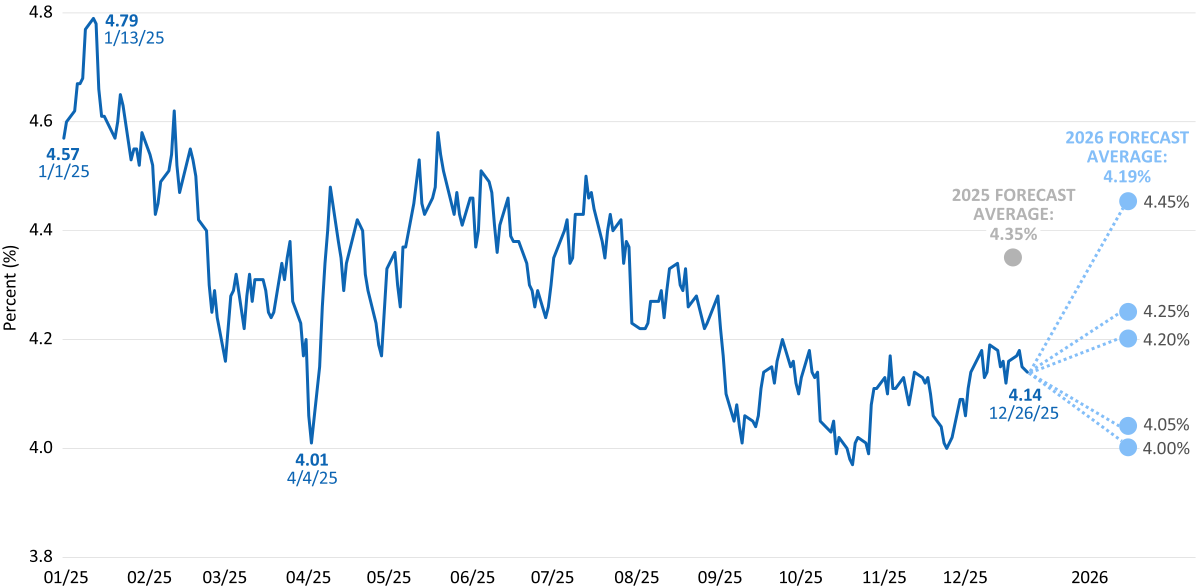
U.S. Treasury yields were choppy in 2025 but ultimately ended the year lower. Do you view 4% yield as more of a floor or a ceiling in the year ahead?
On average, big banks expect the 10-year Treasury yield to end 2026 at about 4.2%, implying a flat year for yields. I believe long-term rates should be lower and view 4% as a ceiling, particularly if the Fed reduces the policy rate to 3%. The irony, however, is that aggressive easing could lift inflation expectations and push long-term yields higher. The “X” factor here is Powell’s successor.
CPI: Year-End Forecasts for 2026 by Major Banks
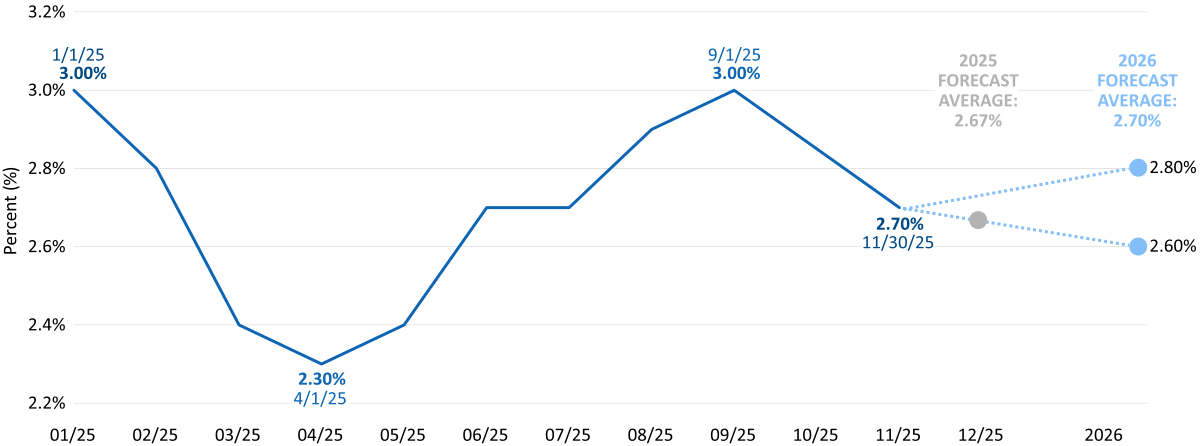
Inflation has remained above the Fed’s 2% target. What’s next in 2026?
In early 2025, inflation appeared to be trending toward the Fed’s target, but after Liberation Day it trended back up. Even so, I believe 3% to be a ceiling, and CPI eased to 2.7% by November. Looking ahead, big banks on average expect CPI to end 2026 at the same rate of 2.7%. As mentioned, I expect inflation to moderate this year, possibly below 2.5%.
Fed Funds: Year-End Forecasts for 2026 by Major Banks
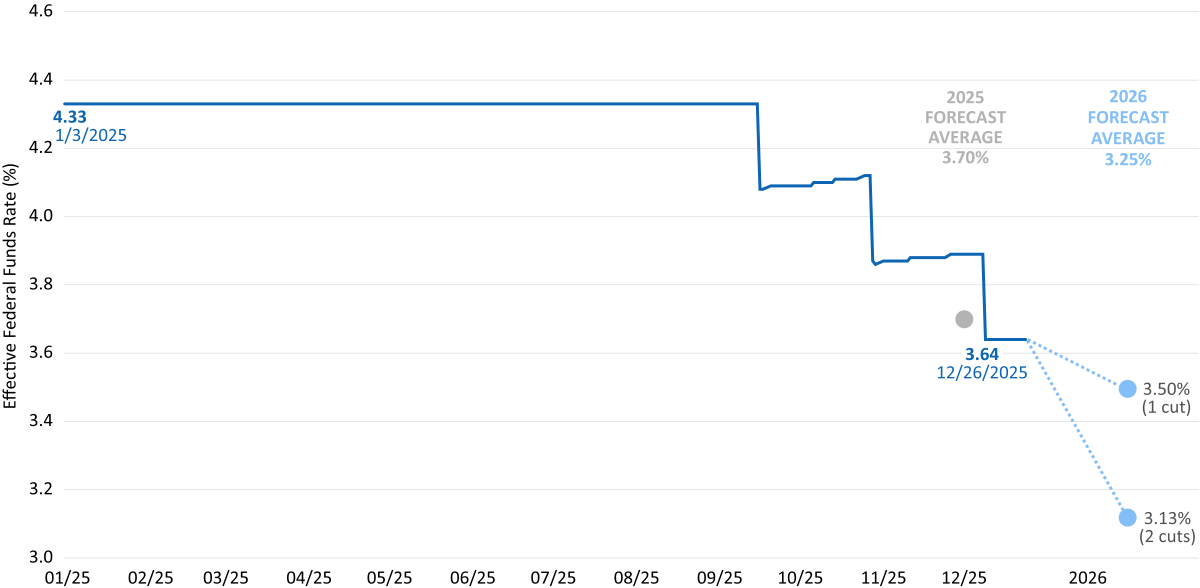
Market performance in 2025 can be partially attributed to the three fed funds rate cuts during the year. What are the big banks predicting for Fed cuts in 2026?
The big banks’ average forecast is for the policy rate to decline to 3.25% in 2026, implying two more cuts of 25 basis points each. I agree; I expect the Fed to stop at a target rate of 3.0% to 3.25%, though the outcome will be influenced by the new Fed chair, and there is a good chance the Fed cuts more aggressively.
S&P 500 Index: Year-End Forecasts for 2026 by Major Banks
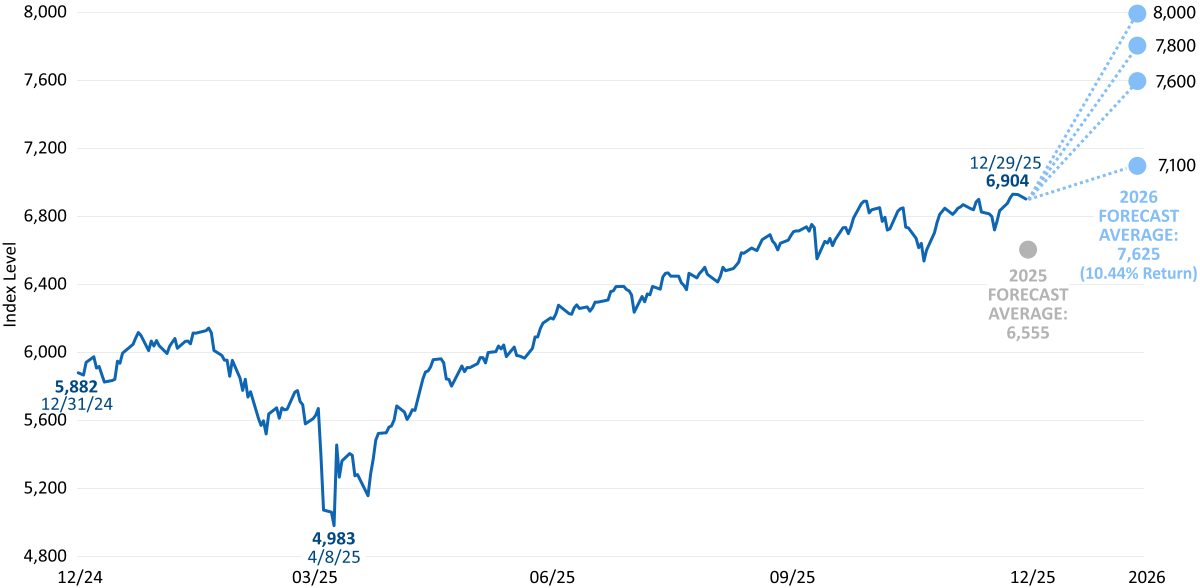
The S&P 500 Index just completed its third year of a bull market. Are you as bullish as many of the strategists on Wall Street?
Perhaps not that many are so bullish. The professional forecasters tend to be cautious about estimating equity returns. Last year, the big banks’ average forecast was for the S&P 500 to end 2025 at 6,555, which was well shy of the actual 6,904, and that was in a Goldilocks year of solid growth, inflation within one-point of the Fed’s target, and Fed rate cuts. Now their average estimate is for a 10.4% return in 2026, with the S&P 500 finishing 2026 at 7,625. I see that as a “safe” estimate, since there are decent tailwinds to the market. I expect the market to surprise the upside. I don’t love my own prediction, but that may be a good sign since the easy call is to get scared.
Last question on our 2026 playbook: What are institutional investors asking about related to opportunities and risks aside from liquid bonds?
There is substantial discussion around non-transparent markets. A little background: During the 2000s, when public markets were fairly flat and rather volatile, institutional investors gravitated toward illiquid investments, particularly private equity. Since around 2010, however, public markets generally have delivered strong returns, with COVID a notable exception. As rates rose, some institutions began to question whether they had overallocated to illiquid investments.
International exposure is also top of mind. After years of exceptional U.S. equity performance, some investors are expecting mean reversion, with international markets potentially outperforming U.S. stocks. International equities shined in 2025, and many institutions are likely under-allocated abroad.
Fixed Income Yields and Year-to-Date Returns
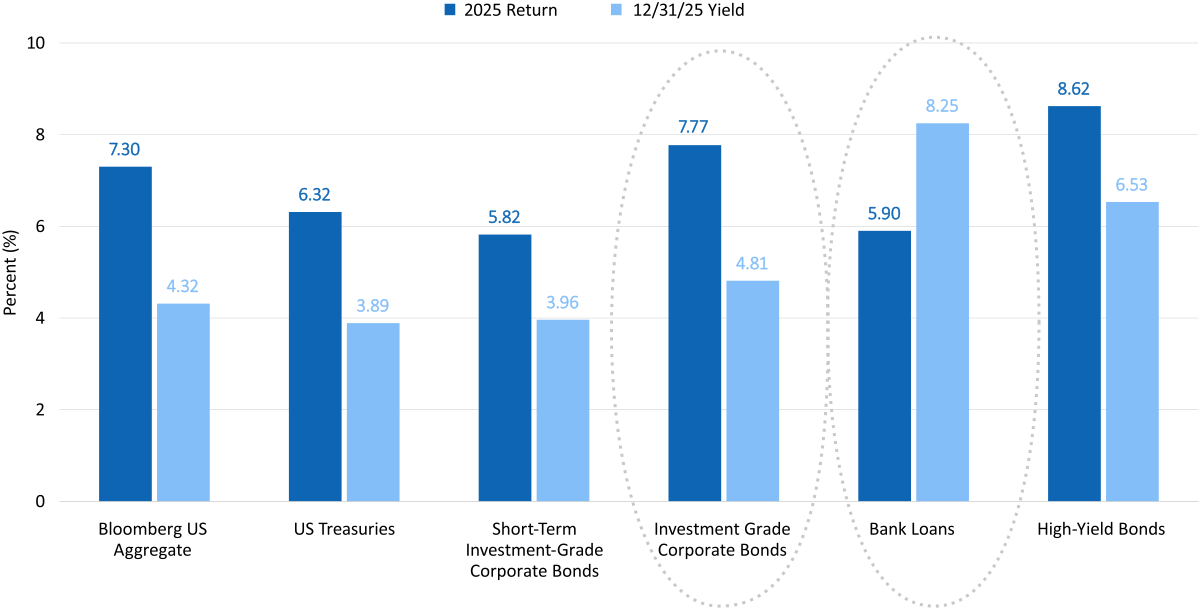
Let's talk bonds. Where do you see opportunities in fixed income?
From 2022 through 2024, we favored floating-rate loans due to the inverted yield curve, attractive loan yields, and fundamentals that were stronger than investors expected. In 2025, we pivoted toward investment-grade corporate bonds. As the Fed cut short-term rates and yields were compressed, high quality, fixed rate bonds started looking more attractive. Indeed, investment-grade corporate bonds returned 7.8% in 2025, while bank loans returned 5.9%.
With the 10-year Treasury yield a little about 4%, I remain constructive on duration. However, I may change my view in March or April as we have greater clarity on Fed policy, the new Fed chair, and the health of the economy. Still, bank loans are yielding roughly 8%, and I believe some exposure is warranted, even as I favor high-quality corporates.
Let's close with a personal reflection.
The daily use of artificial intelligence increased exponentially in 2025. I tell my kids to use AI to reflect and help organize. Use it as a mirror or a map, not a compass. Use AI to think better but never to outsource your thinking. The irony of that statement is it came from AI.
A 10-year Treasury note is a debt obligation issued by the United States government with a 10-year maturity period.
The Atlanta Fed GDPNow provides a running estimate of real GDP growth for the current quarter using available economic data.
Bank loans (or floating-rate loans) are financial instruments that pay a variable or floating interest rate. A floating rate fund invests in bonds and debt instruments whose interest payments fluctuate with an underlying interest-rate level.
A bond is a fixed-income instrument and investment product where individuals lend money to a government or company at a certain interest rate for an amount of time. The entity repays individuals with interest in addition to the original face value of the bond.
The Bloomberg US Aggregate Bond Index (Agg) is composed of investment-grade U.S. government bonds, invest-ment-grade corporate bonds, mortgage pass-through securities, and asset-backed securities, and is commonly used to track the performance of U.S. investment-grade bonds.
Capital Expenditure (CapEx) is the money a company spends to acquire, upgrade, or maintain long-term, physical assets.
Consumer Confidence measures consumers’ attitudes and optimism about the economy and their personal financial situation.
Coupon refers to the interest payment that a bond issuer promises to pay to a bondholder.
Fixed income refers to assets and securities that pay a set level of income to investors, typically in the form of fixed interest or dividends.
Investment grade refers to the quality of a company's credit. To be considered an investment grade issue, the company must be rated at 'BBB' or higher by Standard and Poor's or Moody's.
An investment-grade bond is a type of bond that is considered to have a relatively low risk of default.
The ISM Manufacturing Index is a monthly economic indicator published by the Institute for Supply Management (ISM) that gauges the health of the U.S. manufacturing sector.
Treasury rate (or yield) refers to the interest rate at which the U.S. government borrows money by issuing Treasury securities.
Yield is the income returned on an investment, such as the interest received from holding a security.
A yield curve plots the interest rates of bonds that have equal credit quality but different maturity dates.
Any performance data quoted represents past performance, which does not guarantee future results. Index performance is not indicative of any fund’s performance. Indexes are unmanaged and it is not possible to invest directly in an index. For current standardized performance of the funds, please visit www.AristotleFunds.com.
The views expressed are as of the publication date and are presented for informational purposes only. These views should not be considered as investment advice, an endorsement of any security, mutual fund, sector or index, or to predict performance of any investment or market. Any forward-looking statements are not guaranteed. All material is compiled from sources believed to be reliable, but accuracy cannot be guaranteed. The opinions expressed herein are subject to change without notice as market and other conditions warrant.
Investors should consider a fund’s investment goal, risk, charges and expenses carefully before investing. The prospectus contains this and other information about the fund and can be obtained at www.AristotleFunds.com. It should be read carefully before investing.
Investing involves risk. Principal loss is possible.
A full list of holdings can be found at www.aristotlefunds.com and are subject to risk and to change at anytime. Any discussion of individual companies is not intended as a recommendation to buy, hold or sell securities issued by those companies.
Aristotle Funds and Foreside Financial Services, LLC are not affiliated with Pacific Life Fund Advisors LLC.
Foreside Financial Services, LLC, distributor.